
















We debate the meaning of the Second Amendment endlessly, but rarely stop to interrogate how and why the people who decide to kill dozens of people have also demonstrated that they hate women.

Although we may always question whether or not we will be reprimanded for publishing a certain story, female journalists must continue to make ourselves and those around us aware of the issues self-censorship creates in the long run.

Writer Alison Friedman reflects on what Christine Blasey Ford's courage has meant to many women.

I wasn't born a feminist. Like so many women, I had to learn how to be one — in fact, I'm still learning. If you’re also still learning, here’s a roundup of books that can help you along your journey.

Since the start of the MeToo movement, journalists have played a key role in holding perpetrators accountable for the sexual violence they allegedly committed. Unfortunately, instead of challenging society's instinct to protect powerful men, some reporters covering #MeToo have reproduced this bias.

As of August 1, the Netherlands has instituted a ban on burqas and niqabs in public places, including hospitals, educational facilities, police departments, public museums, and public transportation. This recent policy change stands in stark contrast to the common narrative of Dutch people as tolerant and progressive, and highlights just how pervasive populism and Islamophobia currently are in Europe.

I tried getting help numerous times, especially since my symptoms got worse over time. But none of the doctors I saw took me seriously.

My great-grandmother is just one example of an underrepresented, underappreciated woman who fought her own feminist fight not in a big, public way, but bravely in her daily life. They are the feminists we never hear about, but whose voices surely deserve to be heard and celebrated.

In the recently published book There’s No Crying in Newsrooms, award-winning journalism scholars Kristin Grady Gilger and Julia Wallace investigate how gender has shaped the experiences of female journalists.

As I've grown older, the author whose words I have most often remembered, that has rescued and offered solace to my friends and me is Toni Morrison.

On July 30, model Shanina Shaik revealed that Victoria's Secret canceled this year's Victoria's Secret Fashion Show. The company has not confirmed Shaik's statements, but it seems canceling the event would be appropriate given the scandals the company has faced this year — not to mention decades of profiting off of the objectification and sexualization of women's bodies.

Each week, Houston-based activist Diamond Stylz and her rotating cast of co-hosts serve up candid conversations about topics ranging from gender reveal parties to the latest installment of the television show Pose from a black, trans, and feminist perspective.

The dismissal of women who express “unfeminine” emotions as mentally ill not only frames what is actually women’s self-awareness as irrationality, but further reinforces the idea that rationality is itself a masculinized concept, one that wouldn’t have credence without the simultaneous denigration of women’s emotions.

There is a potential solution to climate change that is as unexpected as it is potentially effective: girls' education.

As I watched the mainstream media cover this day this year, I noticed that hardly any mentioned the female leaders of a famous 1990 protest.

This exposure to other women in the field helped me realize that I could embrace every authentic part of myself and still succeed. In fact, I realized that in order to succeed professionally, the level of harshness I had adapted in my attempt to be more masculine was actually damaging.

We talk a lot about sexism in entrepreneurship, but it’s important to recognize the intersection of race and gender privilege in the space as well.

Her adaptation of the film — the eighth — will not only highlight the feminist understones already present in the novel, but also examine the text with a modern eye, drawing on society’s increased sensitivity to gender fluidity.

Simone de Beauvoir was 41 years old when her most famous book, The Second Sex, was published in 1949. Over 20,000 copies of the book, which explored the meaning of being a woman, were sold in a matter of days after the book’s publication, and it soon became internationally famous.

When the first Argentinian women’s soccer league launched in 1991, the athletes involved were considered amateur and not paid. Almost 30 years later, they’re still unpaid, but that might soon change:

She proved that women could pursue any career they want, and they should be able to do it without guilt weighing them down. She showed that determination and perseverance aren't just worn-out adjectives, but actual, hard-calloused traits.

Charlie Martin is a British racing driver who was set to become the first trans woman to race as a support race in the world’s oldest sports endurance car racing contest: the 24 Hours of Le Mans, also known as “Grand Prix of Endurance and Efficiency.”
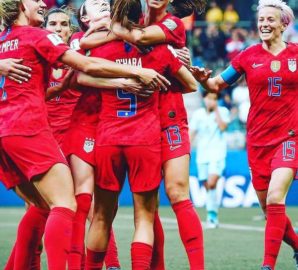
In a lawsuit filed against US Soccer on International Women's Day in March, 28 members of the US women's national soccer team (USWNT) reported earning 38 percent less than male US soccer players and claimed the pay disparities are unlawful under the Equal Pay Act and Title VII. The Soccer Federation finally agreed to enter mediation with the women's soccer team regarding their lawsuit fighting the team's pay gap.

According to the BBC, as of 2012, the 62nd year of F1, only five women had ever entered the Grand Prix, the last of whom had competed in the 1990s.

The WNBA is ushering in its 23rd season, and, with it, huge changes