















The Second Sex, 70 years later
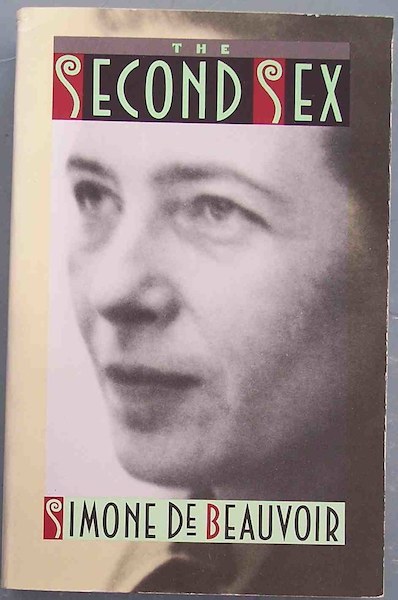
Simone de Beauvoir was 41 years old when her most famous book, The Second Sex, was published in 1949. Over 20,000 copies of the book, which explored the meaning of being a woman, were sold in a matter of days after the book’s publication, and it soon became internationally famous. In fact, The Second Sex is considered by many to be one of the starting points of second-wave feminism.
I decided to read The Second Sex a few weeks ago. My copy of the book, which is the 18th edition of a Spanish translation printed in Argentina, is itself a great example of how her work has continued to be relevant over the years. I still wondered, though, how relevant the book is to women in their daily lives today, so I started to talk to other women who have read it. Although we all came from different socioeconomic backgrounds and life experiences, we all agreed that The Second Sex opened our eyes to a series of situations that happen to women every day that ultimately determine our role in society based on our gender.
In The Second Sex, de Beauvoir posits the idea that women are considered “the other” for men — that we're secondary characters who exist to help men confirm their own identities and justify their superiority over us. This argument, which is presented in the book’s introduction, sets up the author’s investigation of what it means to be “the other.” She does this by drawing on biology, psychology, religion, and other institutions over the course of history to explain how men’s domain over women started and how it has solidified over the years.
De Beauvoir also writes about how women have been put into the role of the “second sex” through various stages of life, including childhood, adolescence, sexual initiation, marriage, motherhood, and beyond. For example, she explores how girls learn to be passive in childhood — to take care of their appearances and play with domestic-themed toys that prepare them to take care of a house and children later in life. Boys, on the other hand, are encouraged to explore the world by playing with toys and games that stimulate their bodies and brains, and encouraged to go the extra mile and take risks.
“Some of the things she says in the book are still current, and that’s surprising,” Alana Constela, a 25-year-old marketer who read the book in 2017 for her undergraduate thesis, told me. The Second Sex is key to understanding aspects in women's lives that are not natural, that are generated by society,” Maria Beatriz, a 24-year-old communications student, added. She read the book after taking a seminar on gender in her university three years ago. “We are not women by nature, we learn to be one."
The first time 30-year-old lawyer, teacher, and journalist Maria Isabel Gallegos read The Second Sex, she initially felt so much rage toward the inequality the book described that it took her a few days to pick the book up again. Today, after re-reading it several times, Maria Isabel recommends it to all of her students.
“In our lives, we women know that there’s inequality, things that aren’t right, but sometimes we can only feel it, it’s difficult to explain it with words,” Gallegos told me. “Simone’s book gives us a way to express ourselves.”
Alana Constela agrees. “Some situations [de Beauvoir] analyzes in the book are things that I see every day, but I haven’t digested it, or reflected upon it. Before reading the book, I had no way to explain why those things bothered me.”
Some young women, however, feel that as a 70-year-old book, The Second Sex has become outdated in some ways, too. Ximena Garcia, a 27-year-old social worker who read the book in 2011 out of curiosity, told me that “we can’t base all of our understanding of gender theories in this book. We should complement our knowledge with other readings and highlight the most important aspects of each one. It’s how I do it, at least.”
Maria Beatriz feels the same way. “Simone did a first rupture, so today we could tear apart other concepts. It’s a good book to get started with feminism and gender issues, but society today is not the same as the one 70 years ago. At that time there were no birth control methods, issues from the LGTBQ community weren’t discussed, even the binarism questions we have today didn’t exist back then. Simone’s book connects with her reality in the 1940s, but today our society needs other things, so we won’t find all the answers in the book, clearly.”
While much has changed in 70 years, inequality undeniably persists and our society still values men over women in many ways. We have come a long way, but there’s still a long way to go. That’s why all the women I talked to and I recommend reading The Second Sex, even decades after its publication. By educating ourselves, discussing ideas, and learning from others, we’ll have the clarity and the tools to keep fighting for a more equal world.
More articles by Category: Feminism
More articles by Tag: Discrimination, Equality, Sexism, Books


