












The Taliban’s New Criminal Code Is Governing Women Out of Existence
In early January, Taliban supreme leader Hibatullah Akhundzada quietly enacted the expansive “Criminal Procedure Code for Courts” (“De Mahakumu Jazaai Osulnama”), effectively turning violence into everyday rule, patriarchy into official policy, and ideology into enforceable law.
Behind closed doors, without any legislative deliberation or public announcement, the code’s text — spanning 119 articles in three chapters and ten sections detailing how to “prevent vice” — only came to light weeks later, when a leaked Pashto version was released online and circulated among legal observers — much to their alarm.
Included are mechanisms to uphold state-determined morality, as well as court- and cleric-supervised punishments for offenses like “sin” (gunah), “corruption” (fasad) and “immorality” (fasad-e akhlaqi). While central to the code’s focus, none of these offenses are clearly defined, leaving any form of non-compliance, divergent personal belief, protest, or even private conduct vulnerable to criminal interpretation. Vice, it would seem, is in the eye of the beholder.
While dangerously vague, one thing about the code is clear: Its primary subject intended for control is Afghan women, whose routine conduct is especially vulnerable to being recharacterized as criminal.
Enshrined subjugation
A striking feature of the code is that discretionary punishments (ta’zir) can be given by judges, religious officials, and even household figures — like husbands.
Under Clause 5 of Article 4, a husband or “master” (badaar) — a legally-recognized owner of individuals subject to their domestic control — can determine and administer punishment over family members, formalizing intra-family discipline.
(Individuals are officially classified under Article 15 as “free or “enslaved” — the latter including not only wives but anyone in the household subject to a male guardian’s disciplinary authority.)
Clause 6 of the same article actually grants any Muslim the disciplinary power to police other members of Afghan society. And while punishment is not exclusive to women, their very presence in public spaces makes them the readiest subject for scrutiny — and the easiest target for enforcement.
For example, a woman leaving her marital home without her husband’s consent, even to stay with her parents, is committing a crime punishable by up to three months’ imprisonment. And those family members who provide her with shelter are subject to identical legal repercussions. In effect, the code legally bars women from escaping domestic abuse, transforming the domestic sphere into a place of enforced isolation while redefining marriage as a trap.
The Taliban frames this as safeguarding family order and enforcing “marital obedience,” while turning private, domestic realms into spheres of legal monitoring and retribution, without refuge from mistreatment.
Families serve as enforcers, neighbors act as spies, and ordinary Afghans become instruments of Taliban doctrine, obliged to discipline one another to “prevent vice” or face consequences themselves, whether imprisonment, corporal punishment or worse.
Conversely, under Article 32, a husband who breaks his wife’s bones or causes grave injury in other ways is subject to no more than 15 days behind bars — and only if the wife can prove her victimhood.
Framed in universal moral rhetoric, the code’s application enforces rigid gender hierarchies that restrict women’s autonomy and independence, while those who resist gender or sexual norms are subject to severe ta'zir punishments like life imprisonment, plus 10 lashes every three days for until “repentance.”
More than just directing courts and judicial processes, the code provides a full blueprint for domination designed to target women most severely.
Removing women’s legal personhood
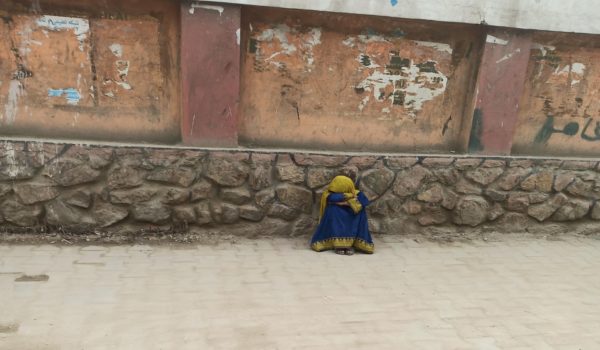
Since the Taliban seized power in August 2021, a barrage of decrees has rapidly erased 20 years of women's rights advancements. Girls were excluded from secondary and higher education, with over 2.2 million deprived of schooling beyond the primary level. Women were largely expelled from workplaces, with bans on employment in the public sectors and NGOs. And rigid dress requirements and mobility restrictions were enforced countrywide.
In today’s Afghanistan, the exclusion of women from public spheres doesn’t only speak to their status in society, but it also demonstrates a coordinated effort to erase them entirely.
Women’s beliefs, self-expression, mobility, interpersonal relationships, and bodies become objects of state oversight by the Ministry for the Propagation of Virtue and Prevention of Vice, who empower its morality police to monitor private and public conduct, detain anyone accused of “moral violations,” and apply ta'zir measures.
The criminal code also creates class divisions that direct penalties based on class rank, rather than the gravity of the crime, wherein harsher measures are reserved for lower classes. Even then, women rank at the bottom of the hierarchy, their status consistently mediated through male authority. Not even higher-status women have independent privileges, as legal power and protection rest exclusively with men.
The code further dismantles procedural safeguards that could provide women with even the slightest protection: There is no protection against self-incrimination or coerced confessions, nor any assured access to legal representation — protections embedded in earlier Afghan laws, like the 1964 Constitution and 2004 Criminal Procedure Code (which, though inherently narrow and imperfectly upheld, were at least formally recognized in the legal framework).
What’s taking shape here isn’t simply oppression but a legal structure that reclassifies women as administratively governed entities, rather than rights-holding individuals, removing them from the structure of legal personhood. This constitutes legal apartheid, in which the legal system fails to see or engage with women as autonomous members of society.
A dark new chapter
History tells us what to expect. The Taliban’s initial rule in Afghanistan (from 1996 to 2001) shows how women and girls were banned from education and employment, barred from leaving home without an escort, and subject to corporal punishment and flogging for perceived moral violations. With their public roles obliterated, Afghan women experienced mass social isolation, which led to mass outmigration, chasing safety and basic human rights elsewhere.
Through this new criminal code — which legalizes gender domination — Afghan women are again being systematically erased from political, public and social life. And the repercussions cannot be understated: A generation of girls is growing up learning that submission is a legal duty and obedience is a virtue.
Global watchdogs, human rights bodies and civil society groups have voiced their outrage. Afghan independent groups and activists condemned the document for eroding fair trial rights and conferring unchecked punitive powers on the legal system and its enforcers, all in the absence of public consultation. Amnesty International slammed it as a “draconian” violation that legitimizes domestic abuse while leaving survivors without legal protection. International academics and clerics echoed the backlash, with the Pakistan Ulema Council labeling its provisions as “un-Islamic” and at odds with human worth. And Richard Bennett, the United Nations Special Rapporteur on human rights for Afghanistan, expressed alarm at the code’s deeply troubling implications.
Yet despite perhaps the sporadic Security Council exhortations to end curbs on women’s freedoms, no unified global plan has emerged to demand accountability or overturn the Taliban’s gender-specific edicts. Meanwhile, the structures entrenching women’s suppression keep growing and continue to solidify.
History will condemn not only the regime that birthed it, but those who legitimized it as mere governance.
Amina Zurmati and Qudratullah Zurmati are writers and human rights defenders advocating for the rights of women and minorities.
More articles by Category: Gender-based violence, Girls, International, Violence against women
More articles by Tag: Afghanistan, Taliban, Gender Based Violence, Gender bias, women's rights


