















The ‘Woman, Life, Freedom’ Movement Struggles to Survive War in Iran
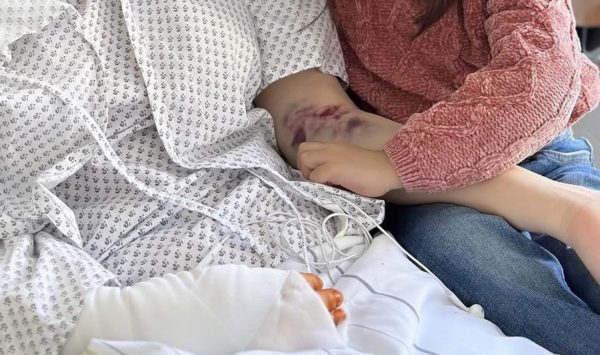
In the months since the U.S. and Israel launched their joint assault on the Islamic Republic of Iran, the “Zan, Zendegi, Azadi” movement — known internationally as the “Woman, Life, Freedom” movement — has yet to articulate a clear public position on the war.
Reactions among feminist voices have been diverse, with contradictory and dispersed reactions to war, foreign intervention, and even the future of the movement itself.
Zan, Zendegi, Azadi first emerged in 2022, in response to the death of Mahsa Amini, a 22-year-old student from the Kurdish minority, who was arrested by Iran’s notorious morality police for wearing her hijab improperly. She was taken into police custody, where she was reportedly beaten — including in the head. She fell into a coma and died three days later.
Nationwide protests erupted, and after security forces answered with deadly force, resistance turned into an uprising against the Islamic Republic itself. A movement was born behind the persecution and discrimination that women and girls face under the regime, and it grew well beyond Iran’s borders.
Years later, Iranian women and girls still face institutionalized repression, and the fight for their freedom is ongoing, within the country as well as in exile.
The assassination of Ayatollah Ali Khamenei — who has led the country (and its campaigns of repression) as supreme leader since 1989 — in the first days of the assault was met by some Iranian women with undisguised relief. Videos of women dancing, removing their veils and chanting anti-regime slogans spread rapidly online — a visceral response to the passing of a figure who had personally sanctioned the morality police, the forced hijab laws enshrined in 1983, and the violent suppression of protests that killed an estimated 1,500 in 2019 and over 530 again in 2022, according to Amnesty International.
Others, however, took a firm anti-war stance, warning that war ultimately kills Iranian civilians first.
The UN Fact-Finding Mission on Iran puts the civilian death toll of the assault at over 3,000 as of April, with more than 27,000 injured in U.S.-Israeli strikes that have targeted schools, hospitals, and civilian infrastructure.
WMC Women Under Siege spoke with several Iranian feminists living in exile outside of Iran, who say that they must speak in the movement’s name precisely because those inside the country who would speak are actively under assault — from both internal and external forces.
Their divergent views reveal how a conflicted movement, born to fight against a regime that kills women, is trying to contend with a war against that regime but that kills women in the process, and without hesitation.
A war from within and without
“I support war,” said Kosar Eftekhari, “but only a war that targets the Islamic Republic and its forces, not ordinary people.”
Eftekhari is an Iranian activist and actress who was blinded in one eye by security forces during the 2022 uprising and later fled to Germany.
She remembers exactly what the officer told her that day: “Leave, don't stay. If you stay, I'll shoot you in the eye. This is an order.” Moments later, he shot her in the eye.
“I heard my eye burst,” Eftekhari said. She felt the warmth of blood run down her face and went to touch it. When she went to look at her hand, covered in blood, she could only see it out of one eye. Through the other, she realized, “everything was dark.”
Sima Moradbeigi, a mother who was also wounded during the 2022 demonstrations, also favors war, if only because “there’s no other way,” she said.
“We are not in favor of war out of desire; we have been brought to this point. We go into the streets empty-handed, and the Islamic Republic responds with bullets. No hesitation, no mercy.”
On October 13, 2022, Moradbeigi, then 27, was shot at close range by a masked officer who fired directly into the crowd of protesters, leaving her with severe injuries.
“They gave my family a bowl of shattered bone fragments,” she said. “My hand had no bones left, only a thin layer of skin. Since then, I have undergone six surgeries.”
She has since sought refuge in Germany.
“The reality is that Iran has long been in a state of war, yet a war between the people and the Islamic Republic government,” said Moradbeigi. “When you’ve tried every possible avenue and reached a dead end, you think maybe foreign intervention is the solution — not to destroy the country, but to end a government that has held its people hostage for years.”
Both Eftekhari’s and Moradbeigi's injuries are a testament to a pattern of state violence that reached its most brutal expression in January, when protests over the economic collapse of the Iranian rial, runaway inflation, and decades of sanctions and government mismanagement were met with the deadliest crackdown since the 1979 Revolution that overthrew Iran’s monarchical government and installed the Islamist regime, according to a recent UN Fact-Finding Mission.
The Iranian government officially acknowledged 3,117 deaths, while the UN Special Rapporteur estimated between 5,000 and 20,000 people had been killed.
The number of casualties was closer to 45,000, U.S. President Donald Trump reportedly told Fox News chief foreign correspondent Trey Yingst. Trump also claimed to have sent guns to Iranian protesters through Kurdish forces, reinforcing claims that the protests were manipulated by foreign interference (though, these claims are primarily advanced by states allied with Iran).
“Remember, the president made a commitment to the Iranian protesters who were in the streets of their country earlier this year," Yingst told Fox & Friends. “Those images were circulating online of thousands of people who were slaughtered at the hands of the Iranian regime, the current regime that is attacking U.S. forces as we speak, and the president made a commitment on Truth Social to those protesters, and he said help is on the way.”
But none in the Zan, Zendegi, Azadi movement who spoke to WMC Women Under Siege said that they believe the U.S. is interested in their liberation.
“In its foreign policy — not only toward Iran but toward any country — the United States has never acted out of goodwill or in the interests of that country's people,” said Mahsa Gholamali-zadeh, a lawyer who was detained during the 2022 protests and now lives in Canada. “It has always pursued its own interests.”
Co-opting the movement
Legal experts and scholars have long documented how Western powers regularly weaponize women’s liberation to legitimize military intervention — what feminist theorists call “embedded feminism,” in which the state co-opts feminist language to sell a war as a humanitarian project.
Following the U.S.-led invasion of Afghanistan in October 2001, then-First Lady Laura Bush famously declared the war “a fight for the rights and dignity of women,” a claim Palestinian-American anthropologist Lila Abu-Lughod dismantled as a rescue narrative that only serves the racist and politically-useful narrative of civilizational difference — first in a 2002 article for "American Anthropologist," then in her 2013 book Do Muslim Women Need Saving?
20 years of U.S. intervention in that country directly killed thousands of Afghan women, and the U.S.’ hasty exit in 2021 left the door wide open for the Taliban’s return, and with them, an oppressive regime that is governing Afghan women out of existence.
In this tradition, the Zan, Zendegi, Azadi was ripe for co-opting.
In June 2025, during the Twelve-Day War — when Israel launched attacks on military, nuclear, and residential sites in Iran just two days before the sixth U.S.-Iran nuclear talks were to take place in Oman — Israeli Prime Minister Benjamin Netanyahu invoked the movement by name to instigate an uprising.
“This is your opportunity to stand up and let your voices be heard,” he said in a direct address to the Iranian people. “Woman, Life, Freedom. Zan, Zendegi, Azadi.”
Between June 13 and June 24, Israel’s “Operation Rising Lion” killed thousands of Iranian civilians, including women.
“The more Zionists co-opt ‘Woman, Life, Freedom’ to justify death and destruction in Palestine and in Iran, the further it is torn from its life-affirming origins in resistance,” Sahla Omar, a feminist writer, argued in response for Raseef22, a Beirut-based independent liberal media outlet.
The slogan appeared again in early January of this year, as anti-regime demonstrations in Iranian diaspora communities broke out in support of regime overthrow, but this time, its presence struck a very different tenor.
In one widely circulated incident, a young woman holding a “Woman, Life, Freedom” flag was harassed, mocked, and verbally abused by monarchist supporters of Reza Pahlavi, the exiled son of Iran’s last Shah, who has been soft-pitching himself to helm a transitional government should the regime be overthrown. In early January, Pahlavi called on large demonstrations both within Iran and outside of it to oppose the regime, while his supporters worked to align pro-monarchist slogans with anti-regime ones, including the Zan, Zendegi, Azadi movement’s. But only as far — and as long — as they served to position him as a natural alternative to the regime.
That same month, Pahlavi removed “Woman, Life, Freedom” from his platforms, drawing sharp criticism that accused him of catering to a more socially conservative (and less feminist) political movement within Iran.
Gholamali-zadeh has suspected this regressive opposition to the movement for quite some time. Nearly as old as the “Woman, Life, Freedom” slogan itself was the slogan “Man, Homeland, Prosperity” promoted by some monarchist groups, in part to offer an alternative (more far-right-aligned) framing to the resistance movement.
While Zan, Zendegi, Azadi faced heavy aggression from the state, it also found itself competing with a patriarchal Persian nationalism within Iran’s anti-regime opposition that positioned itself as the feminist movement’s “ontological and epistemic opposite.”
“This movement reflected the values of a young generation that stood against traditional, religious, patriarchal, discriminatory, and authoritarian norms,” said Gholamali-zadeh. “At the same time, it was fundamentally detached from dominant ideological frameworks, whether monarchist, Islamist, or even traditional leftist. None of these were its source of inspiration.”
A fractured vision of the future
Moradbeigi, Gholamali-zadeh and Eftekhari's views reflect a besieged movement that is united in opposing the regime but fractured over how.
Eftekhari still holds hope for regime change. “This war must help overthrow the regime, leaving none of its members behind,” she said. “We, the victims, must raise our voices and stand in defense of the people and freedom of Iran, not just until the regime falls, but as long as we live. My eye is living proof of the Islamic Republic’s crimes.”
But for Moradbeigi, safety and freedom are not a trade-off, and one cannot come at the expense of the other. “In recent protests, both ‘Woman, Life, Freedom’ and ‘Long live the Shah’ slogans appeared. The bullets in Iran’s streets did not ask our opinions,” she said. “Ultimately, all we want is freedom and a safe country for everyone,” she said.
As for Gholamali-zadeh, she predicts that harsher and more violent days are to come, which will test not only the survival of the movement but of the Iranian people, as the foreign leader who began bombing the country (purportedly in support of protesters) has already threatened genocide against Iran’s “whole civilization.”
Entering its fourth month, a peace deal is too far off in the distance to assure anyone of an end to this war.
“I hope that one day this land, after all this violence, will find peace,” said Gholamali-zadeh.
Perhaps, she said, the true goal of Zan, Zendegi, Azadi has always been that: the very chance at a safe, ordinary life for Iran’s people.
This piece was published in collaboration with Egab.
More articles by Category: Feminism, Free Speech, Gender-based violence, International, Politics, Violence against women
More articles by Tag: Iran, War, Conflict, Violence


