















Innovative Action Draws Attention to Malta Abortion Ban
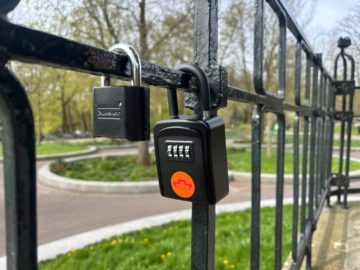
In March 2026, Women on Waves, a reproductive health nonprofit, placed 15 lockboxes — what we called abortion key safes — at carefully selected sites across Malta and its sister island Gozo. Each contained mifepristone and misoprostol, the medications the World Health Organization endorses as safe and effective for abortion care. The pills were prescribed by a licensed physician. They were provided for free. Women less than nine weeks pregnant could reach out to us to receive a location and access code. I was the person on the other end of each of those calls and emails.
Malta, a Mediterranean archipelago home to just over half a million people, is the only country in the European Union with a near-total ban on abortion. Poland, which has received far more international attention for its restrictions, allows abortion in cases of rape, incest, and severe fetal abnormality. Malta does not.
I work with Women on Waves, which runs creative campaigns to provide reproductive care in restrictive settings. The organization was founded in 1999 by Dutch physician Rebecca Gomperts. Its most notable initiative involved converting a cargo shipping container into an abortion clinic and sailing to countries where abortion is illegal to provide services in international waters.
Much of Women on Waves’ advocacy operates at the intersection of art and activism; that connection is what brought us to Malta in the first place. The Malta Biennale, an international arts festival, had invited us to exhibit specifically because of our history of using art to advance reproductive justice.
I first began working with Women on Waves in 2020 to research medication abortion access in the United States. I have been part of the work ever since, including a 2024 action outside the U.S. Supreme Court. While the justices heard a case that threatened to ban mifepristone, our team deployed abortion pill–dispensing robots right outside, operated by physicians in shield law states. Malta was the next chapter, and our most urgent one yet.
Many Americans first heard about reproductive healthcare in Malta in 2022, when an American tourist suffered an incomplete miscarriage there. Because treatment for miscarriages and incomplete abortions involve the same medical procedure, doctors informed her they could not provide the care she needed. She was airlifted to Spain. International outrage followed and led to one narrow legal revision in 2023: Malta now permits abortion if a woman's life is in immediate danger, as determined by three doctors after all other options have been exhausted. Abortion remains illegal in all other circumstances, including rape, incest, and severe fetal abnormalities.
Despite the ban, an estimated 600 women in Malta use abortion pills every year. The World Health Organization has confirmed that telemedicine abortion services and self-managed medication abortions are safe and effective. Most Maltese women access pills by mail from international organizations. Some travel abroad for care, but that requires money, time off work, and childcare that many women simply do not have.
What Malta's law accomplishes is not preventing abortion. It is ensuring that women must navigate it alone, at risk of serious criminal consequence: Under Malta's Criminal Code, a woman who undergoes an abortion can face up to three years in prison.
Since 2023, three women have been prosecuted in Malta for having an abortion — a rate of roughly one for every 200 abortions. On the morning of March 11, 2026, our small team gathered outside a Valletta courthouse to witness the verdict in the most recent case. We were heartbroken when we learned the defendant had lost and received an 18-month suspended sentence for taking abortion pills. A suspended sentence carries no immediate prison time, but it is a criminal conviction that stays on a person’s record for years. For women already navigating an unwanted pregnancy in silence, the verdict reinforced a chilling message: Seeking care could carry criminal consequences.
Politicians can criminalize abortion. They cannot eliminate the need for it.
************
We arrived in Malta as artists, invited by the Biennale to display an exhibition about abortion access. We had initially proposed including the lockboxes as a component of our exhibit. When the curators refused, we decided to move the lockboxes from inside the gallery to the streets, directly accessible to the women who needed them.
The abortion key safes were designed to give Maltese women in need something the law denied them: timely, local, and free abortion care and support. Each location was chosen carefully, screened for cameras and surveillance equipment, accessible without being so visible that a woman seeking care could be identified. Before giving out a code, I spoke to each woman on the phone. I reviewed her medical history and gestational age, asked about her support system and whether she was making the decision freely, and walked her through what to expect from the medication and what symptoms should prompt a hospital visit.
I addressed legal risk directly. If they needed further medical care, they did not need to say they had taken abortion pills and risk criminalization. Instead, they could say they were experiencing a miscarriage. The symptoms and treatment are nearly identical, and there is no blood test to distinguish the two.
The emails the women sent, paraphrased here for anonymity, have stayed with me:
My toddler was sick today, so I couldn't go to the key safe, but I will go tomorrow.
There's almost no clear information available about how to get care in Malta, and I'm feeling so lost.
I ended up alone and I don't feel like I can have this baby. Please help me.
I have two kids and I'm a single mum and I'm barely making it until the end of the month... is it possible to get the pills and pay at the end of the month when I get my salary?
The pills were provided for free.
It was finding out about this initiative that gave me the courage to reach out and ask for help.
************
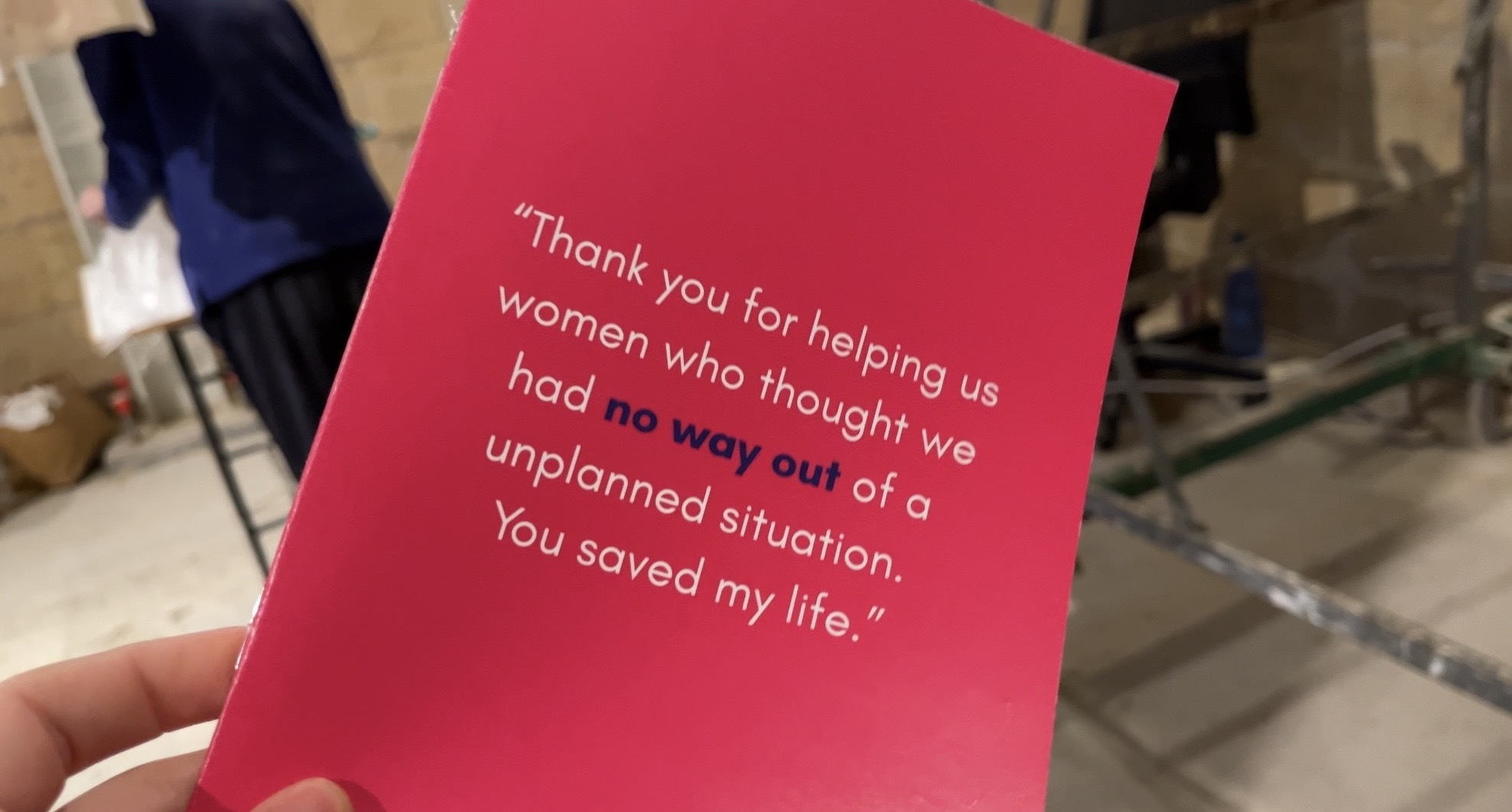
In the midst of the latest conviction, we were simultaneously contesting a decision by the Biennale's curatorial team to censor the word “pills” from our artwork about medication abortion. Our installation included a banner in English and Maltese reading “Need Abortion Pills?” The curatorial team removed the banner, claiming the work failed to meet the “minimum aesthetic quality standards to be shown in an international biennale.” Women on Waves founder Dr. Gomperts responded: “Abortion with medication is the only safe method available to Maltese women. By censoring the word ‘pills,’ the Biennale is harming Maltese women by withholding critical health information.” Maltese lawyer Emma Portelli-Bonnici had written to the Biennale in January that “when lawful artistic expression is restricted within such spaces, the harm extends beyond the individual artist … cultural expression is not ancillary to democratic life but an essential component of it.” Our work was eventually partially restored after public scrutiny and remained on display through May at the Malta Maritime Museum.
It struck me that the same impulse to protect institutional comfort at the expense of women in need was operating in both that gallery and that courtroom.
************
As someone hoping to become a physician, one aspect of the Maltese situation was particularly difficult to confront. Several of the recent criminal cases began after women sought medical care.
In the March 11 case, the woman's own doctor reportedly filed the police report that led to her prosecution. Healthcare should be a place of refuge. Yet many of the women who contacted us were afraid that seeking help could expose them to criminal consequences. That fear is a rational response to a system that has turned doctors into potential informants.
I was also aware, every day of that campaign, of something I could not offer the women I spoke with: the ability to leave. When it ended, I boarded a plane to a country where abortion, for now and precariously, remains legal, and where I carry the networks and knowledge to access care if I ever need it. The women who called me did not.
************
In February 2026, the European Commission responded to My Voice, My Choice, a citizens' initiative signed by more than 1.2 million people, by confirming for the first time that EU funds could be used to support abortion access through the European Social Fund Plus. Human Rights Watch called it a landmark win.
The Commission’s commissioner for equality stated it would mean “support for women who need to travel; support for women in their own country; support for women in remote areas; support for women without financial means.” However, the mechanism is voluntary, meaning member states may use these funds, but are not required to. Malta continues to refuse, and the EU has no enforcement mechanism to compel otherwise.
The people who have built this fight, and who will see it through, are Maltese. Dr. Isabel Stabile, co-founder of Doctors for Choice Malta, has described the current situation as “dire” and said that approximately two women a day are having an abortion under laws that treat them as criminals. The Abortion Doula Support Service, Voice for Choice Malta, and Doctors for Choice Malta are some of the incredible organizations that will still be there now that this lockbox campaign has concluded. I believe they are the reason things will eventually change. A recent survey suggest a majority of postsecondary students in Malta are now pro-choice, and the law is running against the current of its own population.
************
A mere 24 hours after we announced the lockboxes, more than 15 women had reached out seeking care. We only had 15 boxes. The math was immediate and brutal. Within less than two weeks, every code had been used and over 30 women had contacted us.
Some anti-choice organizations, including the National Council of Women of Malta, have called on authorities to investigate the lockboxes. As of this writing, Women on Waves has not been charged.
This campaign was never intended to replace healthcare. The lockboxes were intended to bridge a gap created by the law. Anyone who contacted us after the codes were gone was referred to Women on Web and Women Help Women, organizations that send pills by mail and can waive fees for those who cannot pay.
No society should require hidden lockboxes to provide basic healthcare. And yet I have spent years watching what creativity and determination can build in the face of policies that treat care as a crime: a shipping container turned abortion clinic, a robot dispensing pills outside a Supreme Court, 15 lockboxes in a country where the tide is already turning.
Change does not always arrive through legislation first. Sometimes it arrives in a small black box, with a code that costs nothing and changes everything. The people who have built this fight in Malta will still be there. And so will we.
I planted abortion pills across Malta. And I would do it again.
More articles by Category: Arts and culture, Health, International, Politics
More articles by Tag: Reproductive rights, Reproductive health, Malta, Abortion, Art, Europe


