















Publications that Skipped Latine Writers Missed Bad Bunny's Message
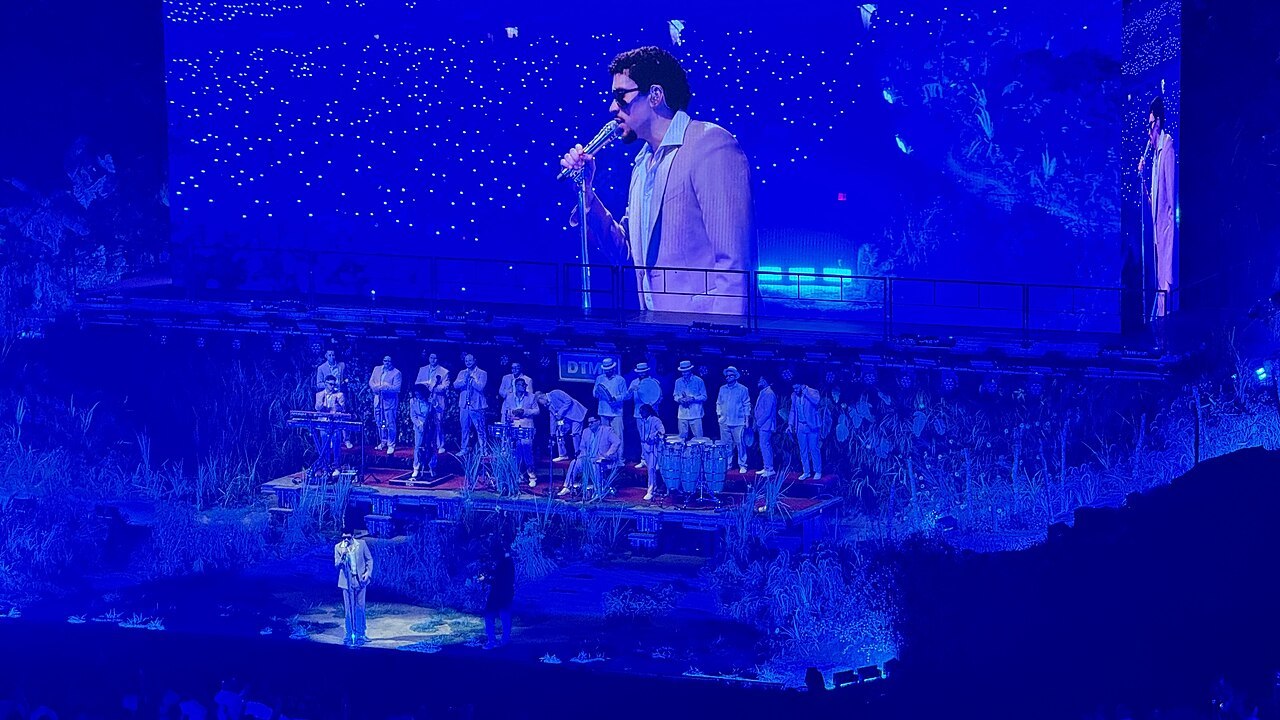
Bad Bunny's iconic Super Bowl halftime performance, which raked in 4.157 billion global views within 24 hours, and Grammys win for Album of the Year were historic victories for Caribbean and Latine visibility, music, and storytelling. But they also revealed, yet again, how so many publications and platforms want to build an audience on the backs of Latines while, at the same time, roll back our already single-digit newsroom numbers.
I was fortunate enough that, after posting on social media that I was looking to place a timely essay about Bad Bunny's Super Bowl spectacle, a fellow Latine journalist and friend responded, giving me the opportunity to write it for the Los Angeles Times. Unfortunately, while the De Los team at the LA Times proved what a difference it makes in quality when you have a Latine team tackling pieces about our culture, other publications fell short.
Instead of hiring a writer who has first-hand knowledge about Puerto Rico, Forbes had a non-Latine writer pen an article explaining the context behind Bad Bunny's halftime show, where she mistakenly said the coquí was the same type of frog as the sapo concho (the latter of which is endangered and has become a mascot for this era of Bad Bunny's music through the character of Concho). It wasn't until I alerted her about the error that the piece was amended, after it had been circulated for more than a day. Other sites, such as Stereogum, Parade, The New Yorker, and The A.V. Club, opted to have their own non-Latinx staffers write about the performance, rather than have culturally competent journalists do so, resulting in key details being lost in their work.
“The roll call of flags Bad Bunny clinched his performance with should be the message received up the media chain”
Anyone can celebrate Bad Bunny's accomplishments. But when writing about the meaning behind something that requires so much insider knowledge of our culture, it's vital to hire someone who can speak to it. The lack of background was evident with U.S. writers who didn't view the performance as blatantly political.
Ricky Martin, who is gay and one of the first Puerto Rican pop culture figures to go global, performed Bad Bunny's impassioned ballad warning of the erasure of Puerto Rico's culture if it were to become a state like Hawai’i. Considering that Puerto Rico is governed by the pro statehood and Donald Trump-ally Governor Jenniffer González — this was a major political message that none of these non-Latinx writers reflected in their coverage.
Becoming a 20-minute “scholar” through Google or ChatGPT won't cut it. It won't instill the depth of pride generated to see Bad Bunny walk out with our original sky-blue flag, which was outlawed after Puerto Rico was made a U.S. territory, until 1957. It also won't convey the direct experience of what it's like to lose power regularly, even during perfect weather, because the private U.S.-Canadian power company that controls the island's electrical grid has no interest in fixing its infrastructure post-Hurricane María and continues to impose exorbitant electricity bills.
As Latine artists gain more opportunities and an equal playing field with those who are not, the shortcomings of publications that failed to properly prepare to cover this triumphant moment, and its continuing reverberations, cannot be ignored; nor can the numbers.
According to 2022 Pew Research Center data, approximately 8 percent of U.S. journalists are Hispanic or Latine. We're underrepresented in newsrooms because we’re not offered the same career opportunities as others, a situation that’s been compounded by all of the gutting and “re-organizing” over the past year.
As much as we Latines look out for each other, real change comes from pressuring the gatekeepers, who will ultimately lose out to platforms that integrate and respect Latine staff who bring authenticity, knowledge and experience in a western hemisphere that looks increasingly like us. The roll call of flags Bad Bunny clinched his performance with should be the message received up the media chain.
More articles by Category: Arts and culture
More articles by Tag: Bad Bunny, Latines, Latinas, Latinos, Hispanic, Latinx


