















Impunity Is Not Forever, If We Fight
Alicia Partnoy knows firsthand the horrors of authoritarianism and dictatorships. Partnoy was among the 30,000 people disappeared, tortured, raped or murdered during Argentina’s military juntas between 1976 and 1983. (Argentina’s current president is among the deniers of that 30,000 number.)
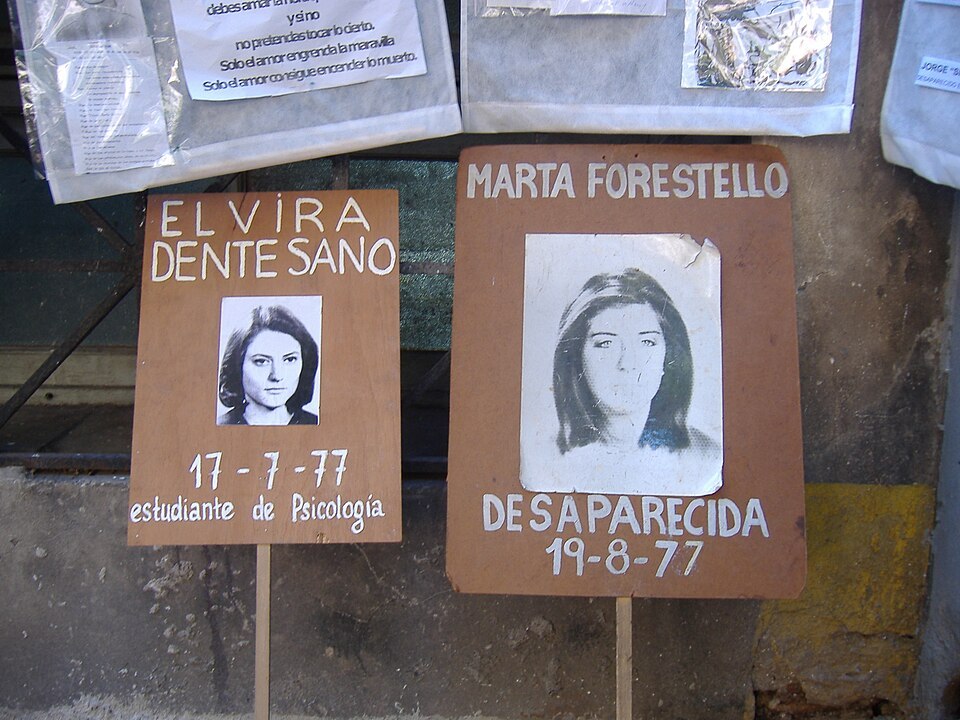
For years, military men, often in roving, unmarked cars, kidnapped people they suspected of being dissidents — students, labor organizers, lawyers, journalists, pregnant women, among so many others.
The atrocities included military officers stealing babies, hundreds of who were born in captivity, and then killing their parents. The murders of people abducted were commonly done through “death flights,” where they were dropped from planes into rivers or the Atlantic Ocean. Victims included early founders of las Madres de la Plaza de Mayo, mothers who each week protested the disappearance of their sons and daughters, and two nuns. They were thrown into the sea alive.
A 21-year-old student activist at the time, Partnoy was kidnapped in early January of 1977 in front of her toddler, who the military threatened to kill. Her husband was tortured and her best friends were killed. She was held blindfolded at a dissident concentration camp called the La Escuelita, the Little School, for months, then jailed with no charges for more than two years. Partnoy’s memoir, The Little School: Tales of Disappearance and Survival, has been used as evidence of torture, stolen children, and killings during trials against perpetrators.
In 1979, she and her daughter fled as refugees to the United States. Here, President Jimmy Carter rejected the politics of his predecessor Gerald Ford and former Secretary of State Henry Kissinger, who had backed ruthless military juntas throughout South America. Carter criticized human rights violations, cut down aid to Argentina, and used other leverage to oppose the junta there.
While military officials in Argentina destroyed files to evade accountability for their atrocities, this would not derail justice for some. Partnoy shared her reflection with IDAR:
“She was worse, more subversive than her husband, we couldn’t try her in court…for lack of evidence,” proclaimed in his defense General D. Abel Teodoro Catuzzi, referring to my testimony, in which I described 105 days as a disappeared person in an extermination camp he had ruled.
He spoke in 1987, when the military controlled the trials against their 1976 to 1983 genocide. This criminal spent a few months in prison but “biological impunity” (his death) allowed him to avoid trials in 2012. When I testified then, Catuzzi’s accomplices sat in the second row. A shawl, a gift from my compañero, and the presence of many relatives and friends of the victims I had been held captive with at a camp called “The Little School,” protected my back from the perpetrators’ hatred.
“At that moment, I felt as if all my disappeared friends had just died”
I was surprised to hear myself testify that while we were disappeared –a torment for our families– our own torture increased because for us, all of our loved ones had disappeared. I was also in shock at my own reaction at the end: I could not stop crying in the arms of the witness support psychologist. At that moment, I felt as if all my disappeared friends had just died. After this immense anguish, I felt a sense of accomplishment for the duty fulfilled.
This historic moment that culminated with the sentencing of perpetrators would not have been possible without the tireless work of the Children for Identity and Justice, Against Forgetting and Silence, the Grandmothers and Mothers of Plaza de Mayo, and the courageous lawyers pursuing the justice that was eluded in the legendary trials featured in the film Argentina, 1985.
This victory gives me strength when today, in Los Angeles, where I live after my forced exile, I witness how my immigrant neighbors disappear under the orders of a government elected, yet acting as a dictatorship. However, with my soul shaken by the memory of my 1977 ordeal, I remember that, if we fight, impunity is not forever.
More articles by Category: International, Violence against women
More articles by Tag: Kiss of the Spider Woman, Argentina, JLo, Military, junta, disappeared, Dirty war, accountability, Justice, Madres de la Plaza de Mayo, Alicia Partnoy, Gerald Ford, Kissinger, Jimmy Carter


