















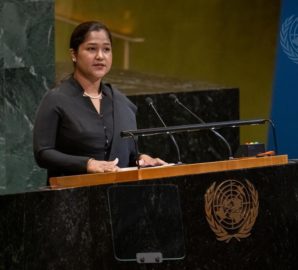
Following the United Nations' High-Level Conference on the Situation of Rohingya Muslims and Other Minorities in Myanmar, international human rights lawyer Michelle Onello argues that no solution to the crisis is valid or viable without the meaningful, safe, and inclusive participation of Rohingya women.
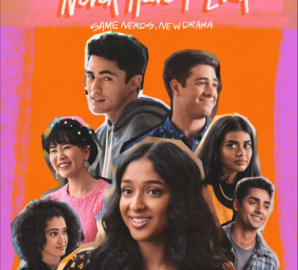
I now see the representation I once revered could not be more dissimilar to reality.

It may surprise many that women like Farida — who once dreamed of being a nurse — would join a violent extremist group, but their reasons are varied and complex. And it takes a holistic state response not only to stop them from joining but also to pull them out.

On August 15, as India was celebrating the 75th anniversary of its independence, 11 men convicted of gang-raping a Muslim woman in 2002 were granted premature release from their life sentences.

Malaysian lawmakers passed the country’s first-ever bill criminalizing stalking in early October.

In the Philippines, there aren't enough resources to go around to support a coordinated strategy against child sex trafficking in online spaces.

It has been five years since the Marawi Siege ended, and while the government has steadily completed infrastructure projects at the former heart of the firefights, the Maranao people have not been able to return to their ancestral lands. Many suspect that the government’s plans to commercialize the city are what's really preventing the IDPs from returning.

The competition for the presidency, between the only son of a “strongman” and a widow, resonates with the enduring friction between a woman-centered native culture and the infrastructure of patriarchal political dynasties bred by colonialism in the Philippines.

In a culture that can see girls as a burden, many women opt to abort their female fetuses — even though it's illegal.

South Korean politics took a right-wing, anti-feminist turn during the presidential election in early March.

We recently had the chance to chat with Gao over email about creating such an emotional memoir, her early memories of Wuhan, and her message for her Asian American readers.

It was not easy for 21-year-old Mehak to convince her parents to support her dream of becoming a rapper.

Philippine President Rodrigo Duterte's "heavy-handed and punitive" — and exceedingly militarized — pandemic strategy largely accounts for why the Philippines continues to suffer nearly two years on.

"TIBBI," a telehealth solution meant to digitize the operations of lady health workers (LHWs) in Pakistan for better efficiency, has been ill-received by their patients: workers reported being yelled at and thrown out of homes for being vulgar and recording information on their devices.

Across western Nepal, tradition remains stronger than law as villagers find new ways to partake in “chhaupadi,” the age-old tradition of exiling women during menstruation because periods have been long considered impure.

When actor and dancer Avantika first had the chance to read the script for Spin, the new Disney Channel film about an Indian American teen named Rhea who discovers her talent for DJing, she immediately knew she wanted to be involved.

Myanmar's garment worker union members are not only fighting for an end to military dictatorship; they are also fighting for the elimination of systemic harassment and violence that has plagued their lives long before the coup.

“Skateboarding is usually considered to be a boy’s sport, but we were meeting so many girls and boys who were taking to skateboarding and really thriving at it."

Without systematic laws and labor protections to acknowledge and defend their rights, LGBTQ+ persons working in Sri Lanka's economic zones are left at the mercy of their employer's biases.

Seventeen-year-old Gurnoor Suri began her activist journey at the young age of 7 when she began donating her belongings to an orphanage she stumbled upon on her way back home from school.

The Philippines is witnessing a rise in women leading suicide missions, leaving the government challenged to simultaneously understand them and anticipate their next move.

When Cyclone Winston ravaged the island nation of Fiji in 2016, it came with 185-mile-per-hour winds and a massive storm surge that displaced thousands, and took away the livelihoods of thousands more. Amid the downed palm trees and debris, people became hungry and desperate.
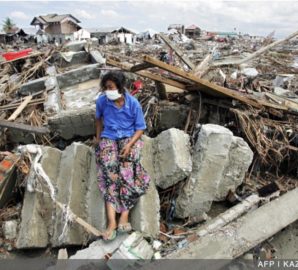
Poor countries often have broken governments, shoddy infrastructure, and few systems in place to help when there is a mass crisis — which is why the U.N. Development Program found that there is a severe difference in how people are harmed during a climate disaster, depending on whether they live in a developing or rich country.

A hurricane hits. The terror and stress caused by the imposing wind and rain affect nearly everybody’s mental health, but perhaps none more so than expectant mothers. Then that stress and the pollutants whipped up by the storm wreak havoc on their bodies, and their pregnancies.

Ketaki Tyagi has been a staunch climate change activist since the age of 14.