















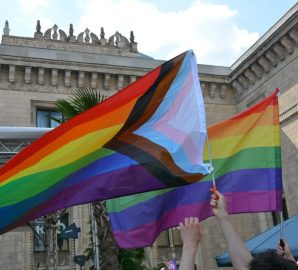
A wave of anti-LGBTQ state laws, and the recent Fulton Supreme Court ruling, show the need for the federal civil rights law that is awaiting Senate action.
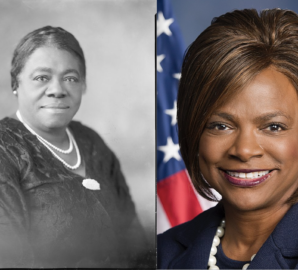
Despite the unfulfilled promise of the 19th Amendment, Black women have traveled an impressive distance over the last century, and continue to exert outsize political influence.
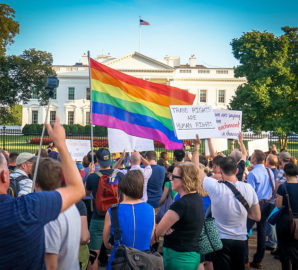
The House passed a comprehensive rights bill last year, but it died in the Senate. A new proposed compromise would ban discrimination — but with a major loophole.

As I watched the mainstream media cover this day this year, I noticed that hardly any mentioned the female leaders of a famous 1990 protest.

Five decades after that contentious moment in the fight for equality, it is still legal for employers to fire LGBTQ+ employees just because of their identity in most parts of this country. That may soon finally change.

Who gets to tell stories of black trauma and how and when should they tell them?

The 30-year rule of Sudan’s president Omar Hassan al-Bashir was ended on Thursday when the military announced it had finally unseated their leader, who governed with an iron fist and is wanted on charges of genocide.

On February 20, Smollett was charged with his first felony, for filling out a false police report, and on March 8, he was indicted on 16 counts of making false statements to the police.

On Tuesday morning, in a 5-4 decision, the Supreme Court lifted two lower court rulings that had prohibited Trump’s ban on transgender military service members from coming into effect.
At the end of September, the nation’s attention turned to Supreme Court nominee Brett Kavanaugh and the now-infamous hearing regarding Dr. Christine Blasey Ford’s allegations of sexual assault against him. While that Supreme Court-related news was obviously worthy of attention, it caused many to overlook the fact that just days later, the Supreme Court began its October sitting on the first Monday of the month.

While social media is helping to encourage young people to vote in record numbers, the actual process of voting is exceptionally digitally inept.

The stories of the silenced matter, even when the outcome of sharing them are not necessarily concrete.

Higginbotham has covered topics including death, sex, and divorce. Recently, she told the FBomb about her newest book, Not My Idea, which tackles racism and white privilege, and is available now.

On June 4, right at the beginning of Pride Month, SCOTUS released their decision in Masterpiece Cakeshop v. Colorado Civil Rights Commission: the court sided with the baker.

We must be intentional about preventing the erasure of black women’s history.

The fight against injustice will always be long and often discouraging. The only way to persist is to choose a cause you feel that your life—and the lives of others—depends on, one you can speak to from (for lack of a better, less cheesy phrase) the heart.

Harper was an outspoken activist for decades on abolition, temperance, public education, voting rights, and women’s equality. Why isn't she a household name?

22-year-old Tyler Bryant, a senior at Alabama State University and president of the Alabama College Democrats, explains the efforts many students made on the ground to mobilize young voters and black voters to help Jones win.

Joe Arpaio, according to Trump, was the one cheated and attacked by the criminal justice system — not his victims.

Detroit, directed by Kathryn Bigelow, takes place in the midst of the infamous 12th Street riot, which was sparked after the police raided an unlicensed club for African-American veterans in 1967....

Ava DuVernay has never been afraid to bring issues like race, the unjust U.S. “justice” system, mass incarceration, and the criminalization of African-Americans and other PoC to the forefront of her films. From the Oscar-winning film Selma to the highly acclaimed 2016 Netflix documentary 13th, DuVernay has examined how the criminal justice system is actively used as an oppressive tactic to repress and discriminate against the Black population....

