















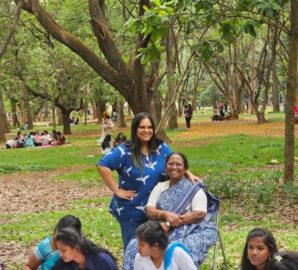
Dalit women in India, who face compounded marginalization due to both caste and gender, are working across generations to make sure their movement evolves alongside the women it serves.
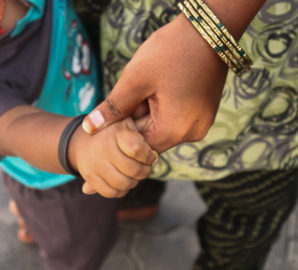
Isolated agrarian communities in the Indian state of Tamil Nadu were hard hit by the pandemic, experiencing increased poverty, the diversion of savings toward healthcare, and prolonged illness, forcing families to pull their daughters out of school and marry them off. Years later, attendance rates haven't recovered, and child marriages haven't subsided.
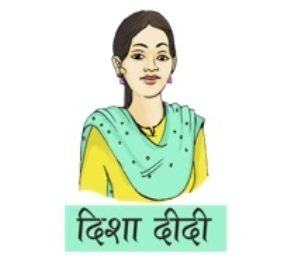
New tools are helping to fill a critical gap in information and education about sexual and reproductive health and rights.

Millions of women tolerate abuse every day due to fear of the cultural stigma of getting help and lack of access to resources available to help them.
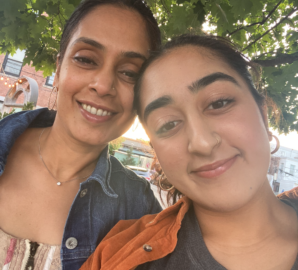
With every generation, whether through leaps, bounds, or the smallest of steps, women of color push the parameters as far as they can, terrifying their mothers, who are fearful of what they will face as they do so.

Villagers often work in the mines, one of the only employers in Budhpura, and nearly all of them are eventually diagnosed with silicosis, a fatal and incurable lung disease. With their husbands gone and no alternative income sources to support themselves and their children, widows join the same profession that killed their husbands.
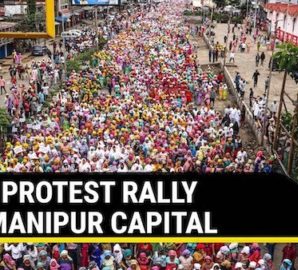
Thousands of women have been leading protests in the northeastern state of Manipur, India.

Despite challenges, women-only cab service providers are hopeful that they can continue to expand.

At long last, same-sex marriage could soon be recognized under Indian law. As of April 18 of this year, a total of 18 petitions have now been introduced to the high court to legalize same-sex marriage.

While India is one of the few countries yet to criminalize marital rape, the high court recently ruled that victims of marital rape are entitled to a safe and legal abortion, establishing in Indian law that non-consensual sex can and does exist among married partners.

On August 15, as India was celebrating the 75th anniversary of its independence, 11 men convicted of gang-raping a Muslim woman in 2002 were granted premature release from their life sentences.

After a scathing experience in one of India's top media houses, Meena Kotwal, a Dalit journalist, founded The Mooknayak, an independent online media outlet that reports on caste oppression and systemic violence against marginalized communities across India.

Across South Asia, women praying in mosques is considered a taboo, but a group of Muslim women from all across India are working to challenge those biases and increase women’s access to mosques.

Anti-Muslim violence and hate speech have become normalized under the ruling Hindu-nationalist Bharatiya Janata Party (BJP), but activists say that the attacks against India’s Muslims have ratcheted up over the last year — particularly, against Muslim women.

Using funds from her own pocket, one retired schoolteacher has been providing free education for children in one Indian slum for the last 13 years.

We had the chance to ask Nagendra over email about her debut novel, the changing role of women in India in the 1920s, and how she worked to include a discussion of colonialism and feminism in her work of crime fiction.

Last September, as India braced itself for another deadly Covid-19 wave amid the upcoming festival season, “La Beauté & Style salon” — the country’s first-ever salon run and managed by trans men — quietly opened its doors in the heart of a bustling market in Ghaziabad, in the capital of New Delhi.

Sanitation work in India still involves illegal manual labor, with as many as 1.3 million Indians from certain caste groups employed as 'manual scavengers,' who load waste onto baskets or metal troughs to carry off for disposal. Not only is the work detrimental to their long-term health, but it’s also a cause for inhumane discrimination, which not only affects how they’re treated out in society but also their pursuit of alternative livelihoods.

For nearly four decades, Baba Wayil, a small Muslim village situated on the foothills of the snowclad Zabarwan Range in Indian-administered Kashmir, has cultivated fame for its blanket ban on dowries and lavish weddings.

New proposed legislation from Uttar Pradesh, the most populous state in India, is being criticized by population and public health experts as not only unnecessary but discriminatory—particularly, against the state’s Muslim minority.
More than 80 women had their names and pictures posted without their consent on the app’s “deals of the day.” Rather than hosting actual transactions, the sole purpose of the app was to humiliate its subjects.
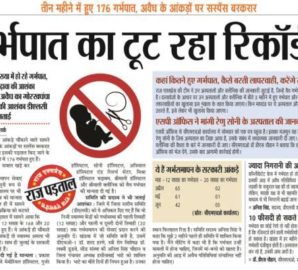
A new analysis of print, digital media, and entertainment has found that coverage is heavy on sensationalism and moral judgment, and light on factual information.

When actor and dancer Avantika first had the chance to read the script for Spin, the new Disney Channel film about an Indian American teen named Rhea who discovers her talent for DJing, she immediately knew she wanted to be involved.

Women who participated in anti-CAA protests nearly two years ago continue to be targeted by law enforcement, bearing the full brunt of the security apparatus or facing aggressive intimidation.

In Kashmir, a longstanding history of mistrust with the Indian central government stands in the way of more people getting vaccinated — including pregnant women, who are among the most vulnerable to COVID-19.