















In Rural Tamil Nadu, Child Marriage Was Already Rampant. Then Came the Pandemic.
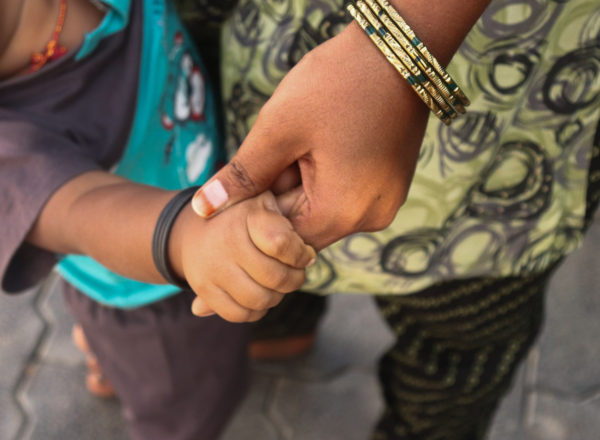
Erode, India — Pavithra* was a 12-year-old kabaddi player and a voracious reader, who’d dreamt of one day becoming a doctor, when the arrival of the Covid-19 global pandemic forced the world into lockdown, sending children like her home from school and parents from their workplaces.
In that first year, she focused on online classes. But the economic strain of the pandemic on her family pushed Pavithra into the workforce by the second lockdown in 2021—a no less dangerous time to “return to normal,” even with the rollout of the country’s vaccine drive. Within months of starting a low-wage job in an illegally-run garment factory, to earn a meager Rs 170 a day (less than $2 USD), Pavithra left school entirely.
Thalavadi, where Pavithra lives, is one of the eight blocks in the Erode district of Tamil Nadu, situated in the Eastern Ghats mountain range bordering Karnataka. In this hilly town, access to education for girls is already limited, due in large part to the cultural prevalence of child marriage. The terrain, underdevelopment, and even language allow for child marriages to go unchecked and underreported, hindering the impact of any government-led efforts to prohibit the practice. Coupled with a global health crisis, stymying the tradition of child marriage was nearly impossible. It remains so today.
In 2024, Erode recorded 150 child marriage cases — the highest in the state — revealing systemic gaps in monitoring, outreach, sex education, and policy implementation.
Two years after dropping out of school, and a mere two days before her 15th birthday, Pavithra married a 20-year-old man from her community. By the following year, she was pregnant.
According to research on the increase in child marriage in the state during the first two years of the pandemic, the main factor driving the rise was economic distress. Worryingly, it also noted that girls who worked were particularly sought after for marriage.
Limited employment during the pandemic resulted in increased poverty, the diversion of savings toward healthcare, and prolonged parental illness, forcing families to pull their daughters out of school and marry them off. Girls like Pavithra.
It was only when Pavithra visited a local primary health center that doctors, then police, discovered her marriage. Sexual assault of a child is a criminal offense under the Protection of Children From Sexual Offences (POCSO) Act, 2012.
Her husband was charged under that act, as well as under the Prohibition of Child Marriage (PCM) Act, 2006. His case remains under trial, but he has not been detained.
Pavithra, now 17, is tasked with keeping their home and caring for their one-year-old son. If her husband is found guilty, he faces up to 10 years’ imprisonment, and Pavithra would need to return to the workforce to provide for her son. But without an education, her only prospects are in the unorganized labor sector, making poverty wages to get by.
The cruel irony of Pavithra’s future is that her best chance at survival now is the state finding her husband not guilty of committing crimes against her.
An underreported epidemic
In Tamil Nadu, data from the directorate of social welfare revealed that child marriage cases spiked by 45% in 2020 compared to 2019, and at least 3,000 marriages were prevented during the first phase of lockdown.
By the third year of the pandemic, nearly 7,000 child marriages were halted by state officials, according to the Tamil Nadu Commission for the Protection of Child Rights.
Concurrently, the state noted a sharp increase in child pregnancies. According to state government data viewed by WMC Women Under Siege, Erode recorded 348 pregnancies in 2021, 472 in 2022, and 431 in 2023—registering no less than 12 pregnancies in any given month over that three-year period.
Far from coincidence, the rates of pregnancies and child marriages are intertwined. Either parents force their daughters to marry once they hit puberty (in accordance with their cultural traditions), or the children are forced to marry to avoid backlash from the community once they become pregnant (provided that the husband is from the same caste). Pavithra was groomed by her now-husband for a year before eloping with him.
The real number of pregnancies is feared to be higher, as unless girls like Pavithra visit hospitals during their pregnancies, no one would know that they were married.
The control of caste
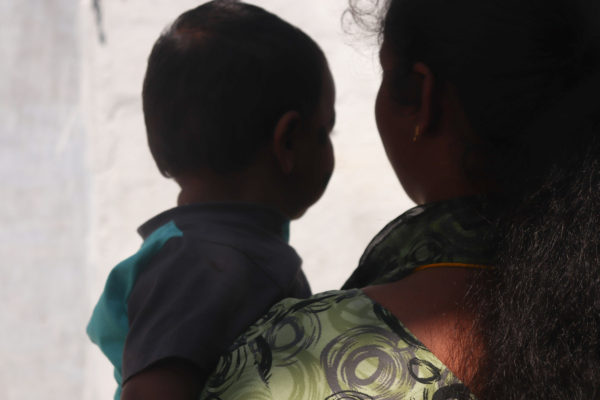
In agrarian communities in the more remote parts of the country, like Thalavadi, the role of caste is central to their choices (or lack thereof, in the case of women and girls). For girls, farm work and housework are of higher value than an education is, and the tradition of child marriage is widespread.
“To control their autonomy and right to choose partners, they have imposed restrictions such as limiting access to education,” said S. Balamurugan, national secretary of the People’s Union of Civil Liberties, who has been working with these communities for nearly three decades.
Pavithra is from the Arunthathiyar community (as is her husband), which is categorized as a “Scheduled Caste.” Scheduled Castes (SCs, or Dalits) are subjected to social exclusion and discrimination within India’s traditional caste system (The term “Scheduled Castes” is also a constitutional category used by the Government of India to identify these historically disadvantaged communities for affirmative action and legal protections).
“During the Covid years, girls from agrarian communities slowly disappeared from the school education system,” one high school headmistress told WMC Women Under Siege. “It was tough to reach them or their parents, given lockdown restrictions.”
The same phenomena was observed among girls from “Most Backward Classes” (MBC) and “Backward Classes” (BC), including communities such as Naickers, Kurumba Gounders, and Lingayats. These communities are classified by the government as socially and educationally backward and are also included in affirmative action measures aimed at promoting their welfare.
Anita*, a Lingayat woman, allowed her 17-year-old daughter to finish high school but prohibited her from pursuing a degree. “We cannot spend money for their studies,” she told WMC Women Under Siege. “They need to learn farm work before their marriages. There would be no respect for us in their in-laws’ houses if they don’t do any work.”
Now, Anita's daughter joins her in working in a rose field to earn Rs 300 ($3.27 USD) each per day (Rs 70 less than their male counterparts).
Anita already found a match for her daughter and had attempted to marry her off, but officials halted the engagement. Now Anita must wait for her daughter to turn 18 — the legal age of consent in India — to avoid further intervention by the state.
“Can you imagine the pain we may face if anything untoward happens to her?” Anita asked, the “untoward” being the possibility of her daughter studying in college and running the risk of forming a relationship outside the community.
Because agrarian communities are mostly endogamous — meaning that members within the group only marry fellow members — to ensure their own protection, “girls who find a partner outside their community risk facing caste-based violence, including killings,” Balamurugan said. “What we see today is a cultural reflection of a patriarchal mindset.”
A hidden health crisis
While Indian law prohibits child marriage and sex with a minor under two separate acts, sources say that they have limited impact in practice, especially when it comes to these communities.
Doctors in Thalavadi, noting a pattern of child marriages after the girls become pregnant, said that often parents will force their children to marry to avoid social stigma (even if the husband is from the same community). And reaching schools and panchayats, or elected local governance bodies, to offer health education on pregnancy and contraception is difficult, as taboos and strict community norms hinder their efforts.
“There are no healthy conversations around sexual and reproductive health,” said Punita Kumar, a public health researcher and social worker.
And pregnancy carries significant risks to a young body. “Since girls’ reproductive organs are not yet fully developed, they face a higher risk of postpartum hemorrhage,” said Dr. B. Kalpana, chairperson of the Infertility Committee of the Federation of Obstetrics and Gynecological Societies of India. “Even normal levels of bleeding can become excessive given their age.” Repeated abortions and childbirths risk cervical cancer later in life, she added.
Kalpana further noted that their infants are often underweight and premature and may face health complications later in life.
The national Adolescent Friendly Health Clinics (AFHC) launched in 2014 to give awareness and counselling to the youngsters. But they’ve had limited success in places like Thalavadi, where even health care workers are subject to the taboo of discussing adolescent sexual health.
“We need region-specific approaches given the complexity of cultural practices and rigid caste structures,” said child rights activist A. Devaneyan.
“The government should identify hotspots in Tamil Nadu and educate schoolchildren and communities about gender sensitization, gender justice, and reproductive health in their own language, rather than in an administrative tone.”
The right to dream
Caste and class have historically played a role in women’s education in India. In 2011, the adult literacy rate for women of Scheduled Castes was less than 50%.
Though some efforts have been made to improve women’s literacy in areas like Thalavadi, women still struggle to move beyond rigid social norms to pursue their educations. And what limited progress was made to do so all but collapsed from the pandemic, putting girl children at higher risk of child marriage and pregnancy.
While Pavithra’s husband encourages her to think about completing her education, she remains firmly opposed. “I need to be at home to take care of my son,” she said.
“Women are intergenerationally conditioned [to believe] that there is nothing to aspire for beyond motherhood,” said Archanaa Sekar, a researcher and feminist activist. “Since there are limited livelihood opportunities available, these young girls just follow the paths their mothers walked.”
*Names have been changed, and their villages withheld, to protect their identities
More articles by Category: Gender-based violence, Girls, Health, International, Violence against women
More articles by Tag: Child Marriage, Sexualized violence, Violence, India, Caste


