















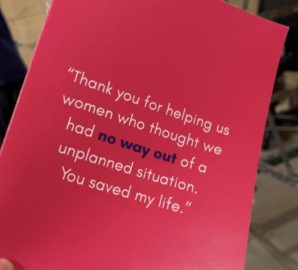
“I planted abortion pills across Malta. Here is why.”

After nearly two years since the Russian invasion of Ukraine, the unchecked exploitation of Ukrainian women abroad — who are still displaced in different European countries, as well as internally, in Ukraine — is poised to create a crisis of sexual abuse and sex trafficking.

In February, Spain’s parliament passed a series of laws that brought many improvements to women’s and transgender people’s lives.

In October, the United Nations Committee Against Torture issued a final decision in Elizabeth Coppin v. Ireland that once again dashed hopes of justice for survivors of one of Ireland’s worst regimes of torture and abuse.

Women Under Siege spoke with American anti-war activist Jody Williams, Yemeni human rights activist Tawakkol Karman, and Liberian peace activist Leymah Gbowee about their trip with Nobel Women's Initiative to Ukraine, the stories they heard there, and how Ukrainian women are fighting for peace in their country.

Progress has been slow and unsteady, but activists are teaming up with elected officials to raise awareness and change laws.

The events following the February 24 Russian invasion of Ukraine brought despair for thousands of elderly and disabled civilians who were unable to flee. Russia has been claiming strikes on cities all around the country, and the fighting has left countless civilians injured, helpless, and desperate in a war zone.

Only one gynecologist serves the 8,000 to 13,000 people of reproductive age who need those services in the municipality of Shuto Orizari in North Macedonia’s capital city, the only municipality with a Roma majority in the country. And as of last month, he’s no longer on duty.

Journalists and activists in Bosnia and Herzegovina are routinely harassed, threatened, and intimidated for their work with refugees and migrants entering the country via the Western Balkan route.
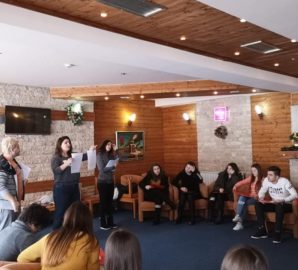
A new pilot program will be introduced in the upcoming school year to teach sex education to high school students in North Macedonia — and right-wing backlash has already arisen to challenge its implementation.

When a Telegram group called “Public Room” was discovered sharing private images and contact information of countless women and girls from across North Macedonia without their consent, the outrage was swift, but authorities' lackluster response to online crimes against women signals a critical need for more protections — and better enforcement.
An interview with Anna Simone, a sociologist and a professor at the University of Roma Tre, about how women and men are scrutinized differently by the Italian media and public.

Protests erupted this week in response to a new abortion ban, but the government has been attacking women’s and LGBTQ rights for years.

The crises that compel refugees to attempt the dangerous journey to Europe haven't ended. Many, including pregnant women, continue to risk drowning, meeting violent pushbacks at sea and land borders, living in unsafe conditions in the camps, and facing racist violence and discrimination.

A recent Amnesty International report released on December 10, the 70th anniversary of the Universal Declaration of Human Rights, reveals that women, particularly the most marginalized women in the UK, have been disproportionately affected by austerity measures implemented in 2010.

Greece is experiencing a refugee crisis — and over half of these refugees are women and children waiting in camps to reunite with relatives or have asylum status approved by the Greek government. The Azadi Project teaches female refugees expertise in jobs related to multimedia communications and storytelling in order to promote their integration into the local labor force.

Meghan Markle will be the first nonwhite woman ever to marry into the British monarchy. But is this fact a point of progress, or does the frenzy surrounding Markle’s race just further reinforce harmful stereotypes surrounding beauty and colorism?