
















Between 1996 and 2000, former President Alberto Fujimori oversaw a family planning program under which more than 280,000 women and men were sterilized in Peru — mainly in poor, rural areas. Decades later, victims are still awaiting justice.

There was a lot of “calling for” this and that, with little in the way of financial or legal commitments for women suffering in the climate crisis. Even the “calling for” part was less than robust.

Kenya’s Forest and Wildlife Services are carrying out brutal and forceful evictions of the indigenous Ogiek people from their homes in the Mau Forest, in the country’s Rift Valley.

This week saw the Third March of Indigenous Women in Brasilia, Brazil. Its theme: “Women Biomes in Defense of Biodiversity Through Ancestral Roots.” Demonstrators took to the streets for women’s rights and to defend their right to Indigenous lands.

Violet Gatensby, a Tlingit artist from Carcross, in Canada’s Yukon territory, startled a room of delegates from First Nations of the Pacific Coast at an Indigenous leadership summit on Lummi territory in Ferndale, Wash., this past week.

In the past 10 years, an environmental activist somewhere in the world was killed every two days. In 2021, three-quarters of such murders were perpetrated in Central America. The perpetrators have been mainly organized criminal groups and governments that want to destroy land for profit, such as through mining, logging, and extractive industries like oil and gas.


Francia Márquez, the country’s first Black woman elected to the vice presidency, is part of the progressive movement taking on a right-wing elite.


A luscious, green canopy outlines Cauca, a mountainous municipality in southwestern Colombia. These biodiverse forests are under threat from the damaging impact of narcotrafficking, and so are the indigenous people defending them. For environmentalist and politician Sandra Liliana Peña Chocué, the price of defending this indigenous territory was her life.

In Chisapani, Ramechhap district, a remote corner in eastern Nepal, the snow-fed Tamakoshi River cascades down the Manthali valley, but residents in upstream villages pray for a few drops of rain. Scorching heat has turned these high hills into a barren landscape.

While precise figures are not known and are vastly underreported, a 2018 study from the Urban Indian Health Institute found that Native American women are 10 times more likely to be murdered than other American women.

When Cyclone Winston ravaged the island nation of Fiji in 2016, it came with 185-mile-per-hour winds and a massive storm surge that displaced thousands, and took away the livelihoods of thousands more. Amid the downed palm trees and debris, people became hungry and desperate.

Our reclaimed pride in indigenous heritage is an opportunity for Latin American immigrants and U.S. First People to work as allies.

While Colombian media covers stories of sexualized violence in almost exploitative detail, it fails to highlight the victims’ ethnicity and race, thereby following a long tradition of obscuring who in the country is disproportionately victimized, as well as hiding the underlying structural causes that leave them most vulnerable.
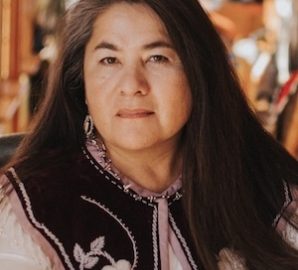
The 19th Amendment didn’t secure the right to vote for Native American women, despite their strong influence on suffragist ideas.

Years after Marawi was liberated from jihadists loyal to the Islamic State, thousands of residents have not been allowed to return to their own land. Now, they face the government’s backhoes contracted to flatten the remnants of their ancestral property to commercialize the city and make it a tourist destination.