
















The federal Office for Civil Rights has closed offices, abandoned many Title IX complainants, and opened investigations that align with the current administration’s political priorities. Students in need of redress must turn to alternative routes to demand accountability.
Although it may be disheartening to look at the lack of support and education from schools, it is inspiring to look toward the young voices pioneering a new wave of advocacy to protect themselves and their peers.

In the face of poor enforcement of Title IX protections, students are advocating for themselves when it comes to addressing sexual harm at school, off campus, and online.

Currently, 18 states ban trans girls from participating in girls’ sports. Often framed as offering “fairness” or “protection,” these insidious laws actually harm all women.

After allegations surfaced that the school’s girls sports teams were significantly underfunded and undervalued, students claimed Campbell violated Title IX, which prohibits gender discrimination in public schools or any program that receives federal funding.

The new report, from the National Coalition for Women and Girls in Education, marking the 50th anniversary of Title IX, affirms the breadth and scope of the antidiscrimination law.
The federal law that prohibits sex discrimination in education is broader than most people realize, and advocates continue to expand its reach.
Next week marks the 50th anniversary of Title IX, the landmark legislation prohibiting sex discrimination in U.S. schools. How close are we to realizing its promise?

Know Your IX, a project of Advocates for Youth — a group that educates and empowers youth to fight against sexual violence in schools — created a guide to Title IX.

When police presence increases in response to incidents of violence, who will protect women from police?
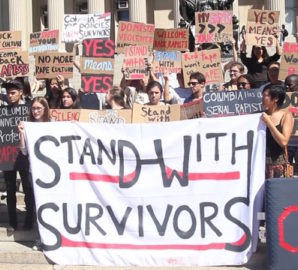
On March 8, The Biden administration took an important step toward changing how schools will handle sexual assault, harassment, and misconduct cases.
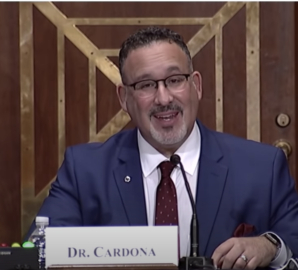
As Biden calls for a review of enforcement guidelines, advocates are pushing the administration to do more than just repair Trump-era harms.

There is a long list of actions the new administration and Congress should take for women and girls, but we can start with six things.
Any plan to rein in the pandemic and its most jarring consequences requires action to support victims and survivors.
The new administration’s actions will be crucial to reaffirming the faith of sexual violence survivors after the damage of the Trump presidency.

School administrators can choose to be proactive in making their schools safer from harassment and assault, or they can wait for their students to force their hands. Either way, they’d be wise to listen to their students.
In November, Education Secretary Betsy DeVos released a proposal for new rules regulating how schools respond to issues like sexual harassment and assault. We are still in the midst of a comment period which could help stop these damaging changes.

On Friday, United States Secretary of Education Betsy DeVos released the Department of Education’s new proposed regulations for Title IX which put the burden of proof on sexual assault survivors to defend their claims of assault.

Several advocacy groups are charging that Education Secretary Betsy DeVos' rollback of Title IX protections is unconstitutional.

A House of Representatives committee has approved a bill that builds on the Trump administration’s erosion of Title IX.