















My fight to push my high school to better handle sexual assault allegations
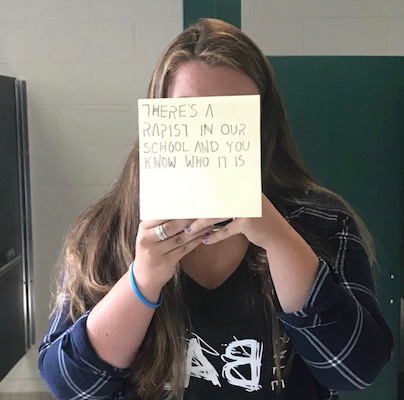
Over the past several school years, multiple sexual assaults have been reported at my high school in Cape Elizabeth, Maine. But the school administration’s investigations into them have been inconsistent — a number of survivors have said that their cases were not handled by the administration in a way that complies with Title IX laws. For example, survivors have claimed that their cases weren’t officially investigated they way Title IX stipulates, or notified about the outcome of their cases if they were investigated.
My school is hardly the only one where students have complained about the handling of allegations. I have worked as a youth ambassador for SafeBAE, a national organization founded by high school survivors to prevent sexual assault among teens, for several years, and through that role I’ve seen just how many schools struggle with how best to respond to allegations of sexual assault.
The scope of this problem in my own community, however, became very clear to me when a small team of students from four schools near my own and I teamed up with SafeBAE to plan the first-ever regional sexual assault prevention summit for high school students in May. The goal of the summit was to educate students and local schools’ faculty on how best to make their schools safe, prevent future harassment and assaults, and help students access support and help and knowledge of their rights after an assault.
When knowledge of my role in planning this summit circulated in my community, some peers at school started to disclose their assaults to me. It was horrible to learn what so many of the people I see every day have been going through without anyone knowing. Everyone who disclosed this information to me came to the summit and attended a breakout session about their Title IX rights in school, hosted by the amazing Know Your IX.
After learning about their rights, and the school’s failure to respect them, this group of students felt empowered to come with me to a school board meeting in June. We were granted permission to speak, and each of us either shared the story of our own assault, or spoke on behalf of a survivor about their perceived lack of support from the administration and challenges they still face every day — like a fear of running into their perpetrator in the halls, hearing rumors spread about them, and the difficulties of just getting through each school day. Every one of us asked the members of the school board to address how seriously lacking current school policies are related to how faculty respond to students’ sexual assault.
The school board members told us that we had been heard and were being taken seriously. Before publishing the video of the meeting for the public record, however, the district first took down the live recording of the meeting that had streamed on the district website and dubbed over the faculty names we had mentioned. That was their entire response. To our knowledge, none of the students or parents who requested to be involved in helping to create a robust sexual assault response policy was contacted to find out how they could better support the school board do this, and they took no action on their own.
So on September 16, several students and I took matters into our own hands. We posted multiple sticky notes in the girls' bathrooms, on which we had written: "There's a rapist in our school and you know who it is." Rumors have long circulated about several serial perpetrators in our school, and everyone knows who they were, but they have still been considered model leaders in our school. They have never been punished, or in any way held accountable, for their actions.
I hoped leaving these notes would create awareness and do something to encourage action toward removing these perpetrators from our school. I do not want any perpetrator of sexual violence to attend my high school (or any other school) and be in the same space as the survivors of their actions every day.
Within an hour of posting them, though, the notes were turned into the office. School staff immediately started pulling everyone who was seen posting them on surveillance tapes out of class for questioning. Over the course of the following weeks, I was interrogated multiple times by school staff and police officers, sometimes without a parent present, and pressured to turn over names of survivors I knew. Not everyone who helped post the notes was identified, and the school also wanted to know their names. I did not share the names of any of these people, but I did admit that I played a part in posting the notes.
On Friday, October 4, a local newspaper broke the story about what I had done and how it had been handled. I had already accepted responsibility for posting the notes, and had been told I would not be punished. But two hours after that piece was published, two other students and I were suspended from school for violating school policies regarding bullying. Basically, I was suspended for “bullying” the serial perpetrators I didn’t even name.
In my suspension meeting, my principal said that every student they had interviewed “knew exactly who the notes were targeting,” which acknowledges that there is a student in our student body widely considered a rapist. And in order to file a bullying claim, that same student would essentially have to identify themselves as a rapist. Why isn’t that the bigger issue than my supposed bullying of a known rapist? That’s not to mention that my school’s bullying policy requires there to be a “pattern of abuse” to qualify as bullying, and that my single sticky note that didn’t identify any particular person is hardly a pattern.
Neither I, nor my allies at my school, will be dissuaded by the school’s paper-thin attempt to silence us. To that end, we hosted a walkout in front of our school on October 7. Students from schools in three surrounding districts came out to support us. Here was our list of demands for our school:
- Expunge records for whistleblowers in regard to these suspensions.
- Provide trauma-informed education on mandated reporting and Title IX for all staff.
- Provide an easier and more comprehensive way to report sexual assault in the school, to be designed with the help of students.
- Introduce a more thorough consent-oriented curriculum, to be designed with students and local sexual assault response services.
- Offer an alternative forum to air grievances that does not rely on the approval of the superintendent and chair of the school board to get on the agenda.
The culture is changing — slowly, maybe, but change will come. School administrators can choose to be proactive in making their schools safer from harassment and assault, or they can wait for their students to force their hands. Either way, they’d be wise to listen to their students.
You can join the national conversation about sexual assault in high school, too. On Thursday, we launched a social media campaign: Share your own sticky note message, tag @safe_bae and use the hashtags #MeTooHS #safebae #survivorssticktogether, and tag three allies of your own.
More articles by Category: Girls, Violence against women
More articles by Tag: Campus rape, Gender Based Violence, High school, Rape, Title IX, #MeToo


