















The rise of the ‘nobodies’ in Colombia
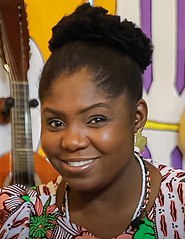
In a conservative, racist, classist, self-proclaimed religious country like Colombia, the election of Afro-descendant Francia Márquez to the vice presidency is seemingly miraculous. That for the first time in our nation’s history a Black Colombiana, a progressive candidate, could be elected to its highest offices has to be understood not simply as a historic milestone, but a turning point that a movement made possible.
For six decades, Colombia had been steeped in armed conflict. The peace accords of April 2016 made evident the desire by many to leave violence behind and aspire to a peaceful society. However, Colombia’s media establishment, which, like in much of Latin America, is controlled by wealthy families and leans conservative, has tried to sink the accords. Much like Trump and his coterie of autocratic followers, who cling to the lie of electoral fraud and use news and social platforms to fan popular discord, former right-wing president Alvaro Uribe continues to malign the accords for ostensibly pardoning the perpetrators of violence, members of the Revolutionary Armed Forces of Colombia - People’s Army (FARC), and demand that they not go unpunished. Despite international praise for the accords —President Juan Manuel Santos was awarded the Nobel Peace Prize for taking on this challenge— the inflammatory media messaging has fueled violence.
The resistance has responded. Masses of Colombians long fed up with the power plays of the ruling elite organized a grassroots campaign to insist on change and successfully brought Francia to the highest echelons of the political structure. With the formidable Gustavo Petro, a former guerrilla, long-time senator, mayor of Bogotá, and now president elect, Márquez is taking on a calcified political structure. They will be inaugurated this Sunday.
“Masses of Colombians long fed up with the power plays of the ruling elite organized a grassroots campaign to insist on change”
Speaking recently to the Colombian press, the Vice-President Elect Márquez addressed the conservative, racist Colombian establishment, saying “I know you have trouble accepting that a Black woman, who worked as a domestic, now will be in the presidential palace…I am the voice for the nobodies…we do not live well here in Colombia. We should all aspire to live joyfully.”
The urgency for new leadership is clear. Indigenous and Black Colombians are among the most vulnerable to armed violence, as dissident FARC guerillas, who refused to lay down arms as stipulated by the accords, and drug traffickers encroach on their lands. Since the signing of the peace accords, 611 environmental activists, both male and female, have been killed, among them 332 indigenous ancestral custodians of mother earth, 75 afro-descent members of community councils to protect the land, and 179 rural leaders, according to a 2021 report by INDEPAZ. This slaughter of people who have stood up to both recalcitrant guerrillas and drug cartels has been accompanied by economic injustices against the poor and the abuse of power.
Last year, Colombian youth took to the streets to protest not only a third round of taxes that would have increased the cost of bread, eggs, and milk by 30 cents but also the 30-years-long impunity of governmental corruption. “I spoke to many young protesters who said they were on the streets because they were hungry, because many had not gone beyond primary school,” related Márquez in an interview with CAMBIO.
Women came out to the streets to cook and feed the protesters. They served with love as entrenched male leaders delivered classic “strongman” tactics. President Ivan Duque mobilized police forces armed with military-style weapons against them, while former president Uribe, whose family has been linked with illicit paramilitary activity, used social media to label the protesters as terrorists and vandals. Some statistics put the human toll of the protests, which lasted two months, at 1,133 victims of physical violence, 1,445 arbitrary arrests, 47 sustained eye injuries, and 43 homicides.
Márquez is shaped by this stark oppression, by the lack of access to basic human services, by racial, class and gender inequality. As a child, she faced the threat of her home being taken from the family. Like many young Colombian girls who are deprived of sex education, she became pregnant at 16. She worked in the illegal gold mines to the last day of her pregnancy, and then as a domestic to support her son.
Her family has buried many young relatives, some victims of the armed conflict, some lost to drugs as they sought economic opportunity in urban centers that offered none. Her struggle to overcome the challenges she and millions of Colombians –referred to as the “nobodies”– face daily has given Francia a deep and pragmatic understanding of what needs to change.
Márquez is a lawyer, a prominent human rights advocate, whose activism against illegal mining attracted international attention and earned her the Goldman Environmental Prize in 2018. She is an unapologetic feminist. "I didn't ask to be in politics, but politics has gotten into our lives and made us miserable,” she said in a recent interview with Semana. “That patriarchal, hegemonic, racist and classist politics is the policy that we want to transform today. The time has come when 'the nobodies' will stand up. The time has come for blacks, indigenous people, peasants, the common people, those historically excluded, to hold hands and move this nation forward.”
“If the 52% of the women of this country bet on a change and a transformation, we can manage to write a new history for our nation”
It’s transformation or sinking further. In June 2022, the Organization for Economic Co-operation and Development (OECD)’s snapshot of Colombia made clear that basic structural economic change is sorely needed. Although the country has made a remarkable recovery from the COVID crisis, it states “…however, both growth and social inclusion are trapped by weak structural policy settings that preclude more than half of income earners from formal jobs and social protection.”
Today, women head more than 40% of Colombian households, according to the National Administrative Department of Statistics (DANE), 2021. It is to the Colombianas, and to the country’s youth that Márquez makes a direct call: “If the 52% of the women of this country bet on a change and a transformation, we can manage to write a new history for our nation that guarantees our sons and daughters a better place. If the young people, who are more than 9 million, take on this challenge, they will be part of the change.”
At the center of Márquez's political platform proposal is the creation of the Ministry for Equality, including LGTBQ+ rights. For marginalized communities, the ministry will provide access to employment and supportive health services. For the Colombian youth, who are in the vanguard in the demand for change, the ministry will develop policy that will allow them to realize their dreams, giving them access to education and health services, to the arts and technology.
Economic inequality is at the core of the entrenched drug-trafficking activity that has plagued the country since the early 1950s. The lucrative business with ready markets both in the United States and in Europe, has pitted both drug cartels and paramilitary groups to vie for control of growing fields, labs, and export routes, leaving peasant communities in the middle of the violence. Márquez recognizes the need for a shift in paradigms when confronting the failed drug policies that allowed so many family members and friends to fall through the cracks. She sees the commercial and health possibilities of cannabis, “as a way of strengthening the very communities that have suffered ineffective and punitive policies.”
There are formidable obstacles to moving the needle against the values of a cloistered conservative political culture, as a 2018 analysis published in liberal daily, El Espectador, makes evident: the country has had 117 presidents in two centuries and six families —López, Santos, Ospina, Pastrana, Lleras and Mosquera are the most repeated surnames in the list of presidents of Colombia. And today presidents are limited to one four-year term, giving Petro and Márquez little time to effect change. Yet, the national presence of Francia allows millions of Colombians in the country and abroad to see themselves represented in the government for the first time.
The call to women and youth to get involved is a “yes we can” moment that has altered the national psyche. Everyday people, the nobodies, who listen to Petro and Márquez's priorities in a bid for equality and peace feel addressed and understood. They have been called to action.
More articles by Category: International
More articles by Tag: Colombia, Francia marquez, nobodies, Afro Latinas, Afro Colombian, Afro descendant, Black, Indigenous


