















Author Harini Nagendra Explores a Young Bride’s Emerging Feminism in 1920s India in “The Bangalore Detectives Club”
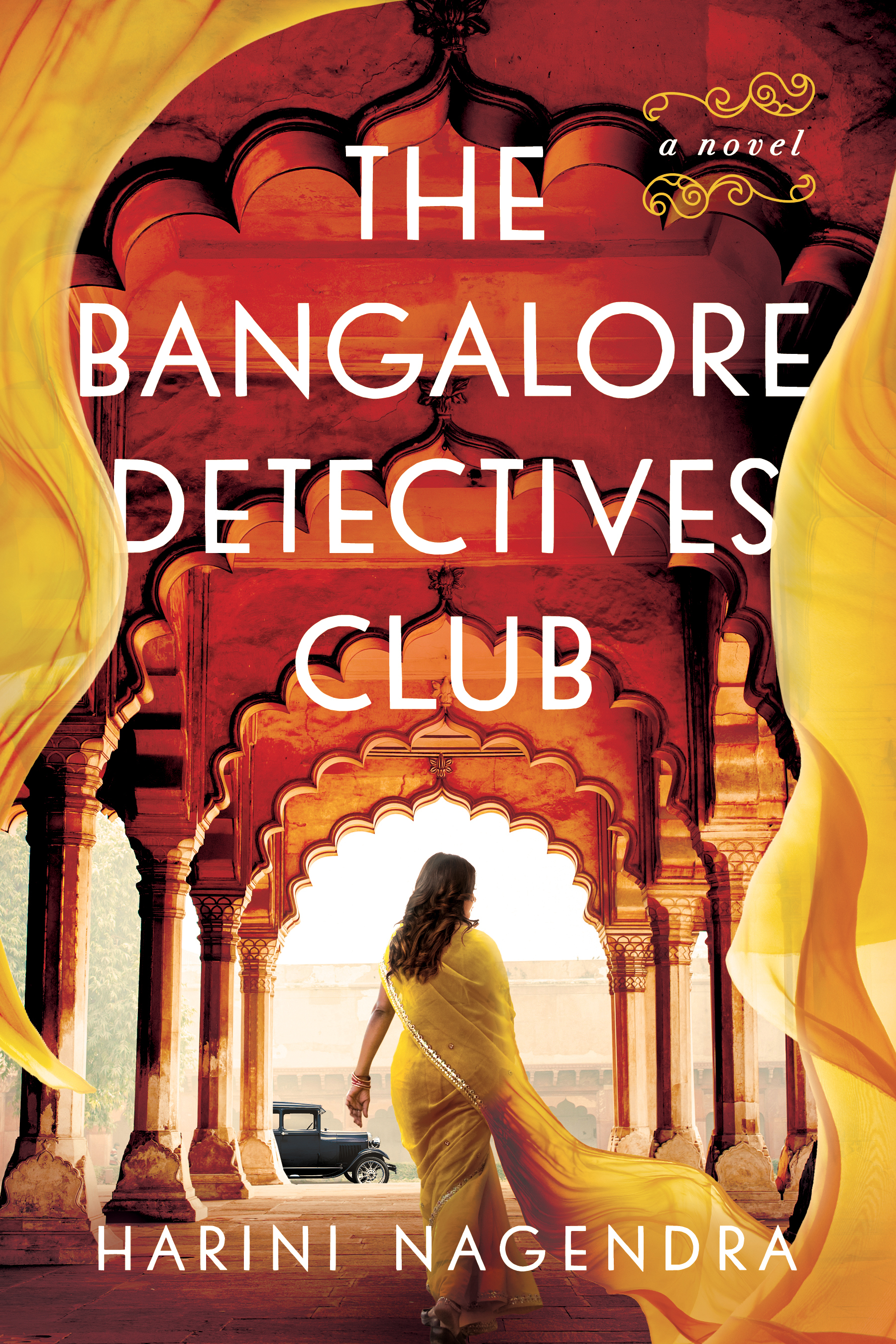
When author Harini Nagendra first began thinking about writing a mystery about a teen bride married to an ambitious doctor during a critical time in Indian history, she knew immediately that she wanted to set her book in the southern Indian city of Bangalore. The Bangalore Detectives Club, which is being released on May 2 by Pegasus Crime, introduces readers to Kaveri, an ambitious 19-year-old slowly adjusting to married life in a big city. When a murder suddenly shatters the calm at her local club, she becomes determined to find out what really happened.
We had the chance to ask Nagendra over email about her debut novel, the changing role of women in India in the 1920s, and how she worked to include a discussion of colonialism and feminism in her work of crime fiction.
The Bangalore of the 1920s is very different from the booming tech city we know today. When did you know you wanted to write a piece of historical fiction, and what was researching this period like?
Bangalore is my favorite city, and I can never get tired of research on it. In my day job as an ecologist who studies the history of the city, I have collected vast amounts of research material on the history of Bangalore — from biographies and oral
histories, archival ledgers and gazettes, newspaper articles, photographs, old family stories, and other sources. Reading these documents is fascinating, and it made me wonder what life was like for people in the past.
The 1920s were the classic “Golden Age,” set between the first and second world wars — a time of strife as well as of opportunity. Historical fiction seemed like a perfect avenue to explore all these ideas and interests. One day in 2007, Kaveri parachuted into my head and demanded that I write a book about her, set in past Bangalore. Researching and writing the book has been one of the most fun things I have done, and I look forward to cataloging Kaveri’s adventures over the next several years and digging deeper into the history of this fascinating city.
Your main character Kaveri, like many women of her generation, was married off as a teen but only recently began living with her husband as a young adult. What was it like researching the changing role of Indian women in the 1920s through Kaveri?
Like most Indians of her generation, Kaveri had an arranged marriage — marrying Ramu, an up-and-coming doctor in Bangalore, when she was just 16. Life did not change much for her in the next three years, until she turned 19 and then moved to his house to start living with him in Bangalore. More than birth, marriage shaped the lives of so many women of those times in India. A young woman could be brought up to live a life of ease, with the freedom to explore other interests apart from the purely domestic realm, but this ease often fell apart once she was married.
On the other hand, many women flourished in their married homes, especially if they had progressive husbands or in-laws who encouraged them to study, work, and develop their identities as individuals of their own accord. I wanted Kaveri, and the women she knows, to reflect the kinds of opportunities available to women of those times, and the constraints and obstacles placed in their way. Kaveri can further her passion for mathematics and learn how to drive because of her husband’s support. But her elderly neighbor, Uma aunty, has never learned how to read or write because she lacked that support, until Kaveri begins to teach her. And women of less privileged backgrounds, whom we also meet, had even fewer choices, often subject to lives where daily abuse was common.
Woman-to-woman, they meet and cut across class and caste barriers, recognizing each other as kindred spirits to form a community of strength through this book, and subsequent books in the series to come.
Like many women — back in the 1920s and now — Kaveri chafes against the gender restrictions placed on her. It’s not until the murder at the heart of this book occurs that she begins really pushing boundaries and questioning the world around her as she investigates. What did you enjoy about creating the character of Kaveri?
Kaveri is spunky and feisty. She loves swimming and mathematics, is very excited when her husband teaches her how to drive his beloved Ford, and in general, pushes back against boundaries wherever she encounters them. But once she marries, Kaveri begins to realize how many restrictions society places on women. Her mother stops her from swimming because it’s not something that married women from “good families” are allowed to do, and her mother-in-law doesn’t want her to continue her mathematics, because she thinks that too much studying makes women’s brains go soft.
Kaveri chafes at the restrictions on her, but like so many women, she was brought up to fit in with society and tries not to make waves. It’s only when she stumbles upon a murder and decides to try and solve it to protect a helpless woman from injustice, that she starts to push against societal expectations in earnest, exploring herself and growing in strength and ability as she does.
Kaveri reminds me of so many women in my family — including my husband’s aunt who swam in a sari in the 1930s, my mother’s grandmother who was an herbal doctor and midwife at the turn of the (last) century, and my own grandmother who, with her older sister, went on hunger strike to demand that her father send her to school. I think we all know formidable women in our families who took charge of events and did things no one expected them to — and we admire them immensely, their spirit living on to become the stuff and fabric of family legends. I enjoyed weaving bits and pieces of the stories of strong women from older generations into the experiences of Kaveri.
It was also interesting to see the relationship between Kaveri and her husband Ramu evolve as the book progresses. This book is the beginning of a new series — what are you looking forward to when it comes to writing future mysteries featuring these two characters?
I just turned in my manuscript for book two, which takes the relationship between Kaveri and Ramu further, by interrogating her relationship with another key woman in her husband’s life — his mother! Will Bhargavi and Kaveri mend their fractured relationship, or will her refusal to give up sleuthing further drive them apart — and what will the tension between the two women do to the relationship between Kaveri and Ramu? There is much to examine here. As the books continue, Kaveri and Ramu begin to settle into the rhythms of marriage like any long-married couple — but with new crimes popping up constantly, their relationship constantly ventures into new and unfamiliar terrain.
I loved writing about the interactions with Kaveri and Ramu, such as their first trip into Lal Bagh to see the zoo, their stroll through the old parts of Basavanagudi to see the rock where Tipu Sultan placed his sentries and lit lamps to guide their path at night, or the time that Ramu surprises Kaveri by making coffee and dosas for her in the morning. I hope to take readers along multiple journeys with this sleuthing duo in the next books in the series.
Finally, Kaveri is a huge Sherlock Holmes fan and often thinks about what Holmes and Watson would do while trying to solve her own mystery. Did you draw on Conan Doyle at all yourself while creating this book?
I am a big fan of Sherlock Holmes, and of Conan Doyle’s other work too! Kaveri is an avid reader of mysteries, and she does draw on her fascination with Sherlock Holmes to think of how she could deduce clues about the murderer by looking at footprints and fingerprints and hearing witness accounts. She is also a big fan of the Lady Molly of Scotland Yard books by Baroness Orczy — a perhaps lesser-known, but equally
fascinating, author whose lady detective inspires Kaveri to go beyond the limits of what women from genteel family backgrounds were normally permitted to do. I also love the atmospheric way in which Conan Doyle described the 19th- and 20th-century setting of London in which many of Holmes’ cases were located, and certainly, that was an inspiration for me as well, while recreating 1920s Bangalore in a way that it came alive for readers.
More articles by Category: Arts and culture
More articles by Tag: Books, India


