















Women dominated the efforts to oust the president of Sudan
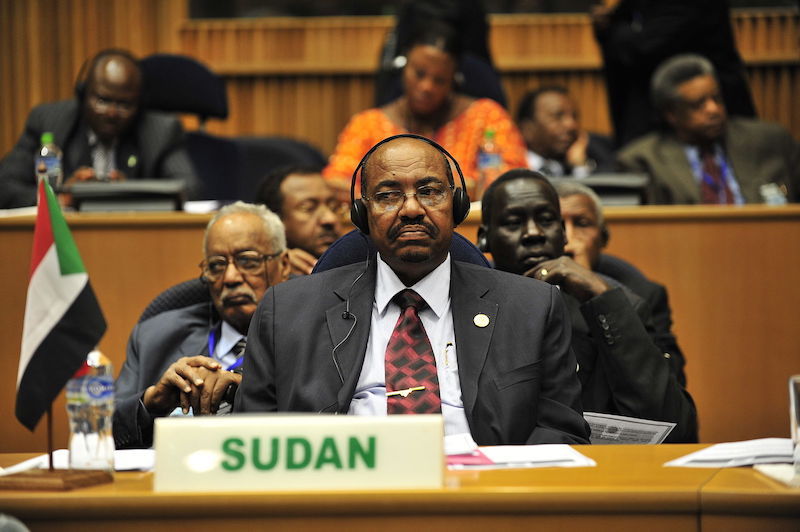
The 30-year rule of Sudan’s president Omar Hassan al-Bashir was ended on Thursday when the military announced it had finally unseated their leader, who governed with an iron fist and is wanted on charges of genocide. The move came after months of protest, which began on December 19 in the town Atbara after the president tripled the cost of bread. The movement, which quickly spread throughout the country demanding peace and an end to the autocrat’s rule, was predominately led by women: by one estimate, as many as 70 percent of the people who have been protesting since December have been women.
“This regime could not crush down women and women’s ability to fight for change and freedom,” Sara Abdelgalil, a spokeswoman for the Sudanese Professionals Association, which was a primary organizer of the movement, told The Globe Post last Monday. “Sudanese women’s resistance and resilience overcome this suppression.”
The 75-year-old president was indicted by the International Criminal Court (ICC) for genocide and crimes against humanity for the violence that took place in Darfur between 2003 and 2008. The ICC, which relies on foreign governments to handcuff and arrest individuals who face charges in the Court, issued a warrant for al-Bashir arrest in 2009 and again in 2010, but al-Bashir has continued to travel abroad, including South Africa, without being arrested.
In addition to these crimes, Sudanese women have been significantly affected by sharia law, which has technically been in place in the nation since 1983. While the restrictions were not uniformly enforced, between 40,000 and 50,000 women are flogged each year for violating the country’s public order laws, which were put in place by al-Bashir, according to the Sudanese group No To Women Oppression.
An 80-year-old woman named Nemat Malik told The Globe Post that women many were lashed for how they chose to dress under the President’s rule. “This regime is a lot of harassment and oppression for women especially,” she said. Ihsan Fagiri, 65, told The Globe Post that “From day one when this government came to power, they started to design laws against women. Don’t wear trousers, cover your hair, don’t speak loudly.”
Months of protests accelerated last Saturday when groups called for a sit-in outside the defense ministry. On Thursday, protesters waited until lunchtime to hear the announcement from Defense Minister Awad Mohamed Ahmed Ibn Auf that al-Bashir was arrested and that the military would supervise a two-year transition to civilian rule. The sit-in continued over the next few days, and to placate the protesters, two individuals who held high-level positions in al-Bashir’s government resigned: the head of the national security service and the defense minister who had served as the head of the military’s transition team.
As of Monday morning, protesters were still in front of the defense ministry demanding a full transition to civilian rule. Hanna Mohammed, a doctor who served six months in jail for protesting earlier this year, told the Guardian that she and others would “continue sitting here till all our demands have been achieved.”
It is unclear what will happen in the coming days or weeks. For now, a three-month state of emergency is in place, including a 10 pm curfew.
More articles by Category: International, Politics
More articles by Tag: Activism and advocacy, Africa, Women of color, Civil rights, Women's leadership


