















Menstruating Women Are Still Dying in Nepal, Caught Between Gruesome Tradition and Ineffective Laws
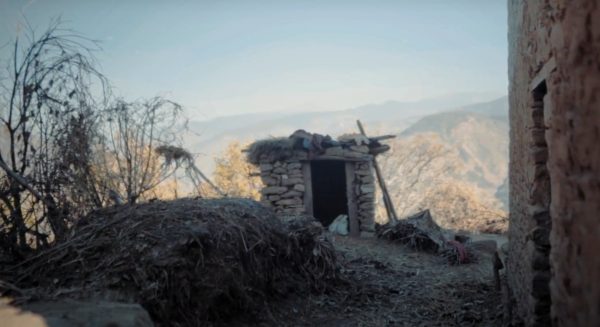
On one winter afternoon in February, deep in the rippled hills of western Nepal, villagers of the small municipality of Chulthe were teeming with activity. A group of five social campaigners were en route to inspect the village for menstrual huts. The huts, where women are banished during their periods, were stealthily decorated to appear like communal toilets by erecting a mock-up commode.
But the campaigners knew what to look for. They could spot them.
Across western Nepal, tradition remains stronger than law as villagers find new ways to partake in “chhaupadi,” the age-old tradition of exiling women during menstruation because periods have been long considered impure. According to a 2018 study, more than 95 percent of women from this region still practice chhaupadi. Although social taboo against menstruation is widespread throughout the country, it is most visibly jarring in these remote western villages, in some of the country’s most poverty-stricken areas.
While the practice is criminalized, it remains rampant in rural parts of Nepal, and questions now mount over the failure of law enforcement and social campaigns created to eradicate the taboo.
An oppressive regime is built around chhaupadi here. Every month, menstruating women and girls — through societal pressure or out of fear of the divine — trudge out of their houses to sleep in a separate hut or a cowshed for the duration of their periods. According to the villagers’ beliefs, contact with the menstruating girl will wither crops; cows will not give milk; and the girl’s father and brothers will die from her “polluting” them.
Many of the spaces where they are isolated have no ventilation. Some have walls made of mud or straw, as though they were menstruation burrows. During their time in the huts, women and girls can’t cook or eat nourishing food, nor can they drink from or bathe in the local river source. Consequently, they’re at high risk of diarrhea and respiratory diseases. What’s more, they face the peril of attack by wild animals — or even by their fellow villagers.
Nepal’s Supreme Court banned the practice in 2005, and further criminalized it in 2018 after a series of highly publicized deaths. A $25 fine and/or three-month jail sentence was imposed on anyone subjecting women to the practice. Since then, social campaigners and police officers have marched to villages in rural western Nepal to dismantle the huts and counsel villagers on the dangers of the practice.
"My wife is living in the hut,” Bhim Dev*, a local representative of Chulthe, candidly admitted to the campaigners, who were led by Legal Aid and Consultancy Center (LACC) Nepal, a nongovernmental organization combating gender-based violence and human trafficking.
“I know about the new law, but we have always been god-fearing people. If I allow my wife to stay in the home during her period, it will invite bad omens and disease.” He said the new law could not cure family members if they fall ill.
His wife, who was living in the hut at the time, refused to speak to the campaigners.
Last year, thousands of menstrual huts were demolished as part of a well-intentioned campaign by the district officials and social leaders to further discourage the tradition in Achham (Chhulte’s district) and neighboring Dhangadi — in the far western region of the country — where chhaupadi is most copiously practiced. But knocking down the huts alone has done little to end it.
“Huts are either reconstructed, or menstruating women and girls are exiled to even more unsanitary and threatening structures — sheds often shared with domesticated animals or livestock,” said Sita Upreti Thapa, a spokesperson for the Lamki Chuha municipality of Dhangadhi. “A high number of cases go unreported, as nothing immediately fatal occurs, and police cannot take legal action against anyone without a complaint.”
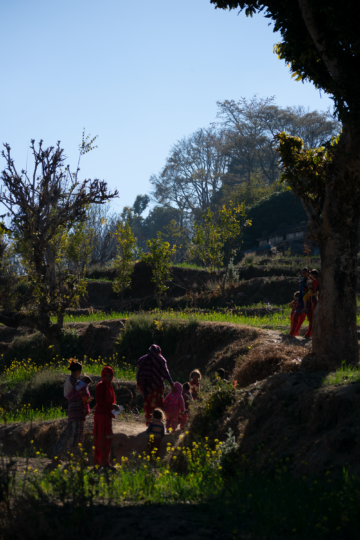
Therein lies what women’s rights activists identified as a glaring loophole within the law: it only bars individuals from forcing a woman to follow the custom, without accounting for women who do so voluntarily. In theory, the police would have to file a complaint either from a woman against a family member or from someone who would do so on her behalf. But the law provides no consideration to women who follow the custom of their own will. “[So] we face a massive challenge in implementing the law at the local level,” said Thapa.
Nepalese traditions are deeply influenced by the Hindu belief of fatalism, in which an individual’s life circumstances are orchestrated through a divine force, rather than personal will.
A law cannot easily override a practice written in Hindu scriptures, argued Anita Thapaliya, a human rights lawyer currently working with LACC Nepal. “It doesn't look like the prospect of a $25 fine and a three-month jail stint will be enough to deter people,” she said. “More often than not, these cases do not even get filed with the police. In many districts in western Nepal, local representatives, civil society leaders, politicians, and individuals responsible for enacting social change have themselves been found to be practicing chhaupadi.”
“People consider it their fate to observe the prevailing menstrual restrictions,” said Radha Poudel, a women’s rights activist who has been working to uproot the taboo for over 40 years. “This fear of the divine adheres to societal restrictions without questioning what is at stake.”
Activists say that putting an end to age-old beliefs associating bad omens with menstruating women will require programs focused exclusively on changing that mindset and behavior, which they see as lacking.
Current programs, led by both the government and civil society, rely upon giving free pads to make menstruation easier, or demolishing or cleaning the cowshed, but these are not sustainable solutions, said Paudel. Upholding women’s dignity during menstruation should be activists’ priority ahead of issues like accessibility of sanitary products. Distributing sanitary pads without providing this guidance underscores the idea that menstrual blood is impure and must be accompanied by shame, which creates a negative impression.
Thapa said that the government was pressing to end this tradition and that new policies were being drafted to combat chhaupadi. For example, families who still practice it will not be eligible for government benefits like pensions for the elderly and for single women, concessionary loans, and recommendations for a school scholarship or government job.
Two years ago, the government of Nepal drafted a policy on dignified menstruation and endorsed a mission of dismantling oppressive social systems in place affecting individuals who menstruate. For the first time, the government also established National Dignified Menstruation Day in December 2018. Still, people’s attitudes toward chhaupadi have barely changed. Older generations are rigid with their beliefs and want to see the continuity of this practice under any consequences; meanwhile, younger generations have yet to challenge these myths and superstitions.
Paudel said that to promote dignified menstruation and remove the taboo surrounding menstrual boycott, a more overarching approach would have to be implemented to end the belief that menstruation is unholy and untouchable.
In districts in the far west, which are among the poorest in Nepal, the literacy rate is less than the national average: In the district of Achham, female literacy rate is around 37 percent. In another neighboring district of Bajura, it stands at 22 percent. The lack of education means that many women don't understand that the custom violates their rights and rarely ever question its legitimacy.
For any superstition to be uprooted, education and awareness play an essential role at the local level, with sustained efforts to promote women’s education, health, empowerment and livelihood. In addition to supporting social awareness among affected Nepali communities about the natural process of menstruation and the harmful practice of chhaupadi, perseverance and sensitivity are also required to acknowledge that age-old practices don’t die easily.
“Enforcing the law is significant,” said Thapa. “[But] it’s going to take much more than that to bring dignity to something that [is] so strongly considered impure.”
*Names of individuals who practice chhaupadi have been changed for privacy reasons
More articles by Category: Gender-based violence, Girls, Health, International, Violence against women
More articles by Tag: Asia, Reproductive rights, Reproductive health


