















How my mom defied the odds to become a doctor
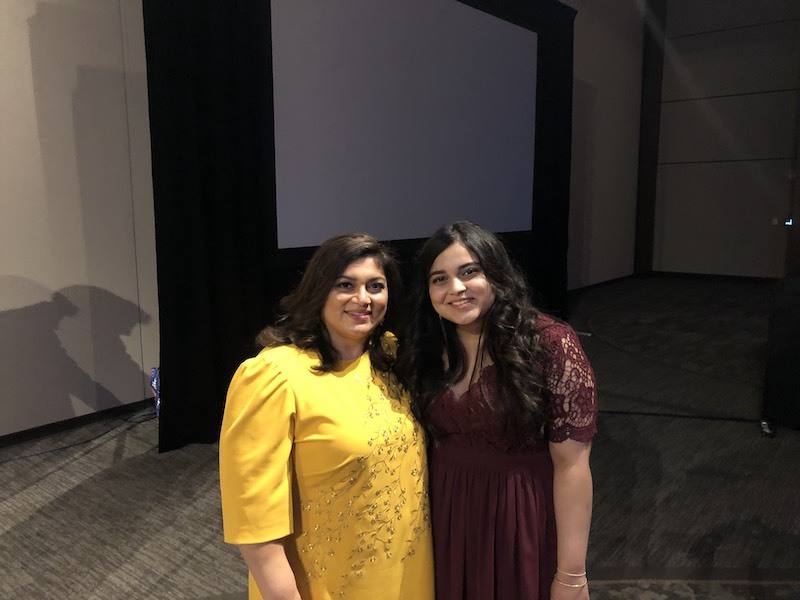
"Dr. Bohra will always be one of the most dedicated residents I have met," Dr. Mac, my mom's boss, said at a ceremony commemorating her graduation from her medical residency last week. "Her passion for medicine, even in times of stress" — he paused, glancing at me — "has never stopped."
He then handed my mother a certificate while my family and I cheered and clapped from a table in the audience, along with her co-workers and co-workers' families attending the graduation banquet.
As she walked off the stage and back toward our table, I smiled at her. In response, she shook her head as if to say, "it's not that big of a deal."
But it is a big deal for me. I remembered when, in third grade, my mom put me in after-school care to take science classes, and in sixth grade, when, sweaty from playing outside, and she shouted to me across the driveway she had gotten into medical school. She chose Des Moines University in Iowa, which meant she lived there and only visited our home in McKinney, Texas every few weeks.
I remembered all the Friday nights I spent in the years after that, sitting next to my brother in the car while my dad drove around the airport terminal, waiting for her to walk out. I remembered cupping my mouth and screaming, "That's my mom!" into the quiet auditorium when she walked across the stage to receive her medical school degree.
Now, ten years later, she is a full-fledged physician, having beaten all odds to accomplish it. A first-generation immigrant — born in India but raised in America — my mom, grew up under the weight of Indian cultural norms that expect women to be good wives and good mothers, and nothing more. My mother's mother even fought with her husband about whether she could return to work after years of being a stay-at-home mom. After winning that argument and working for a few years, she still ended up quitting out of guilt for not taking care of her family.
When she was an undergraduate, my mother told her family that she wanted to be a doctor. STEM isn't really for girls, they said. So she graduated as an English major, married, and became a stay-at-home mom herself. Her dream persisted, and when she realized she could no longer ignore it, she started taking prerequisite classes for medical school in her late 30s.
Our family faced social consequences for her choice. Once she started medical school, other people in the Indian community who believed she had made the wrong decision stopped inviting us to social events. Some extended family in India refused to believe she attended "real" medical school, while other family members made negative comments, telling her she would ruin her children's lives if she continued to study. Even though my dad generally supported her, he too made comments about having to do the housework himself.
Everyone in her life always weighed her decisions with a brass scale, and if it ever tipped in favor of her career rather than family, they decided she had failed. They anchored this scale to her as she tried to study, take tests, and help patients. They stopped her from feeling joy about her accomplishments in a way nobody could or would ever do to a man.
At times, even I wished she would spend more time at home. But her grit, her toughness, inspired me. So, I was tough, too. During the end of her residency, that quality abruptly became crucial to my very survival. Six months before my mom was set to finish, and become a doctor, I felt sick for a week. She sent me to get a blood test and noticed the reports indicated my kidney function was lower than it should've been. She then took my blood pressure, and it was dangerously high, so she took me to the hospital at which she worked.
When we first drove to the emergency room, she called one of her bosses, Dr. Bala, who was a nephrologist. Although it was nine PM, he stayed at the hospital until we arrived. It usually takes a couple of days before seeing a specialist in the ER, but I didn't wait at all because of my mom.
Tests revealed that my kidneys were failing. The doctors decided to treat me with steroids while I waited for a transplant, attempting to delay dialysis, and I was discharged. Every night, I would sleep next to my mom and witnessed many mornings when, at five AM, she got ready for work. It surprised me that she had the energy to keep going as life began to drag her down.
Before I had to start dialysis, however, I luckily received transplant surgery after a stranger decided to donate her kidney and was a match with me. Afterward, I recovered under my mother's care, but her parents, my grandparents, still called the medical school a mistake. They even claimed she should never have gone. But if she had not gone, we possibly would've handled my health problems differently. While everyone should have access to excellent health care, it's undeniable that I received better treatment because my mother could knowledgeably advocate for me as a doctor.
In leaving her family, my mother ended up helping her family. More than that, she defied all preconceived notions about herself, and throughout everything — when she was alone in a one-bedroom apartment in Iowa when she had to hear her parents discourage her over the phone, even when I got sick — she kept going. That strength is contagious.
She proved that women could pursue any career they want, and they should be able to do it without guilt weighing them down. She showed that determination and perseverance aren't just worn-out adjectives, but actual, hard-calloused traits.
Now, she can go by Dr. Bohra. And yes, it is that big of a deal.
More articles by Category: Feminism
More articles by Tag: Women of color, Discrimination, Sexism


