















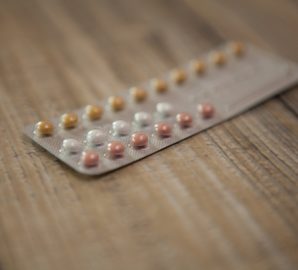
Dspite widespread use among college students, the pill is not the symbol of freedom it was once assumed to be.

If our abortion rights are taken away, who knows what other rights will be taken next?
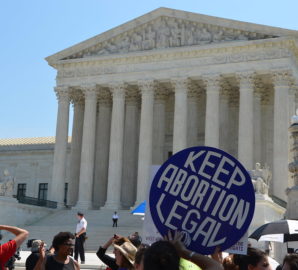
According to a leaked initial draft majority opinion written by Justice Alito, the Supreme Court has voted to strike down Roe v. Wade, the 1973 decision that protects a pregnant person's liberty to choose to have an abortion without excessive government restriction.

There’s no question abortion rights are in a crisis in the U.S. This year alone, 42 states have introduced at least 536 abortion restrictions, with dozens becoming law. And that’s on top of last year’s devastating record of antiabortion laws passed, including the news-making Texas abortion ban that allows anyone — literally anyone — to sue someone who helps a patient receive an abortion, from the provider to an abortion fund to an Uber driver.

On March 9, the Mississippi House of Representatives killed a bill that would have allowed mothers to keep Medicaid coverage for a year after giving birth.

On March 8, while many celebrated International Women’s Day, Guatemala’s Congress approved the “Ley para la Protección de la Vida y la Familia” (Law for the Protection of Life and Family), which would punish abortion with up to 10 years in prison.

In Lebanon, where childbirth care is highly medicalized and dominated by obstetricians in private hospitals, women are often persuaded to have cesarean sections, the revenue for which procedure is key for hospitals struggling to survive amid economic collapse.
The Colombian Constitucional Court made history on February 21 by decriminalizing abortion until the 24th week of pregnancy.

The Texas abortion bill SB8, which passed on September 1, 2021, prohibits and criminalizes abortion after a fetus’ heartbeat is detected.

Texas State Representative Donna Howard has watched the political tides shift firsthand.

Amy Coney Barrett and other members of the Supreme Court have shown outrageous disregard for the real impact of pregnancy.

Only one gynecologist serves the 8,000 to 13,000 people of reproductive age who need those services in the municipality of Shuto Orizari in North Macedonia’s capital city, the only municipality with a Roma majority in the country. And as of last month, he’s no longer on duty.

What are crisis pregnancy centers, masquerading as medical clinics, doing with women’s confidential medical information?

On December 1, after hearing close to two hours of debate on a Mississippi law that bans abortions after 15 weeks, the Supreme Court appeared open to upholding the state law.
This year, the Guttmacher Institute published a mid-year report that found this was “the worst legislative year ever for U.S. abortion rights,” with 90 restrictions enacted in the 2021 legislative session.

Not only can the inability to bear children have a profound impact on Indian women’s identities — childless women’s very femininity is questioned — but it can also threaten their relationships, particularly their marriages.

On Saturday, Daniella Flanagan rallied for reproductive rights in downtown Houston along with more than 10,000 others when the skies opened. Relentless, heavy rain poured down.

With Roe v. Wade imperiled, activists are stepping up with innovative acts of resistance.

The former state legislator, well known for her filibuster of a 2013 anti-abortion bill, speaks out on how and why we must keep fighting back against the erosion of reproductive rights.
In a 5-4 vote, the Supreme Court refused to block a Texas abortion law that bans abortions after six weeks, including in cases of rape and incest, and allows people to sue both clinics and individuals who help someone get an abortion.

A recent trend in anti-choice activism is rearing its ugly head again.

The UN Generation Equality Forum builds on the promise of the Beijing Conference of 26 years ago.

Across western Nepal, tradition remains stronger than law as villagers find new ways to partake in “chhaupadi,” the age-old tradition of exiling women during menstruation because periods have been long considered impure.

In defiance of public opinion, state legislatures in 2021 have already passed the highest number of curbs on abortion since the 1973 Supreme Court Roe v. Wade decision.

In this Q and A, the screenwriters reveal how the woeful sex education they experienced as teens in Texas fueled the plot of their new teen road-trip movie.