















Infertility Is on the Rise in Kashmir
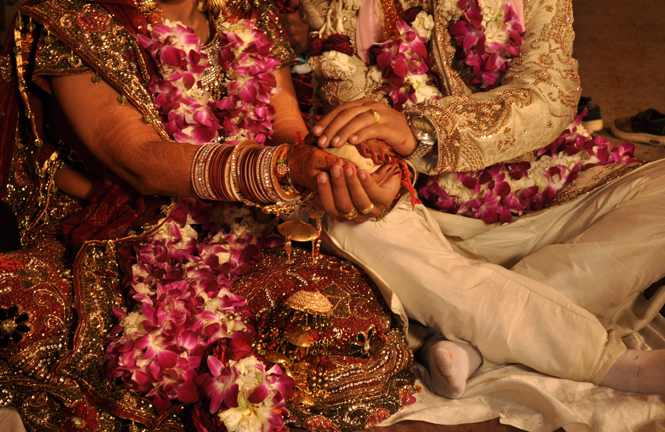
Nahida, a 33-year-old schoolteacher who lives in Kulgam district of Kashmir and has been married for five years, had two miscarriages over one year. She has been struggling with infertility since, and people in her life have noticed. One neighborhood aunty, she told the FBomb, recently asked, “When are we getting the good news? You have made us wait for so long!”
After failing to conceive for a long time, Nahida sought treatment from many fertility experts, but all proved unsuccessful. Nahida’s in-laws “used to treat me with love,” she said, “but ever since they got to know about my ineffective fertility treatments, they have started to distance from me.”
It’s a phenomenon many women in Kashmir have experienced in recent years, as rates of infertility among women there have “risen from 12% to 18% over the past two decades,” Dr. Syed Naseer, an infertility specialist in Kashmir, told the FBomb. According to the 2019-2020 National Family Health Survey, the Total Fertility Rate (TFR) in Jammu and Kashmir is 1.4 children per woman, which has declined from two children per woman in 2015-16. Indian census data from 2018 also revealed that the fertility rates in Jammu and Kashmir had decreased to 1.6 from 2.3 in 2007.
Experts point to the decades-long conflict in the region as one of the major reasons for increasing infertility. But while the reason may not be definitive, the impact on women is clear.
“In patriarchal societies, it is mostly a female who is solely held responsible for not begetting a child,” Shefan Jehan Gazi, a practicing lawyer in the Jammu and Kashmir high court, told the FBomb. “If a doctor prescribes medical tests to the males to ascertain the grounds of infertility, most of them hesitate, as they don’t like to take responsibility for the cause. It is very convenient for them to shift the burden on females.”
Not only can the inability to bear children have a profound impact on Indian women’s identities — childless women’s very femininity is questioned — but it can also threaten their relationships, particularly their marriages.
According to Gazi, in about 30% to 40% of divorce cases in Kashmir, infertility is cited as one of the reasons for divorce. A number of national and global studies back up her observation; a 2014 Danish study, for example, found that childless couples are up to three times more likely to divorce than those who have children.
This is what happened to Bilkees Khan, a beauty parlor owner in south Kashmir’s main town Anantnag. Because she is a breast cancer survivor, Khan’s doctor advised her against becoming pregnant. Khan married a man from Doda only after letting him know this information. “I made it clear to him that I might never be able to become a mother, and he was fine with it,” Khan told the FBomb.
A month into Khan’s marriage, however, her in-laws demanded that she have a baby, and Khan bowed to the pressure; she conceived in the first year of her marriage. Ultimately, however, the fetus couldn’t grow due to her health issues, and Khan had an abortion. Additionally, she experienced early menopausal symptoms due to her chemotherapy treatment, making it difficult for Khan to conceive again.
Khan wanted to adopt a child, but her husband did not. Then, the tension escalated.
“He had started ignoring me and never took my financial responsibilities or paid my medical bills,” Khan said.
During a follow-up visit for cancer treatment to Mumbai’s Tata Memorial Hospital, her husband’s cousin broke the shocking news that he had married another woman while still married to Khan.
The social consequences of infertility have left these women not only stigmatized but also depressed; many have turned to mental health experts for treatment. After four unsuccessful in vitro Fertilization (IVF) procedures and intense pressure from her in-laws to have a child, 36-year-old Fozia Jan’s husband began to mistreat her. Her sister-in-law even used to hide her children from Jan because she thought “that I am cursed and I could bring misfortune to her kids. She often asked me to check with an exorcist.”
Jan had suicidal ideations and was forced to move back in with her parents.
“She hardly talks to anyone,” Jan’s mother told the FBomb. “We tried to counsel her, but the constant thought of being childless makes her depressed.”
“I was by myself throughout this quest to have a kid and save my marriage from falling apart. I felt completely unsupported,” Jan said.
Infertility also had an impact on Jan’s professional life. She was pursuing her Ph.D. in Urdu from a local university but had to leave the program while undergoing IVF treatments because her “supervisor was not cooperative enough to understand my problems.”
Dr. Rumana Masudi, senior resident of the gynecology department at Sher-i-Kashmir Institute of Medical Sciences medical college, Kashmir, told the FBomb that “the hopelessness that stems from years of treatment failures coupled with an unhealthy social environment off-kilts the hormone levels, and it can at times lead to depression.”
“The imbalance of hormones can further make conception difficult,” she added.
In Kashmir, polycystic ovarian disease (PCOD), also known as PCOS, an endocrine disorder that can cause infertility among women if left untreated, has been on the rise in young women for years. A 2020 study done in Kashmir found the prevalence of probable PCOS to be around 46.4% in women of reproductive age.
Despite how common the condition is, the taboo and stigma associated with it leave many young girls suffering in silence.
Aaliya, 25, dealt with irregular menstrual cycles and weight gain for months before being diagnosed with PCOS by an endocrinologist. Aaliya’s mother “told me to conceal it from others,” Aaliya said. “She fears that the society won’t accept me, and I might face hindrance in getting married.”
Even the male members of Aaliya’s family don’t know about her diagnosis. “I have missed many of my follow-ups in the effort to keep it a secret,” creating “a barrier to access proper health care,” she said, adding that, “an unmarried girl visiting a gynecologist is often met with suspicious eyes by the society.”
While there is no indication that diminishing infertility rates will recover soon, it would do women a lot of good not to deal with the burden of shame and trauma put on them in addition to their reproductive challenges. The subject of infertility has long been cloaked in silence in Indian culture, but women need support to cope with the distress of infertility, and attitudinal changes in the family can help them lead a respectful life irrespective of their reproductive status.
More articles by Category: Feminism
More articles by Tag: Reproductive rights, Reproductive health


