
















Pro-choice Christians have been sidelined by the vitriol of the Religious Right. But there are increasing calls for the pro-choice majority to make itself heard.

The Paycheck Protection Program (PPP) doles out between $4 million and $10 million to controversial faux-abortion clinics known as crisis pregnancy centers.

Every hour, four girls under 13 are raped in Brazil.
A 2016 report revealed that one in five adult Brazilian women has had at least one abortion, which amounts to at least half a million women every year. Given that the practice is illegal, the number may be much higher.

The Supreme Court ruled in favor of women’s reproductive rights in a 5-4 decision on June 29 by striking down a Louisiana law that would have limited the state to a single abortion clinic.
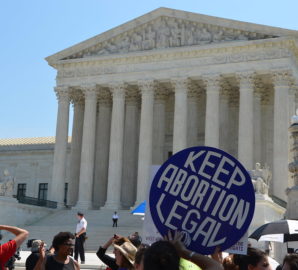
The 5-4 decision affirms recent precedent by overturning provider restrictions in Louisiana.

Anti-choice protests were staged at clinics in North Carolina; Louisiana; Washington, D.C.; and Michigan, at which protesters similarly disregarded social distancing guidelines.
The life I was choosing for myself was almost on the line. And abortion would have saved it.

The many unnecessary barriers to abortion access in the U.S. have grown exponentially during the pandemic, forcing providers and patients to adapt.

Six Republican-led states are attempting to ban abortions amid the coronavirus pandemic by claiming that abortions are nonessential medical procedures.

The film follows the young women as they travel from their small Pennsylvania town to Planned Parenthood in New York City so Autumn can have a surgical abortion.

After a tumultuous two weeks in which abortion services were supposed to be operational yet remained inaccessible through Northern Ireland’s health service, the Department of Health said medical professionals were now permitted to "terminate pregnancies lawfully."

Argentina’s battle for abortion rights reached a new boiling point in March when the country’s president, Alberto Fernández, announced a bill to decriminalize abortion.
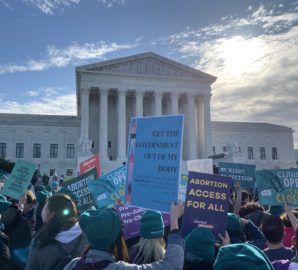
Advocates are expressing concern that less than four years after the court ruled that TRAP laws are unconstitutional, it has agreed to revisit the question.

In the powerful new film "Never Rarely Sometimes Always," a teenager has to cross state lines to seek abortion care.
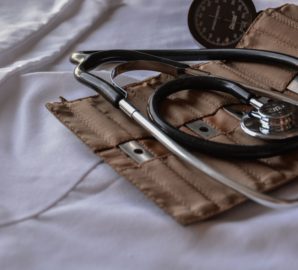
As abortion protections have eroded across the country, countless health care providers have stepped out from behind their stethoscopes to talk about why abortion is an important part of reproductive health care.

A recent study found that there was also an unprecedented number of discussions about abortion depicted on television — more than ever observed in a single year.

Zimbabwe's maternal mortality crisis is pushing the debate on abortion, but the current economic crisis and stigma stand in the way of legalization.
An anti-abortion bill introduced to Ohio’s General Assembly on November 14 is causing controversy for requiring doctors to exhaust every possible option to save an unborn fetus, including “re-implanting” an ectopic pregnancy — a procedure that is literally medically impossible.
The 1973 Roe v. Wade decision, which affirmed a woman’s right to choose, is often referred to as “the law of the land.” However, it’s actually a Supreme Court decision, not a law, and that distinction is incredibly important.

In the ever-intensifying war on women’s reproductive rights in the U.S., Republican Ohio lawmakers have managed to take things to a new, frightening low. A bill introduced this month would criminalize all abortion and includes a provision requiring doctors to try to “re-implant” ectopic pregnancies, despite the fact that no such procedure exists.

As states move toward ever-more-restrictive abortion regulations, Missouri has really gone over the edge. At a hearing on Tuesday, the state’s health director told lawmakers that he had been tracking the periods of women who’d been to the state’s only Planned Parenthood clinic, in St. Louis.

In a country as staunchly anti-abortion as Argentina, Sunday’s presidential election outcome signals a potential sea change for women’s rights in the notoriously restrictive country.

Activist Renee Bracey Sherman started the hashtag #AskAboutAbortion after moderators continuously failed to raise the subject. She recently told the FBomb about what needs to change in the national dialogue about abortion and what debate-watchers should look for in the future.

After a surge of bans this year, abortion providers and advocates are expanding coalitions to widen the network of support for rights and access.