















Why haven't Democratic Primary Debate moderators asked about abortion?
The September Democratic Primary Debates stoked controversy—not for the subjects that were discussed, but the ones that weren’t. While candidates discussed topics like healthcare and the economy, questions about reproductive rights were notably absent.
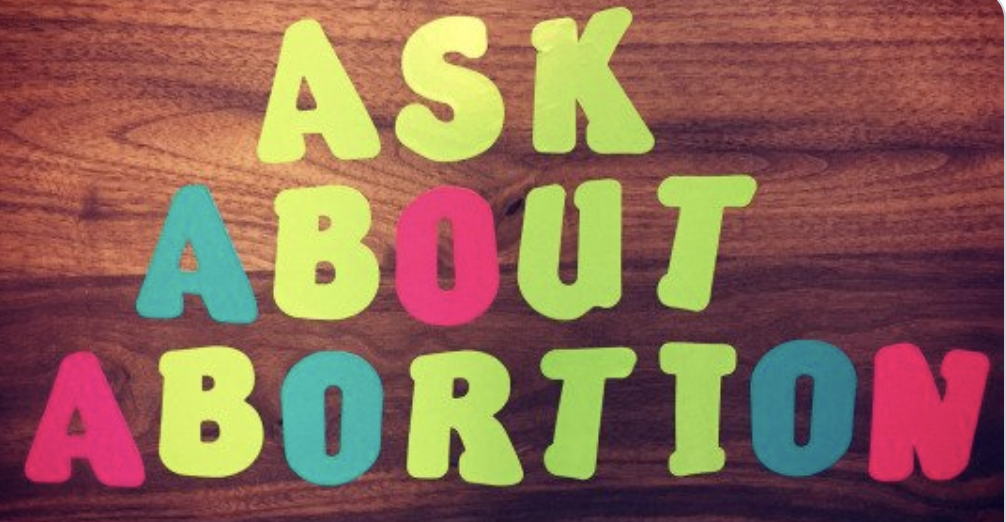
Unfortunately, this is nothing new. During the 2016 Democratic Primary Debates, activist Renee Bracey Sherman started the hashtag #AskAboutAbortion after moderators continuously failed to raise the subject. She recently told the FBomb about what needs to change in the national dialogue about abortion and what debate-watchers should look for in the future.
You started #AskAboutAbortion during the 2016 primaries. Why do you think that now, three years later, the issue still isn’t being discussed in Democratic primary debates?
It’s really frustrating because there are a number of people who think of abortion as a side issue that we keep getting “distracted” by, or that it’s a wedge issue, or who just think “Hey, we have all those candidates up there who are pro-choice, why [would] we spend time discussing this?’ All of that is actually the problem. People aren’t paying attention to the fact that abortion access has been decimated over the past ten years, and we’ve let it slide and not discussed it for so long. We’ve allowed it to just be the pro-choice vs. pro-life argument, but [have] not actually discussed the impact that it’s having on reproductive abilities, the reasons to decide if, when, and how to grow your family, and how it’s tied to economic issues, workplace issues, gender equality—all of those things. It’s just siloed off even though it impacts all of those areas.
The feedback that we heard in 2016 was that there was no reason to really debate it among the democratic candidates — they are all pro-choice, so what’s the problem? That fundamentally misunderstands what we’re asking [moderators] when we’re asking them to ask about abortion. We’re asking not just “do you support the right to an abortion?’” [but] what are your values around peoples’ ability to create and grow their families? And given that abortion has been under attack for so long, what is your plan to fix it?
Saying “I support Roe vs. Wade” is not a plan. What happens when Roe vs. Wade isn’t there? There needs to be a larger conversation. Supporting Roe vs. Wade says nothing about whether you support the Hyde Amendment, and, if you do not support it, what are you going to do about getting it repealed? I’m just really frustrated that we have to have this conversation, and I feel like if we had addressed some of this back in 2016 or earlier than that, we would be having a different conversation right now.
Because, as you said, abortion tends to be seen as a side issue, could you explain why the issue should be important to all Americans and not just people who can get pregnant?
I think people think, “Okay, abortion impacts those people over there who need [one], and that’s never going to be me,” and that’s not true. You never know when you’re going to need an abortion. In fact, a lot of people don’t think about abortion until they need one. Then they are all of the sudden hit with this huge wall of how difficult it is to get an abortion. That does turn some people into activists because they’re like, “this is ridiculous.” It shouldn’t be that people only find out about how hard it is to get access to healthcare when they need it and when it’s a specific time-bound issue.
I also think the framing of [abortion as] only [important to] the people who need one is wrong simply because all of our lives are impacted by abortion — whether or not someone we love was able to get [an abortion] or was not. There are so many people who are like, “I’m here because my parents or my mom was able to get an abortion before having me, and then they were ready to have me when I came along.” All of our lives are deeply impacted by that.
The challenge is that a lot of people don’t realize how abortion has impacted their life. Everyone loves someone who has had an abortion. You may not need an abortion [yourself], but you may be supporting a partner. You may be supporting a best friend, family member, or parent through their decision...We [can] advocate for resources and freedoms that we may or may not use. The point is that the people we care about have access to them when they need them.
People have remarked that while many candidates complained that moderators didn’t ask about reproductive rights in last months’ debates, none of them brought the issue up on their own during the debates. How responsible do you think the candidates are for the lack of dialogue about abortion in these debates?
I appreciate that some of the candidates have released plans for how they are going to protect and expand abortion access. I think that’s exciting and wonderful. You either fundamentally believe abortion is healthcare or you don’t.
All of the things that [the candidates] are talking about when they talk about health insurance and healthcare access, they all apply to abortion. Abortion is the canary in the coal mine for all of these things — whether or not it can be a procedure that your insurance company just decides they don’t want to cover or whether or not a state can tell an insurance company”‘no you may not cover this.” If you are on public health insurance like Medicare or Medicaid, you have to pay for this healthcare service out of pocket, and that is disproportionately affecting folks of color, folks of disabilities, young people. That is an injustice that I would like to see the candidates talk about, and they didn’t do that. Honestly, they could have just done it in a quick one-liner.
To the extent that you know about the current candidates’ plans, what do you think are the important differences people should look out for?
I think the first piece is that some candidates have put out plans, and some have not. That is actually huge. I think a lot of times, candidates at any level will [write] under their “issues” tab on their website: “I support the right to an abortion. I stand with Planned Parenthood,” and that’s it. It’s their stance, but it’s not really a plan. How are you going to not only protect [abortion] access but also expand it? We are beyond need[ing] to protect [abortion access]. There’s no access for so many people, so there’s nothing to protect.
I would ask folks to look and see if their favorite candidate has even released a plan—see if they even mention abortion on their website at all. This is not just for presidential primaries, but for anyone running for office. As far as the presidential candidates, what’s really exciting is that a number of the candidates have proposed some new ideas. Warren has talked about enshrining the right to an abortion as a federal statute. Harris was talking about doing something similar to the Voting Rights Act, where the Department of Justice has to review a restriction before it goes into effect to make sure it doesn’t gut abortion access. These are really exciting ideas, and I want us to continue to see how we can push candidates to get [their] ideas out there. That is what the primaries are about.
If the candidates discuss abortion in the next debate, what more would you like to learn about their positions?
There are some candidates who have flip-flopped in their support of abortion or have gone along with the status quo of things like the Hyde Amendment. I would love to hear Mayor Pete Buttigieg talk about how he is or is not protecting access to abortion in his own city, because a lot of people don’t know that there is a fight to open a women’s health clinic in South Bend, Indiana happening right now. My understanding is that he has been an ally, but I would love to see him talk about what [he] did as a mayor and how [he] would like to open up access to reproductive healthcare nationwide.
I do think candidates should talk about how they either have or have not voted on bills that allowed Hyde restrictions to go in [to effect], and how it felt to take that vote, and if they regret it. Do they pledge to keep voting for a budget that includes the Hyde Amendment? What kind of stand are they going to take? And, again, what are they planning to do to increase the number of independent abortion clinics in this country given that the majority of abortions are performed at independent medical clinics? I would really just love for them to be asked about whether they support the Hyde Amendment and if not how they are planning to repeal it. And if they do support it, they need to justify why they think it’s okay that low-income people, folks in the military, folks in PeaceCorps, and state employees do not deserve to have their abortion covered by their health insurance. They should have to answer to that.
You do a lot of work helping people who have had abortions tell their stories. In your experience, could you speak to how individuals sharing their abortion story can affect these national dialogues we’re having about abortion?
Any of us sharing our abortion story and saying that this is an experience I had, why this matters to me, how this medical procedure has impacted my life so that I got to decide if when and how to grow my family — that is powerful. We are demanding that elected officials represent us and actually listen to us. We are forcing the conversation. That is why I believe #askaboutabortion was an offspring of the work I already do.
As someone who has had an abortion, I was watching the debates in 2015, and I’m watching them now, and I’m waiting for the candidates to talk about something that made my life possible, and they’re not doing it. That makes it hard for me to decide who I want to vote for. It’s really important that the candidates are actually listening to their constituents and saying abortion access is under attack. It made a difference in my life, and I want to make sure that abortion is accessible for people who need one tomorrow and in three years, five years, ten years. It says, “I took the brave step to share my story, and now it’s your turn to step up to the plate and actually tell me how you’re going to protect access.”
More articles by Category: Disability, Feminism, Politics, WMC Loreen Arbus Journalism Program
More articles by Tag: Abortion, Activism and advocacy, Elections


