















Anti-choice protestors are still out during COVID-19
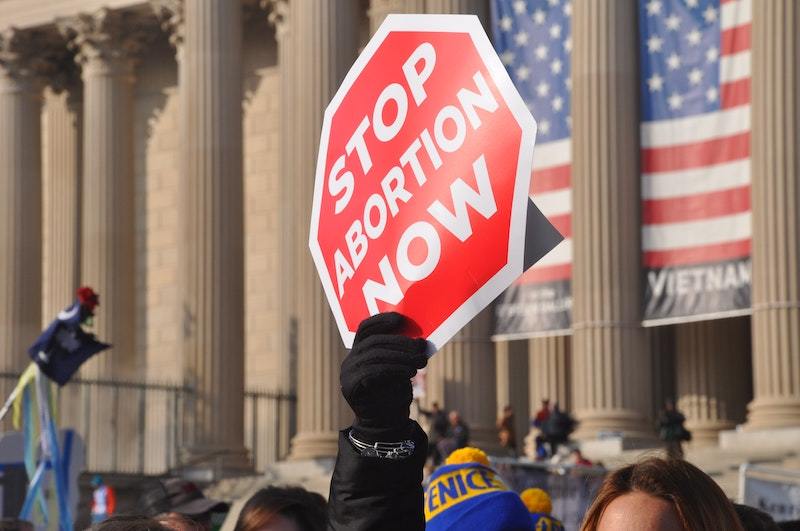
On Mother’s Day weekend, 50 people disobeyed Kentucky’s stay-at-home order to protest the state’s only remaining abortion clinic, EMW Women's Surgical Center. The protesters held homemade signs, prayed, and refused to practice social distancing. Clinic owner Ona Marshall told The Courier-Journal the protesters have been appearing at the clinic regularly over the last four weeks and even attempted to “get close to women trying to enter the building.”
Anti-choice protests were also staged at clinics in North Carolina; Louisiana; Washington, D.C.; and Michigan, at which protesters similarly disregarded social distancing guidelines. Rewire News reported that one protester in Raleigh, N.C., purposefully coughed in the direction of a clinic escort who was clearly in a higher-risk age bracket. “Would be a shame if I was sick,” the protester reportedly said.
These protests are another chapter in a disturbing history of anti-abortion protesters using intimidation tactics and displaying a flagrant disregard for the lives of clinic workers and patients.
In the 1980s, multiple abortion clinics were bombed, and the 1990s saw a string of shootings of doctors who provided abortion care. At least one of the bombings in the 1980s was attributed to the group Army of God, a group that still exists and has been out in force since the pandemic began. Described by the National Abortion Federation as a domestic terrorist group, the Army of God has a history of using explicitly violent tactics. In a statement on the recent spate of anti-abortion protest, National Abortion Federation CEO Katherine Ragsdale told HuffPost, “Surrounding and screaming at patients and making it difficult for them to get into the clinic takes on new weight when we’re trying to social distance. It threatens patients and staff lives.”
On top of risking the physical health of patients and clinic staff, these protests threaten their mental and emotional well-being. Research demonstrates that getting an abortion does not have any long-term negative health effects. However, a study conducted at EMW Women’s Surgical Center between October 2018 and May 2019 showed that witnessing protesters adversely affects patients’ mental health. The study concluded that patients who perceived larger numbers of protesters scored high enough on a IES-R test, measuring the severity of stress after an event, to potentially merit PTSD diagnosis. The sample size in this study was relatively small, but a November 2019 review of similar studies supports the basic conclusion “that women generally experience an emotional and entirely negative response to anti-abortion protests outside abortion facilities.” Conducted before the coronavirus pandemic, these studies don’t take into account the added anxiety of simply leaving one’s home or the fact that protesters could now be asymptomatic carriers of an infectious and deadly disease.
To make matters worse, 18 states effectively ban telemedicine abortion, with several more attempting to institute bans since the pandemic started. Proponents of these bans still argue that they are necessary to protect patient health. In actuality, these bans limit the already scarce options for people seeking safe reproductive care, and in this case leave some with no choice but to go to clinics in person, potentially risking their physical and mental health. These bans persist despite the fact that telemedicine abortion is both safe and popular. In a 2019 press statement, Planned Parenthood cited a study published in the journal Obstetrics & Gynecology, explaining, “Researchers concluded that medication abortion provided remotely offers patients the same effective, high-quality care that they would receive if they were in the same room with the same trained providers.”
The presence of these protestors and the bans on telemedicine abortion reveal a much darker consequence of anti-abortion activism at this time. While these anti-abortion activists may coat their arguments in faux-concern over medical safety or overwhelming empathy for an unborn fetus, their actions are gambling with the mental and physical health of pregnant people.
More articles by Category: Feminism
More articles by Tag: Abortion, Discrimination, COVID-19


