















'Never Rarely Sometimes Always' desensationalizes abortion
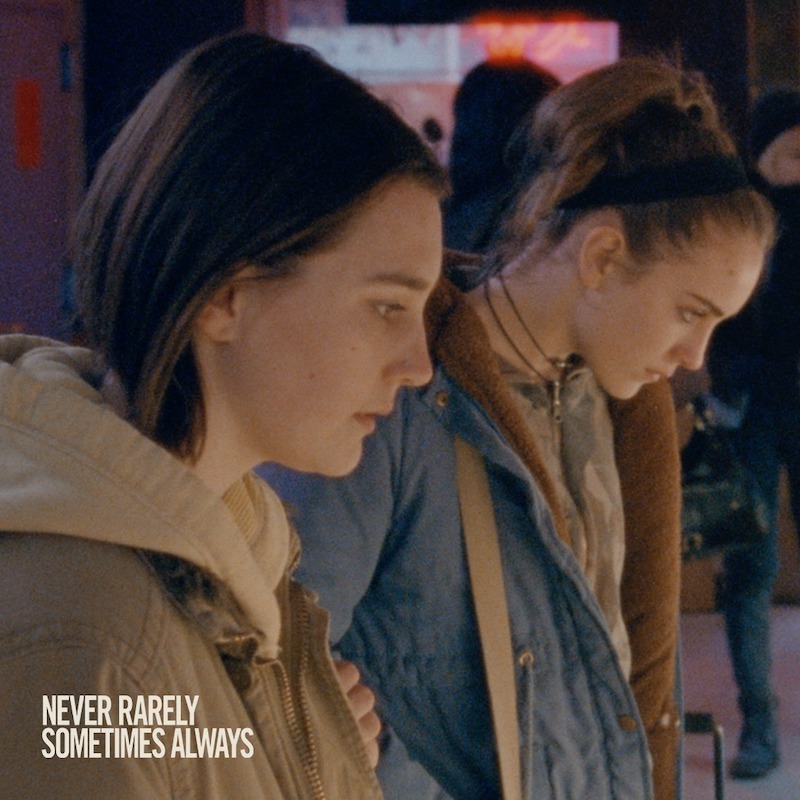
Never Rarely Sometimes Always — a film that premiered at Sundance 2020 and won the Silver Bear Grand Jury Prize at the Berlin Film Festival — depicts the story of 17-year-old Autumn and her cousin Skylar. The film follows the young women as they travel from their small Pennsylvania town to Planned Parenthood in New York City so Autumn can have a surgical abortion. Most notably, the film is remarkable in the way it portrays the protagonist’s attempt to get an abortion with a light hand or, as The Atlantic writer David Sims put it, “desensationalize[s]” the experience.
The film is “more focused on barriers to entry and difficulties getting the procedure,” Sims adds. For instance, the audience never actually sees Autumn reveal to Skylar that she’s pregnant or detail the sexual encounter that led to her pregnancy. Elizabeth Hittman, the film’s director, explained to Sims that she wanted to make a film that broke out of the binary that most depictions of abortion fall into: “the back-alley illegal abortion that’s bloody and dangerous, and the oversimplified version of it.” Hittman added, “You can explore the complexity of things without making it a death sentence.”
The respect shown toward the female characters’ complex interior lives in Never Rarely Sometimes Always marks a step forward in the evolution of abortion storytelling. The stars are quick to note that the film is about more than just the character’s reproductive health. “I would probably say it's the first movie I've ever seen completely, honestly depicting a true heroic female journey,” Talia Ryder, who plays Skylar, told Marie Claire. Sociologist Gretchen Sisson, investigator at the Abortion Onscreen program at the University of California, San Francisco, told TIME: “What we’re seeing now is much more focused on the woman’s experience, and much more of a focus on telling different types of stories for different types of women.”
The 2014 indie movie Obvious Child starring Jenny Slate is likely the most similar pre-existing film to Never Rarely Sometimes Always. In that film, in the midst of a breakup and emotional crisis, Donna, a stand-up comedian, gets pregnant from a one-night stand with Max, a preppy nice guy. The decision to get an abortion isn’t an arc in and of itself, but instead grounds Donna’s emotional journey of reckoning with her lingering feelings for Max and her confusion about her life’s direction. As Kaley Sciortino wrote in The Guardian, Obvious Child’s message “is something to be applauded: having an abortion is not likely to ruin your life, or even be an awful experience; in fact, it might just all work out fine.”
Revolutionary as Obvious Child was, the story feels comfortable and relatively conflict-averse. Set in New York City, the characters’ pro-choice perspectives are a given. For instance, when Donna tells her mom she plans to get an abortion, her mother holds her close and says, “Thank god. I thought you were gonna tell me you’re moving to LA.” Never Rarely Sometimes Always, on the other hand, begins in a small Pennsylvania town, a setting Hittman says she deliberately chose to contrast with New York. The town was based on drives Hittman took through Pennsylvania, where, she tells ELLE, she “went back in time, to this coal-mining region with no public transportation that felt completely cut off from any major city.” Pennsylvania became, in a sense, its own character in the movie. Hittman explained, “It’s about creating the tone of the place more than showing the audience how impoverished these places are.”
Ultimately, Hittman was interested in telling a story about the struggles of abortion tourism. Hittman was inspired to write the film after seeing a story about Irish women who had to go to London to get an abortion. Pennsylvania’s abortion restrictions, including the law that minors must get parental consent to undergo an abortion, provides a parallel environment to that narrative. However, Hittman made it clear that while she intended to depict the hardship of getting an abortion, it was important that the girls’ journey remain understated. “It’s about micro-obstacles and how they navigate them,” Hittman explained. “It was really important to put the audience in their shoes and feel the tension of them navigating this misogynistic and hostile world that reflects the way this country treats us in real life.”
The film is now available to rent through iTunes and Amazon Prime Video.
More articles by Category: Feminism, Media
More articles by Tag: Abortion, Reproductive rights, High school, Film


