
















Everybody loves Disney. The only problem is that Disney didn’t use to love everybody — but now, they’re addressing that with a new disclaimer on the streaming service.
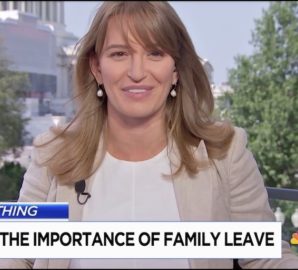
Can the visibility of prominent female journalists help to smash stereotypes about workers who are pregnant or new mothers?
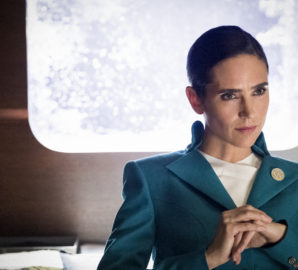
Showcases at New York Comic Con, an annual event for pop culture fans, indicate that the future is getting brighter for on-camera female representation in superhero/sci-fi films and TV. Behind the camera, progress has been much slower.
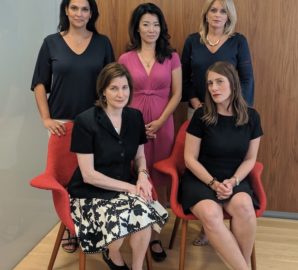
Separate lawsuits against Charter Communications allege that the company’s Spectrum News NY1 cable channel discriminates against female reporters and anchors who are over the age of 40. The case sheds light on treatment of older women in the field of television news.
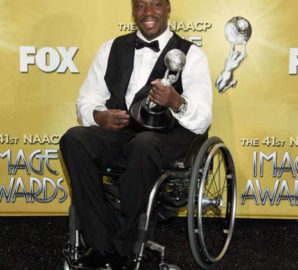
There is still a considerable disparity between the experiences of people with disabilities and the representation of them in the entertainment industry. CBS recognizes this and is one of the first major networks to commit to taking action to change it.

In an excerpt from Sarah Barnett’s interview on “Women’s Media Center Live With Robin Morgan,” which aired June 9 and is available by podcast at wmclive.com and other podcast platforms, Barnett talks about her work promoting women on screen and in TV’s executive suites.

Before Stonewall, lesbians were all but invisible in media. Fifty years of activism and advocacy have made a remarkable impact.

Anime is one of Japan’s main cultural exports and a large part of its cultural identity, but feminists have pointed out that the genre has long had a problematic relationship with gender and racial representations. The site Anime Feminist, founded by U.K native Amelia Cook, analyzes diversity and representation in this art form.

On February 20, Smollett was charged with his first felony, for filling out a false police report, and on March 8, he was indicted on 16 counts of making false statements to the police.

A new study shows that depictions of abortion on TV can dispel myths and destigmatize the experience.

South Africa’s entertainment industry has historically told monolithic narratives of black lives. While these narratives do reflect the reality of many black South Africans, they are not the only experiences of black South Africans and, moreover, not the only experiences black South Africans should be told are available to them.

According to a new study, there was an encouraging increase in diverse fictional depictions of abortion last year.

By chronicling how these allegations against Kelly have been an open secret in the entertainment industry for years, the series' director dream hampton exposes how both Hollywood and the United States legal system have essentially enabled Kelly’s abuse by ignoring it.
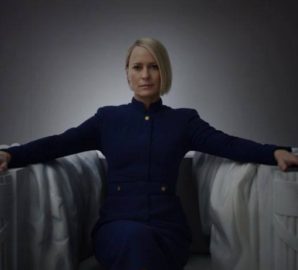
In the sixth and final season of House of Cards, President Claire Underwood has an opportunity to transcend Frank’s murderous scheming and set a more uplifting example, but instead forcefully pushes back against obstacles in her way and continues to fight for power at any expense.

As someone with an eating disorder, I knew Insatiable’s fat jokes and jokes about eating disorders would trigger me. What I was unprepared for, however, were the many biphobic jokes that were also a major part of the show’s storyline.

Popular but vicious characters like Regina George in Mean Girls, the spoiled but well-meaning protagonist Cher Horowitz in Clueless, and ambitious, cunning Blair Waldorf (Queen B of the Upper East Side) in Gossip Girl are all as beautiful, wealthy, self-centered, and ambitious as they come. There’s also another trait they all share, however, a trait that seems to be a key element of the “popular girl” trope: signs of have an eating disorder.

On the surface, the Netflix hit GLOW is a show about the making of a show — specifically, the 1980s TV show “Gorgeous Ladies of Wrestling” (G.L.O.W.) that inspired the series. But beneath this plot lies a far more interesting exploration of women’s experiences in the entertainment industry, and in the world at large, in the 1980s through a modern lens.

As a black person with light-skin privilege, it took me a while to understand that society treats dark-skinned black people with a similar indifference and insensitivity to that which the ugly duckling experienced.

Closure is one thing, but concocting an entire series based on the constant reminder — and, in the aforementioned case, physical destruction — of one’s past partner directly places this past relationship, and inherent to that, her past partner, as the cornerstone of Becca’s journey to find love is disempowering to Becca as a multidimensional person.

Feminist writer Allison Yarrow seeks to answer that very question in her new book 90s Bitch. Yarrow talked to the FBomb about how and why this “bitchification occurred,” as well as its implications for current and future generations of feminists.

Netflix's Unbreakable Kimmy Schmidt is just the latest in a long history of films and TV shows that have perpetuated stereotypes while failing to give opportunities to Native women.

When we talk about increasing and diversifying female representation in Hollywood, it seems it is women who feel the most pressure, who feel the most responsible, to counterbalance this misrepresentation by giving voices to a wide range of characters of different colors, ages, sexualities, and backgrounds.

The voracious-but-still-skinny-woman trope of a character rails against unrealistic body standards and eats tons of high-calorie foods, but somehow weighs very little herself.

News directors say they want to connect with their communities. Hiring diverse staff is key to achieving this goal.

Gabby Antonio Smashes the Imperialist, White Supremacist, Capitalist Patriarchy! is a web series that challenges systems of oppression in both its production and its content.