















50 years after Stonewall, a new media landscape for queer women
Fifty years ago, at the time of the Stonewall Riots, lesbian was a dirty word. It indicated a literal mental illness, according to the American Psychiatric Association. Not surprisingly, media depictions of gay women were few and far between, and those that existed were damning news reports of lesbians identified in raids of dyke bars, causing some women to lose their jobs, homes, and families, or tragic films like the adaptation of Lillian Hellman's The Children's Hour (1961) or The Killing of Sister George (1968), where women perceived as lesbians were punished.
The movement to create inclusive, accurate, and diverse portrayals of queer women in media, like the broader political movement that catalyzed it, has seen both progress and setbacks, but now queer women are more seen and heard than ever before, in all facets of pop culture, entertainment, and media. These hard-won gains came as a result of lesbians’ insistence that media accurately and fully reflect their lives, out of a recognition of just how integral representation, visibility, and inclusion were and continue to be.
Queer women and men had been engaging in political activism in the United States for years before Stonewall, which started in New York City on June 28, 1969. In its aftermath, lesbian and bisexual activists found themselves having to demand visibility and a voice within both gay and women's liberation groups. Often this meant creating their own media. Early lesbian organization Daughters of Bilitis published short stories from playwright Lorraine Hansberry, among many other women, in their early newsletter-turned-magazine The Ladder, as well as a Lily Tomlin cover story in their 1970s publication, The Lesbian Tide. Philadelphia, San Francisco, Milwaukee, Ann Arbor, Boston, and many other cities had their own local lesbian publications.
Lesbian activists continued pushing for fair and honest inclusion in more mainstream press and Hollywood alike. In 1974, a group calling themselves Lesbian Feminist Liberation protested NBC after they aired an episode of the show Police Woman with three lesbians murdering and robbing elderly nursing home patients. While a small group of 10 women went inside NBC's headquarters to demand time with network vice president Herminio Traviesas, 75 more were outside demonstrating. The next day, protesters hung a 20-foot-long banner from the balcony of Traviesas' office reading "LESBIANS PROTEST NBC." LFL, a group of women who felt unheard by the greater umbrella organization Gay Activists Alliance, also staged a disruption during an episode of The Dick Cavett Show when he brought on antifeminist, antilesbian author George Gilder.
The increase in visibility of lesbians in mainstream media was so gradual that it’s easy to recall specific instances in the 1980s and 1990s: the film Personal Best (1982); Donna Deitch’s Desert Hearts (1985); the “lesbian chic” moment in the early 1990s (including the Cindy Crawford/kd lang Vanity Fair cover); television’s first two-woman kiss, on L.A. Law in 1991; the 1993 Newsweek cover story “Lesbians: Coming Out Strong”; Martina Navratilova’s Subaru ad campaign (1996); Queen Latifah's Black butch lesbian character Cleo in Set It Off (1996); Deepa Mehta's 1996 film Fire. But mainstream media still sensationalized and delegitimized queer women in cases such as Billie Jean King being outed by a disgruntled ex-lover in 1981, and the rape of a Black lesbian in New York City publicly referred to as a hoax by a New York Daily News columnist in 1994. Films like Basic Instinct were protested by members of Queer Nation, ACT UP, and GLAAD for their violent and ill-informed depictions of bisexuality. Lesbian director Jamie Babbit was told to censor the lesbian sex scene in her 1999 black comedy But I'm a Cheerleader, or the MPAA would give the film an NC-17 rating, and Fannie Flagg's Fried Green Tomatoes was de-gayed altogether when adapted into an eventually Oscar-nominated film.
Ellen DeGeneres’ simultaneous coming out on her television show, Ellen, and on the cover of Time magazine in 1997 is often celebrated as a major marker of lesbian visibility — and it is, especially in light of her eventual success. But that success came only after several years of being blacklisted for taking such a chance in a still quite homophobic America, which wasn't ready to accept an openly gay woman leading her own show on primetime TV.
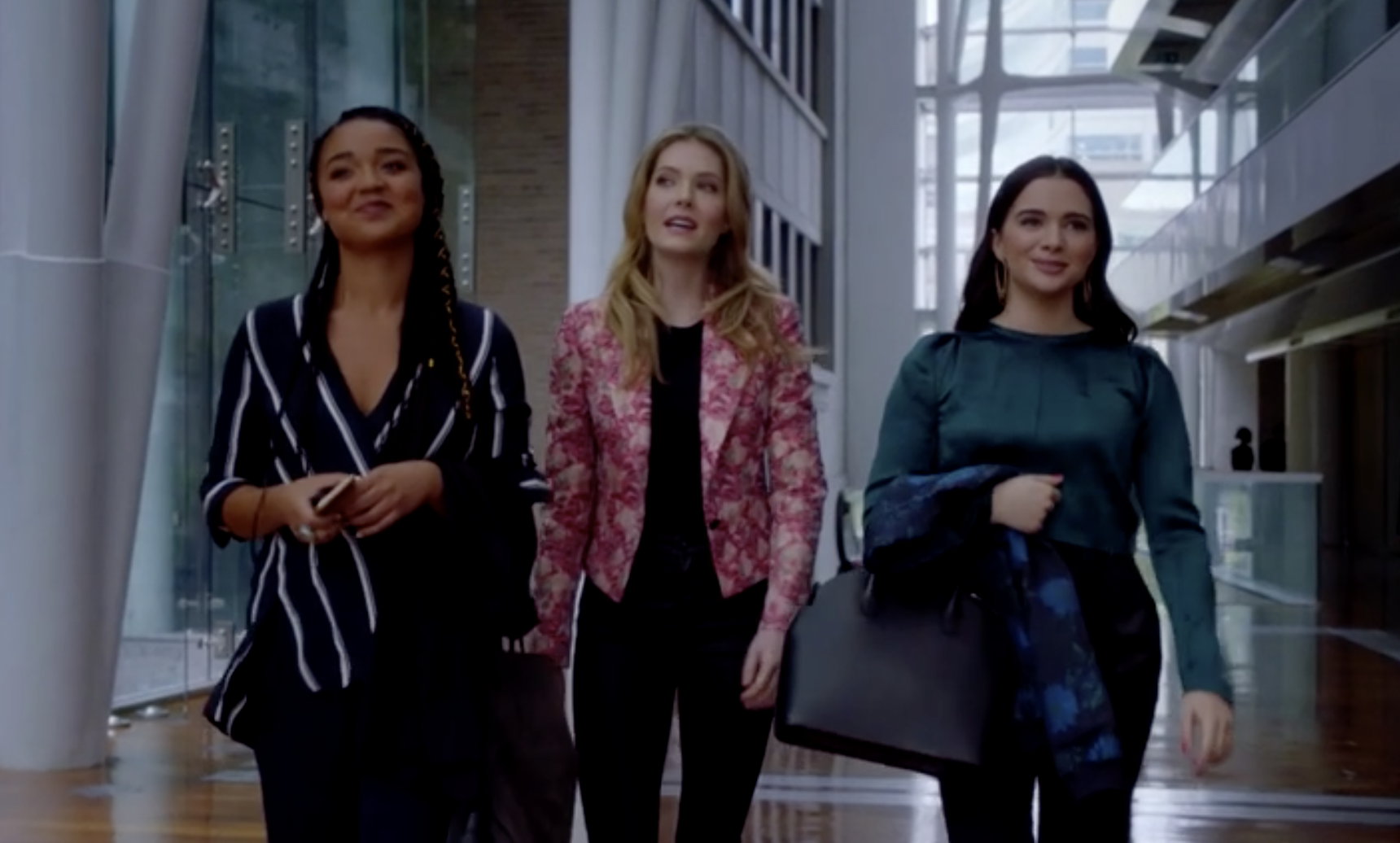
Milestone films such as Desert Hearts, But I'm a Cheerleader, Alice Wu's Saving Face, Rose Troche’s Go Fish, and Cheryl Dunye’s The Watermelon Woman helped make possible a show like The L Word, which premiered in 2004. Even though The L Word remains one of very few television shows dedicated largely to the lives and relationships of queer women, as written and directed primarily by queer women, it laid the groundwork for shows that were not centered on the lives of lesbians to start to include major characters who were queer women. Its six-season run provided heightened visibility and access for stories about queer women, who then began to be written into more series, especially in the last few years, a period that has been coined the New Golden Age of Television. Pre-L Word, only a few series (such as E.R., Relativity, and Buffy the Vampire Slayer) had lesbian leads, but now there are countless shows with regular and occasional lesbian and bisexual characters in the cast, and they are no longer limited to only white women. The Bold Type, Orange Is the New Black, Pretty Little Liars, Sense8, and Vida are among those that have queer women of color not only on screen, but also in the writers’ room to ensure they are given their due. The forthcoming Batwoman series stars openly queer Ruby Rose as the lesbian superhero and boasts lesbian executive producer Caroline Dries. It makes all the difference. On the big screen, the recent film Book Smart matter-of-factly features a high school lesbian main character.
Thanks to the sustained efforts of queer women activists, artists, writers, producers, and audiences, today’s media landscape would be unrecognizable to lesbians who, 50 years ago, were searching to find themselves and others like them.
More articles by Category: Arts and culture, LGBTQIA, Media
More articles by Tag: Film, Television, Activism and advocacy


