















The creative executive behind some of TV’s best female-centric shows
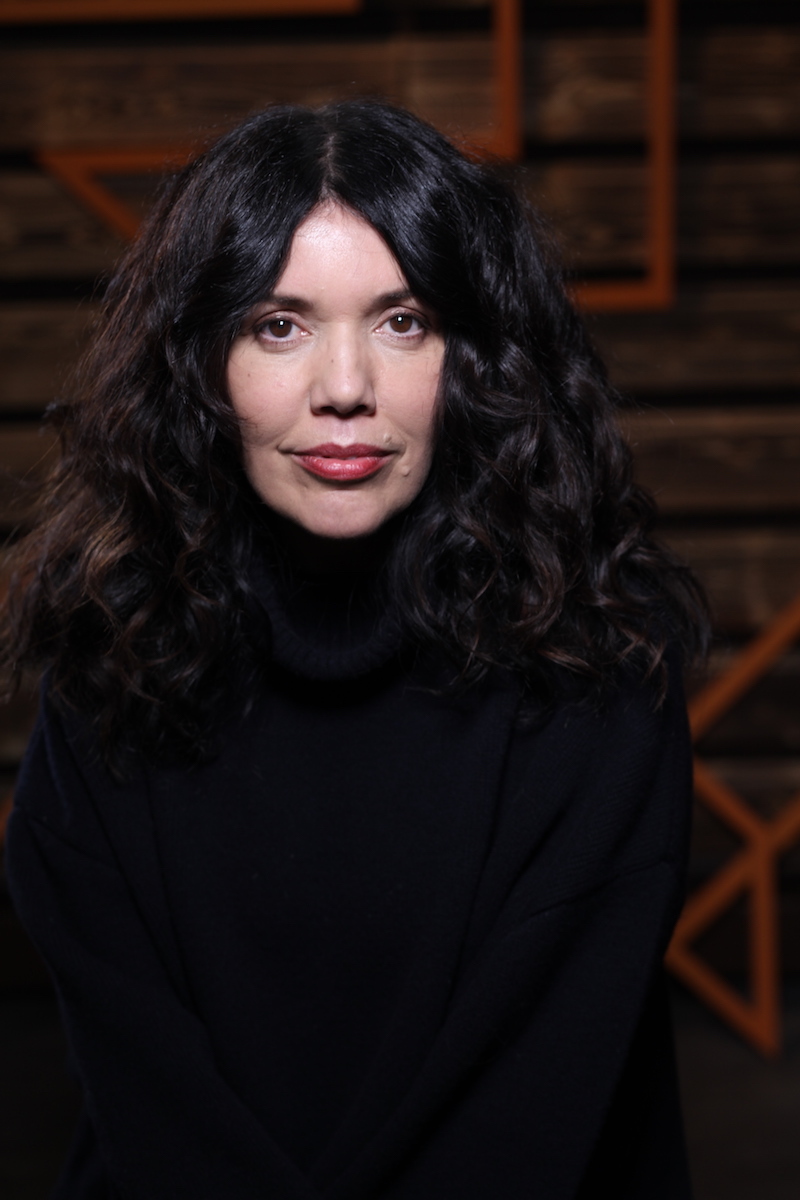
As the first woman president of AMC Entertainment Networks, Sarah Barnett oversees AMC, BBC America, IFC, and Sundance TV. She was previously in charge at BBC America, which aired female-centric series such as “Killing Eve,” “Orphan Black,” and “Dr. Who.” Following is an edited excerpt from Barnett's interview on "Women's Media Center Live With Robin Morgan," which aired June 9 and is available by podcast at wmclive.com and all your favorite podcast platforms. In it, Barnett talks about the impact of fascinating women protagonists, how a seemingly risky creative choice can become a successful choice, and why we need a critical mass of women in creative fields.
Robin Morgan: What if you learned that all of the TV programs you most loved, although they were splayed across a variety of channels, really had been put there by a single woman? You’ve really been watching H.E.R. network. When you think of a woman in power in television, the first name that springs to mind is Sarah Barnett. When you think of auteur-driven, award-winning, distinctive dramatic series on television, the name that springs to mind is probably Sarah Barnett. When you think of someone cutting a swathe through the most intelligent networks — AMC, BBC America, IFC, Sundance TV — you think of Sarah Barnett.
RM: Well, congratulations — you are now President of AMC Entertainment Networks: BBC America, AMC, IFC, and Sundance TV. Do you ever sleep?
Sarah Barnett: I actually sleep very well, ever since I was very young. I don't have a moment to spare in my waking hours, but I am an eight-hours-a-night girl.
RM: I want to start by talking to you about women of power, of which you now thankfully are one. You were inducted into the 2014 class of Multichannel News’ Wonder Women, and you've been named to the Cable Fax Top 100 and Most Powerful Women list for the past six years. Now, powerful women used to be few and far between and used to happily kick any other woman climbing the ladder after them. There's a change now with mentoring and developing other women, and I want to also congratulate you because I know that when you became president of AMC you fought to be replaced at BBC America with another woman, Courtney Thomasma. That's unusual, because usually it returns to, "We gave one woman a chance and now we'll go back to the boys." You pulled that off, my dear, thank you!
SB: Well, I have to say, I didn't have to try very hard, because Courtney is a complete rock star, and it was apparent to everybody that she could very ably step into my shoes at BBC America, but, yeah, I do think there's been a bit of a shift that's gone on. You know, it used to be that there was just one or two women in the room, and I think there is a sort of critical mass that makes a difference, I think if you are the only woman in the room, or there's just you and one other, it can be really tricky, because your opinions, your behavior, your tone, the way you try to argue and persuade, everything is seen very much through the lens of gender; you're carrying your gender in everything you do. And I think once there's not just one or two, but three or five or seven women in the room, then that sort of terrible weight starts to disappear, and you're a human with good thoughts or dumb thoughts, and good arguments or silly ones, and persuasiveness or not, and I think that's when you start to really create an environment where you can actually contribute as a full human being. And you stop being a curiosity or something. If there are only one or two women in the room, I think that men can be overly anxious about revealing themselves, upsetting you, about creating a climate in which it’s female-friendly, and in a way that bizarrely can make them more comfortable when you're not in the room, because they're not having to try so hard.
I think that's why in some ways it's been depressingly slow for some of the numbers to grow at the rate that frankly they should. But I do think maybe [change] is happening, [with] some of the things that have played out in the past year or two around the big drama of, first of all, Harvey Weinstein, you know, being lassoed and brought down, and then various others; I think for whatever reason the ways in which consciousness is being raised in corporate board rooms around the country, and frankly the optics aren't good either if you don't have women at various levels — I think that's fantastic, and I think it is creating a shift, and I think that everyone will benefit.
RM: It's vitally important, because of course the Women's Media Center exists because media both reflects and defines what our realities are. And so it's disproportionate that when consciousness of sexism finally … I wouldn't say “hit” Hollywood, but erupted from within, and people were no longer as afraid to identify as feminists, and no longer as afraid to call out the truth, that has an enormous ripple effect down through the entire culture, and also in the pipeline. When you speak of developing women's leadership, that means we have to get more women into the pipeline to begin with, which used to be a rarity. How are we coming with that?
SB: Well, it's interesting thinking about that from the seat I sit in, which is one of being a gatekeeper around what stories get told. There's a saying, which I think is so true: “If you can't see it, you can't be it.” So I think that the ability to shape through the stories we tell, just as the Women's Media Center is engaged in, to be able to reflect but also really change the world through changing people's belief, understanding, and aspiration about who they can be in the world, is enormous, and I've never taken that privilege lightly. And I think that a lot of my team equally are very activated and energized around this responsibility of telling stories that truly reflect a diverse point of view around people of color as well as for women. A small anecdote: At BBC America, Doctor Who is a fifty-five-year-long-running franchise, but the doctors have all been men … considering they have two hearts and regenerate, there's no reason why they equally can't shift gender, but it always had been men, wonderful men playing the role of the doctor — until the end of last year….
RM: Right, huge change.
SB: … a huge change, a huge pop culture moment, and some of the social media responses — little girls squealing with delight at the fact that the new Doctor’s a girl — were just so heartwarming, but also profoundly impactful. And we partnered with the Women's Media Center to do a study on the ways in which the representation of female superheroes can impact not just little girls but little boys, and impact the understanding and the expectations of what those young humans think women can be, and the role of superheroes. I mean, the representation of women generally in all sorts of complicated, messy, screwed-up as well as wonderful incarnations is something that we're very interested in doing across all of our networks here. But I think that specifically the representation of women as superheroes, there's something obviously so archetypal, so powerful about superheroes, and so it's important. And the fact that Jody Whitaker [who plays the Doctor] will be out there, hopefully, for years to come, changing how little boys and little girls see women and the roles that women can play in the world is something that is big.
RM: That's one example of something that's happened on your watch, but there are many examples. You seem to have a talent for artistic development as well as the bottom line, unlike some CEOs in media — many of the boys, and even some of the first women who were trying to convince the boys they were just like the boys instead of being themselves — followed the rule that, “the bottom line is everything.” It seems to me under your watch with not only Doctor Who becoming a woman, but also [examples of] nuances between women, like Killing Eve, which was an amazing series, that [you emphasize] the artistic side of development as well as the bottom line, and in fact see them as interlinked. How do you think you come by that, and how can we make more people catch it?
SB: Well, I was lucky enough to be trained at the BBC, which has always been an entity that prioritizes complicated, quality story-telling, and actually wasn't underpinned by a commercial imperative; its brief was to be relevant to everyone in the country, and to explore creatively — to be bold creatively. So that sort of trained me, and then I've been lucky enough since then to work for some fantastic brands like Sundance TV, which I ran before I ran BBC America, and now AMC and IFC, and I think that this company, AMC Networks, really does understand … you know, AMC was put on the map because of Mad Men and Breaking Bad and shows that didn't land as obviously the most commercial choices to make. But I think so much of it is about seeing … [As a programmer], you get it wrong more than you get it right, but if there's any skill in being a programmer it's seeing a little bit around the corner about what's to come. And if you can find those fresh voices just before it's part of the mainstream, then those are the times I think where the risky creative choice can also end up being the successful business choice. And I think of a show like Top of the Lake with Jane [Campion] which we did when I was at Sundance. Iit actually didn't drive enormous viewers, but it really, along with a few other things, put that brand on the map because it was so fresh, and it was a moment where film auteurs were moving into television, and it was rare for someone like Jane to be making TV. And she'd long been an idol of mine, so to get to work with her on that in some way was incredible personally, but also really good for the brand and the business. And then, Killing Eve, you know …
RM: Remarkable.
SB: I mean, Phoebe Waller-Bridge is just the most genius voice in television right now. She can turn her hand to anything, and I think what's so great about Killing Eve is it takes a fairly familiar architecture, if you like, of storytelling — it's a thriller, and there's a cop and an assassin, and by dint of making them both female there's a certain sort of radical-ness which goes along with that, which is sad in a way, but true, and fresh, and then her humor, you know, she just has something so special, the way she mixes pathos with something then hilariously rude and shocking, and even at times outrageously cruel, and the humor of humiliation in her work, but underneath it all is this really very big, truthful engagement with how people are, how humans are, the psychology. I don't know entirely why this show has landed as well as it has —it's just been phenomenal; it was the most successful show at the BAFTAs a few days ago, it just won a Peabody, Sandra won a Golden Globe, and it's incredible, it's the fastest growing show, we had the most growth season after season more than any other show in cable for three years, it's just incredible.
RM: Yeah, the writing is so good. The performances and direction are brilliant. But the writing is so good — as a writer, I think “my god …”
SB: And I think it starts there. TV is such a writer's medium. And I think it does [further] the conversation around representation and gender. I think that we've never quite seen these women before, and I think the ability for women to be not just strong, not just amazing, but also really flawed, and the truth with which Phoebe explores desire, and obsession, and a pull towards one’s dark side, in Eve as well as in Villanelle, the psychopath, feels so fresh because we just haven't seen enough stories that are concerned with that, and then it's done in her signature style, which is amazing.
RM: Yes, well you know the old joke, it used to be the sexpot, and then it was the DA — those were the parts for women. And of course, we’re more than half the human species, and there's quite a variation among us, you know, which we haven't seen given back to us, and it's deeply refreshing. I have to say that I realize when I look at the shows that have taken place under your aegis, whether it's The Honourable Woman, which was at Sundance TV, or, Orphan Black at BBC America, that I have been a fan of the Sarah Barnett Network across the networks that you have run. Wherever you go, there's a trail of not only success, but excellence, Sarah, and of a totally new representation of the real world in which female human beings live. I'm so grateful for that and for everything that you do with the Women's Medica Center, but also that you do for the general public, and for the arts on television. It's a suburb gift. So thank you, and keep up the brilliant work.
More articles by Category: Arts and culture, Media
More articles by Tag: Television, Women's leadership


