
















Recently, five teenagers in Afghanistan who make up an all-female robotics team developed a cost-effective ventilator that runs using the motor of a Toyota Corolla.

Tunisian women from different ages and backgrounds have begun to share their sexual harassment stories on social media under the hashtag #EnaZeda — which means #MeToo in the Tunisian dialect.

This film takes place in 2006, at the height of over-surveillance of Arab and Muslim communities in a post 9/11 United States and gives viewers a much-needed view into the inner life of a Muslim American teen girl.

The development in their case comes after a months-long saga in which the women, who said they fled to escape an abusive family and restrictive society, hid out in Hong Kong and stayed in various safe houses out of fear they could be intercepted and forced to return home.

Pakistan is a country governed by moral values and strict cultural codes, and perhaps no Pakistani citizens are as strictly policed in terms of these values than woman.

Gender inequality and sexism are still embedded in the Middle Eastern workplace, even in progressive workplaces like International NGOs and even if they try invoke equitable policies.

Yemeni singer, songwriter, and multi-instrumentalist Methal began her music career during the Arab Spring in 2011; that political escalation inspired her to more creatively address issues of religion and social justice. She most recently collaborated with the American rock band X Ambassadors and recorded the song “Cycles,” which depicts her relationship with her home country.
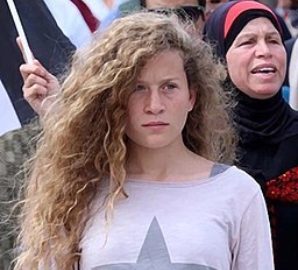
Ahed Tamimi is more than an emblem of Palestinian unity or a symbol of the resistance. She is an inspiring figure for all young feminists to look up to.

17-year-old Najem, who resides in a suburban area in southwestern Syria that surrounds the city of Damascus, has been documenting the Syrian Civil War through his Twitter account since December 7, 2017. The teen posts photos, videos, and messages that capture what it’s like to be one of the many children and teenagers forced to fight to survive in the middle of the war.
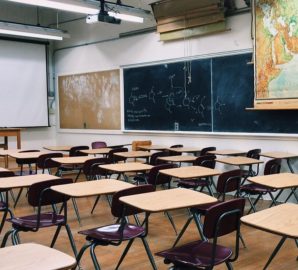
Many educational institutions in Tunisia — especially those in rural areas, where people are generally more conservative and traditional — separate girls and boys from each other within the same class so that female students won’t mix with the male students.
Saudi women are unable to exercise freedom in clothing, travel, work, or family. This reality led the World Economic Forum to rank Saudi Arabia 141 out of 144 countries in its 2016 report on the global gender gap.

Emerging from a crowd of around a dozen women, Farida, a 32-year-old Syrian refugee living in Istanbul, stood in front of a cabinet full of bright and colorful threads and beads. Looking at the materials with friends, she mused what color she should use for her next earring project. “Let’s not use orange and pink this time,” she murmured to one of her friends, another Syrian refugee.

The British government is scrambling to find three of its female citizens traveling to join the ranks of foreign recruits to the Islamic State (IS or ISIS). These young women are not alone. According to one recent study, more than 500 women from Western countries have traveled to join the extremists in Iraq and Syria.