
















“Do you know where this road goes from here? We are hungry, and my baby hasn’t eaten much,” an exhausted young Afghan woman asks me. Roma, her 2-year-old son, Abraham, and three men from her family were walking on the side of the road in the Hungarian village of Roszke, looking completely lost, when we stumbled upon them.

Almost every hour, the men run to the Serbia-Hungarian border crossing, shouting together, “Open the gate! Open the gate!” But the Roszke Horgos border remains guarded by Hungarian police after the government of Hungarian President Viktor Orbán ordered it shut on Tuesday.

Many of the 3,000 refugees who spent last night on the Serbian side of its border with Hungary are women and children. Hungary shut the border on Tuesday, saying refugees had to apply for asylum before entering the country. Hungarian authorities said that criminal proceedings would be launched against any migrants found crossing the fence illegally and that they could face up to 10 years in prison.

For the first time in the history of the Bosnian War Crimes Court, judges included compensation to a wartime rape victim as part of the court’s ruling. On June 24, 2015, Bosiljko Marković and Ostoja Marković were ordered to pay roughly $15,000 to the woman they raped during the war. The court sentenced each man to ten years in prison.

When Congolese President Joseph Kabila tapped 49-year-old Jeanine Mabunda Lioko, a finance executive and a member of the National Assembly of the Democratic Republic of Congo, to be his special representative on sexualized violence in July 2014, UN representatives hailed the appointment as a “new dawn” in the fight to end rape and child recruitment in the country’s 20-year conflict.

On Monday, a report from the UN was made public by UN Secretary-General Ban Ki-moon that highlights sexualized violence in war. The report covers attacks conducted in 2014 and describes violence against women in 19 countries—13 conflict zones, five countries that are recovering from conflict, and one “additional situation of concern” (Nigeria).

In February, the London School of Economics and Political Science announced the launch of a new Center on Women, Peace, and Security at the school. The center, which is scheduled to open in 2016, will focus on the “participation of women in conflict-related processes and on enhancing accountability and ending impunity for rape and sexual violence in war,” according to its website.

The British government is scrambling to find three of its female citizens traveling to join the ranks of foreign recruits to the Islamic State (IS or ISIS). These young women are not alone. According to one recent study, more than 500 women from Western countries have traveled to join the extremists in Iraq and Syria.

On February 24, a friend of mine posted an editorial on social media about a bill passed in the Pakistani Senate four days earlier, which punishes individuals who hinder prosecutions in rape cases or stigmatize the survivor. My friend asked: “How was this story not all over the news?”

While the news cycle in January was dominated by reports on Japanese hostages held by the militant group Islamic State and the Paris attacks on the offices of the satirical newspaper Charlie Hebdo, some stories didn’t receive as much attention.
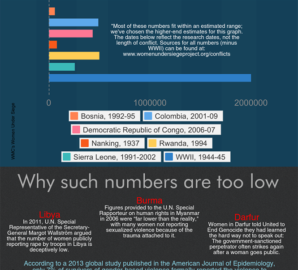
We know there’s a problem but we don’t know how big it is. That’s what governments, scholars, and others argue when trying to figure out how to allot funds toward this problem of sexualized violence in conflict. If we don’t know the numbers, they ask, how can we help properly? How can we mount prosecutions? Offer reparations? Put in place proper advocacy? So the thinking goes.
Following the end of the #16Days of Activism Against Gender-Based Violence Campaign, WMC’s Women Under Siege has gathered some of the best tweets out there in the hope that this action, this dialogue, this advocacy doesn’t stop here. We can do more. We must.

At the age of 18, Leyla’s three-year lesbian relationship was discovered. She ran away to Baghdad from her home in the conservative Iraqi city of Basra, though her girlfriend wasn’t able to escape. Staying behind turned out to be deadly.
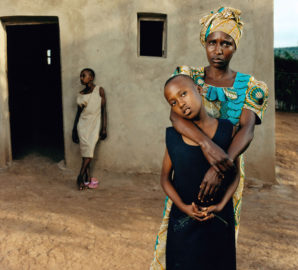
Countless women and girls have been raped to death, held as sexual slaves, gang raped, and subjected to sexual mutilation in conflicts during the last century—in the Rwandan genocide, the Nanking massacre, the war in the former Yugoslavia, Sierra Leone’s civil war, and Burma’s long-running armed conflict, to name a few.

Just like any other population caught up in a war zone, people with disabilities suffer displacement, injury, and trauma. About 6.5 million of the 43.51 million people who have been displaced due to conflict live with a disability. Yet in conflict, when the social fabric is vulnerable and resources are limited, people with disabilities face increased violence while their protection needs often go ignored.
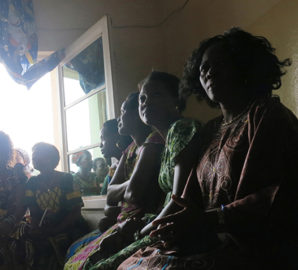
A young woman seems to have attached herself to me one day at Zaatari, a refugee camp holding at least 120,000 Syrians in the middle of the Jordanian desert. Her name is Abeer and she is the less obviously beautiful, older sister to a 16-year-old girl who has been married off to a much-older Libyan food distributor. He gave the girl a watch, perfume, and water when they met.


