
















On April 20, Marcia Mejía Chirimia, 28, an indigenous Colombian peace and women’s rights activist, received a text message from someone she believes is a member of a paramilitary group.

When Luna Watfa refused to reveal any information to her interrogators, they took her son, 17, and threatened to torture him. “They put my son’s hands behind his back, his T-shirt over his head and they took him,” she says.

Wars fought because of ethnic hatred often seem to be more brutal than others. This is just a personal observation, having studied many. Just look at Rwanda, whose 1994 war saw between 250,000 and half a million women raped, often with objects and often publicly, in order to spread maximum humiliation and terror.
The recent Lancet Series on Maternal Health confirms a well-established reality: The majority of preventable maternal deaths continue to occur in areas affected by humanitarian crisis, largely as a result of poor maternal care. But this reminder is also accompanied by a chronic offense. Contraception is not given the spotlight it deserves.


Mary Elias, of Laje village in Malawi’s southern Zomba district, speaks in metaphors. “We are carrying both water cans,” she says of the situation for single mothers in drought-ridden Malawi—meaning that women with children but without partners are solely responsible for feeding, clothing, and educating their progeny. Already a Sisyphean task in a country the United Nations Development Program regularly ranks in the top 20 poorest on earth, this has become nearly impossible in the past few years.

Yagna Ibrahim is a woman who has a presence that is difficult to ignore. She strides into the room with grace and confidence, pulls out a chair, and sits down next to her friend and fellow women’s rights activist, Rabia Musa.
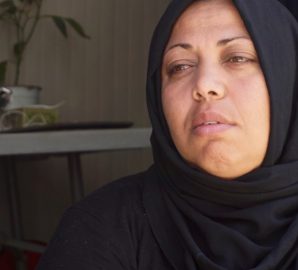
The air is stuffy by default. Soap, especially laundry soap, is usually a rare commodity among refugees. Add to the muddle of unwashed smells a buzzing from black flies, nearly 100 degree heat, and dark, polyester clothes that cover from head to toe, and life inside a makeshift container on the Greek island of Samos is an unpleasant one, thick with defeat.
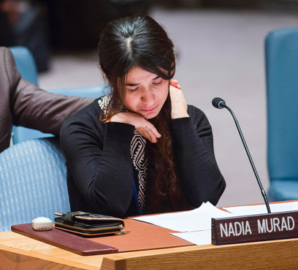

Within the first few days after Sandra Moreno’s daughter, Ana Paula, disappeared in 2009, Moreno reached out to a TV crew a few blocks from her home in the lower-middle-class neighborhood of Carapicuíba, in the Brazilian state of São Paulo.


Tucked away in the graffitied center of Athens is a soothing example of 1920s architecture. High ceilings and arched doorways lead to a stone-walled patio. The feeling inside is fresh on a sweaty day in Greece, with a breeze winding through tall, paneled windows. But it is the life inside, the laughter and chatter, that makes this a truly calming place.
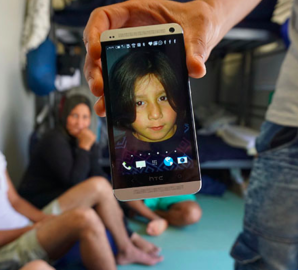
Here was yet another family flung across the sea from Syria sitting in an air-conditioned, yet still stuffy, container that is their temporary home on the island of Samos in Greece. With so many of them having made it to the country together, the Al-Ghateb family stood out from the hundreds of single men and mothers with children at the camp.

“My friend, my friend!” Two little Syrian girls come running toward me as they see the camera around my neck. These two words are part of their limited English vocabulary, a language they are being taught in school at the Vathi refugee center—known as a “hot spot”—on the island of Samos in Greece.