
















In July of this year, Columbia University settled alleged rapist Paul Nungesser’s lawsuit against the school for gender-based discrimination. Nungesser was accused of raping then-fellow Columbia student Emma Sulkowicz, who gained attention for her 2014 performance-art piece Mattress Performance (Carry That Weight).

The week after she handed in her AK47 rifle, Patricia found out she was pregnant. Patricia had been a rebel fighter in the Revolutionary Armed Forces of Colombia, or FARC, for 14 years. Last month, she was one of 7,000 rebels to hand in their weapons in a low-key ceremony that marked the end of the armed struggle.

In the violence that rocked Kenya following the disputed elections of 2007, the media reported hundreds of cases of sexualized violence. Jane’s was one of them. Today, Jane grapples with HIV, trauma, and empty promises of reparation. Her husband was killed in the violence, but his body has never been found.

Guatemala City—It’s not a stretch to say that the reproductive rights of women and girls are not fully recognized in Guatemala. On top of that—or perhaps because of it—Guatemala has one of the highest rates of teen pregnancy in Latin America, where one in three girls becomes a mother before reaching the age of 18, according to a 2014 UNICEF report.

“He said, ‘If you cry, I’ll kill you,’” Agnes says. “He clasped my throat so I wouldn’t scream, threw me to the ground and raped me.” The shy, anxious 18-year-old lowers her eyes and touches her throat. She’s barely said a word in two months.

With Trump dominating nearly every bit of news across the country and in many parts of the world, reports of major human rights violations against women are being overshadowed.
Milia Eidmouni’s family didn’t want her to be a journalist. They wanted her to choose a more typical career for an educated Syrian woman, such as teaching. But as a feminist, women’s rights defender and human rights campaigner, she pursued her desire to become a working journalist in 2007

Anneke Lucas survived being trafficked for sex not once, but twice. “I was 9 years old when an elderly English-speaking man took me to the United States in his jet and sex-trafficked me in a luxurious hotel,” says Lucas, an anti-trafficking advocate and the founder of the nonprofit organization Liberation Prison Yoga.

Every Wednesday at half-past one, in the narrow lanes of the southern Delhi slum of Dakshinpuri, a group of local women congregate in a windowless room. They are members of the “Mahila Panchayat,” or “female village council.” They are bound by a common cause—justice for women who suffer violence and harassment in their homes.
With Tuesday’s gruesome chemical attack in Syria all over the news, attention has suddenly turned toward the crimes of Bashar Al-Assad’s regime—and away, for a moment, from those of the Islamic State. It is about time.

Grace sits staring vacantly ahead, her hands tightly clasped in her lap. She is 16 years old but has a tiny frame that makes her look no older than 13. Underneath her checkered school dress, a small bump sticks out. In four months’ time, she is due to give birth to her stepfather’s child.

Thirteen-year-old Jane* lived in Melito Porto Salvo, a village in Calabria, a region that is commonly referred to as Italy’s toe. She was young, confused, and lonely after her parents decided to separate. Like many children in this situation, she struggled to make sense of her new world. All of that changed when she met 19-year-old Davide Schimizzi in the summer of 2013. Their romance filled an emotional void in her life.

Earlier this month, Amnesty released a report detailing allegations of government-sanctioned abuses in the two buildings of Saydnaya military prison outside of Damascus, between 2011 and 2015. The findings show a systematic policy of mass executions, torture and deprivation of food, water, medicine and medical care, which could amount to war crimes and crimes against humanity.

On December 14, 2016, 23-year-old feminist activist Débora Soriano de Melo was bludgeoned to death with a baseball bat in a bar in São Paulo, Brazil. There was evidence that the young activist suffered sexual abuse that same night. Detectives suspected Willy Gorayeb Liger, a manager of the bar, in the assault and called for his arrest on rape charges.

After her husband died, Margaret, 55, saw no alternative but to sell her body in order to feed her four children. She would walk down to Lake Victoria every day to buy fish to sell in the market. But first she had to have sex with a fisherman. For at least the past two decades, fishermen at Lake Victoria have demanded sex before selling their catch to female fish traders.

“No hate! No fear! Refugees are welcome here!” Shouts are rising into the night sky in Brooklyn as I write this. I just left the Brooklyn federal courthouse, where hundreds of people are chanting that and more, some slogans more angry and profane than others.
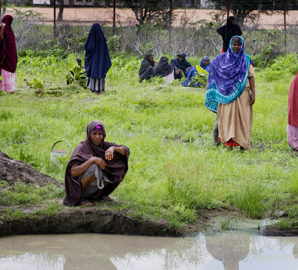
Once known as a refugee-friendly nation, Kenya is becoming more resistant to taking in people who have been forced to flee their homes. That means added challenges for the nonprofit Heshima and the refugee girls it supports, says executive director Alisa Roadcup.

In September 2016, when I arrived at a gloomy, two-star Econo Lodge hotel in Fort Lee, New Jersey, Daey*—which means “mother” in Kurdish—was sleeping.

Throughout the conflict in DRC, children have been abducted and made to serve as soldiers. While most are male, it is estimated over a third are female, used mainly as domestic and sexual servants, but sometimes as fighters. Now an NGO has released a report showing that many of the girls weren’t enlisted by force.