
















Providers are gearing up for a possible ban on one of the two drugs used in medication abortion, as an anti-abortion group's lawsuit is expected to be decided this week.

Mifepristone will be accessible in pharmacies and through the mail, but still-existing regulations may blunt the new policy’s impact.

While India is one of the few countries yet to criminalize marital rape, the high court recently ruled that victims of marital rape are entitled to a safe and legal abortion, establishing in Indian law that non-consensual sex can and does exist among married partners.

Five months after the Supreme Court’s Dobbs decision overturned Roe v. Wade, providers face increased threats and harassment, emotional devastation, and the anguish of having to turn people away from accessing needed care. But they are determined to continue their work.

Plaintiffs in three states are seeking to overturn abortion bans on religious grounds.
Today I consider myself a passionate advocate for reproductive justice and freedom.

Florida school districts are receiving nationwide backlash for requiring students to provide records of their menstrual cycle to play sports.

When it comes to the media’s depictions of abortion, what we most often see may not accurately depict the reality of people’s experiences with abortion.

Advocates in countries that have achieved legalization of abortion in recent years are making it clear that they stand with Americans in efforts to restore reproductive rights and access.

Our country is supposedly the “land of the free” and yet women’s choices about their reproductive health and autonomy are being forced by a government that is in turn influenced by certain religions.

On June 20, a joint investigation from The Intercept Brazil and the website Portal Catarinas found that an 11-year-old (who has remained anonymous) had not only been denied an abortion after becoming pregnant as a result of rape but was also separated from her mother, who was vocal about terminating the pregnancy, and sent to foster care.

Even before Roe v. Wade was overturned, reproductive choice in the United States was reserved for those with the appropriate social and financial resources.

For the first time in my young life, I feel well and truly hopeless.

What happens now? Advocates and organizations have been preparing for the overturning of Roe v. Wade.

On June 1, Illinois officially repealed its Parental Notice of Abortion Act (PNA), which required the guardians of patients under 18 to be notified at least 48 hours before the patient received an abortion.

A documentary and a dramatic film give a chilling portrait of the crushing impact of abortion bans — and of the courageous women who provided abortion care in pre-Roe Illinois.

The proliferation of attacks on LGBTQ rights, abortion access, voting rights, and immigration have prompted activists to intensify coalition-building work.
If our abortion rights are taken away, who knows what other rights will be taken next?
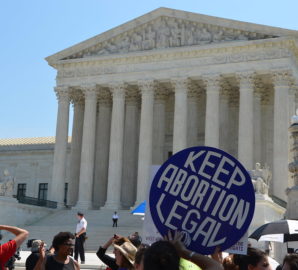
According to a leaked initial draft majority opinion written by Justice Alito, the Supreme Court has voted to strike down Roe v. Wade, the 1973 decision that protects a pregnant person's liberty to choose to have an abortion without excessive government restriction.


There’s no question abortion rights are in a crisis in the U.S. This year alone, 42 states have introduced at least 536 abortion restrictions, with dozens becoming law. And that’s on top of last year’s devastating record of antiabortion laws passed, including the news-making Texas abortion ban that allows anyone — literally anyone — to sue someone who helps a patient receive an abortion, from the provider to an abortion fund to an Uber driver.

The WHO's new guidelines can serve as an authoritative confirmation for what American reproductive rights activists have always known: abortion is essential healthcare.

In a culture that can see girls as a burden, many women opt to abort their female fetuses — even though it's illegal.

On March 8, while many celebrated International Women’s Day, Guatemala’s Congress approved the “Ley para la Protección de la Vida y la Familia” (Law for the Protection of Life and Family), which would punish abortion with up to 10 years in prison.

About 400 women on average are prosecuted every year in the Andean country, blocking eligible women from accessing safe, timely, and free abortions. Underage girls are not exempt from such criminal prosecution and face sweeping sanctions, from restricted movement to mandatory community service, if convicted.