
















According to a new study, there was an encouraging increase in diverse fictional depictions of abortion last year.

A recent Amnesty International report released on December 10, the 70th anniversary of the Universal Declaration of Human Rights, reveals that women, particularly the most marginalized women in the UK, have been disproportionately affected by austerity measures implemented in 2010.

Jair Bolsonaro’s election as Brazil’s president at the end of October, and the threat of far right extremism it represents, comes on the heels of a reinvigorated fight for abortion rights all across Latin America.

Tuesday’s midterm election brought mixed results for abortion rights. Democrats took control of the House, but anti-choice ballot measures passed in two states, leaving millions of women vulnerable to criminalization if Roe v. Wade is ultimately overturned.

With the appointment of Brett Kavanaugh to the Supreme Court, anti-abortion activists see a new opportunity to overturn or gut Roe v. Wade.
From Brazil to México, from Chile to Venezuela, from Peru to Costa Rica, from Bolivia to Ecuador, the green wave protesters’ call for legal, safe, and free abortion has intensified. The right to choose is influencing and energizing the activists in these countries, and these countries’ political institutions are paying more attention to their activism.

In Brazil, abortion is currently only legal in cases of rape, when the pregnancy poses a major threat to the woman’s life, or in cases of anencephaly in the fetus. On August 3 and 6 of this year, a public hearing was held to discuss the possibility of decriminalizing abortion altogether.

Often considered the “swing vote” on the Supreme Court, Justice Kennedy spent his 30-year career making arguably the most bipartisan decisions in the courtroom. Democrats and progressives had come to rely on him as a key figure in the fight to protect existing abortion rights at the federal level.
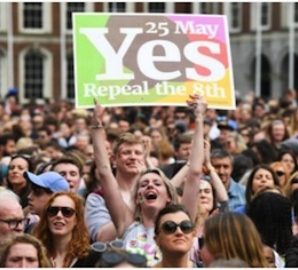
A leader in the campaign to repeal Ireland's abortion ban reflects on how the victory was won — and the implications for other countries.

On Thursday, activists drew attention to severe restrictions on the right to choose: Women in Belfast took abortion pills, which had been delivered by robot from the Netherlands, in front of the city’s main court buildings.

After a lengthy legal battle that reached all the way to the U.S. Supreme Court, Arkansas has become the first state in the nation in which women are unable to access medical abortions.

Minors should have the right to have an abortion without parental consent or notification because teens who choose not notify their parents before having an abortion likely do so for very good reasons other than privacy or shame.

Anti-choice legislators have been quietly using insurance regulations to restrict abortion access.

A monument dedicated to “victims of abortion” is one step closer to being built on the grounds of the Tennessee State Capitol.

The administration's funding priorities threaten programs that provide affordable contraceptive care to millions.
Removing the barriers to accessing safe and timely abortion is an economic justice issue.
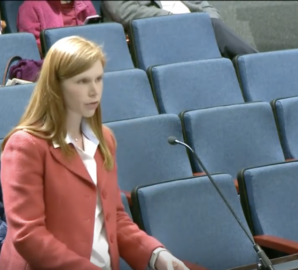
At a recent closed-door meeting, Bethany Kozma stood before a roomful of international leaders assembled to discuss gender equality and women’s rights and announced that the “U.S. is a pro-life nation.”

On Tuesday, the Supreme Court heard the first oral arguments in a crucial case targeting Crisis Pregnancy Centers. Lizz Winstead of Lady Parts Justice explains why this case is so important.
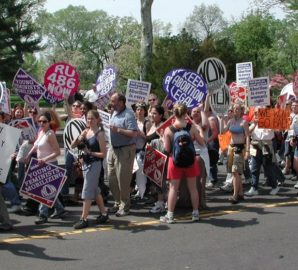
On Monday, Mississippi's governor signed a new bill into law that prohibits abortion after 15 weeks, making Mississippi the strictest state in the country for women who want to terminate unwanted pregnancies. Just before noon today, a district judge granted a temporary restraining order requested by the state's lone clinic.
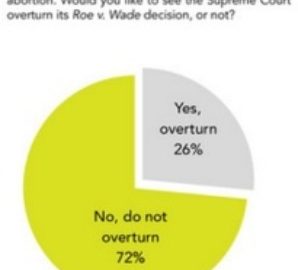
A new approach has revealed that most pollsters may be asking the wrong questions on abortion.

A new study shows that laws restricting abortion access are creating long-lasting economic consequences for women.
The kinds of tactics politicians use to create and pass abortion restrictions are also used by anti-choice groups on college campuses.
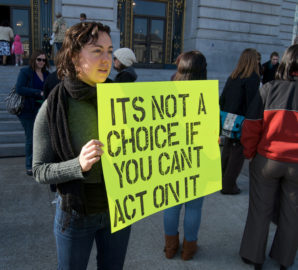
In a vote early this evening, Senate Republicans failed to pass “The Pain-Capable Unborn Child Protection Act,” a bill that aimed to make abortion 20 weeks post-fertilization illegal in most cases.
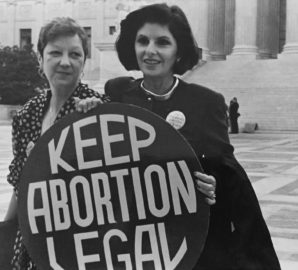
On January 22, 1973, the Supreme Court handed down its decision in the Roe v. Wade case. That decision, made 45 years ago, gave women the legal right to have an abortion.

In three cases of undocumented minors needing abortions, the government has argued that merely allowing the women to physically leave a detention facility would amount to facilitating their abortions, even though no one is asking the government to transport the women to clinics or to pay for their abortions.