
















In New York State, Roe v. Wade is codified into law. This is what Democrats must move to do federally.

There’s no question abortion rights are in a crisis in the U.S. This year alone, 42 states have introduced at least 536 abortion restrictions, with dozens becoming law. And that’s on top of last year’s devastating record of antiabortion laws passed, including the news-making Texas abortion ban that allows anyone — literally anyone — to sue someone who helps a patient receive an abortion, from the provider to an abortion fund to an Uber driver.

The WHO's new guidelines can serve as an authoritative confirmation for what American reproductive rights activists have always known: abortion is essential healthcare.

In a culture that can see girls as a burden, many women opt to abort their female fetuses — even though it's illegal.

As the world observes the two-year mark of the global pandemic, we take stock of the devastating impact on incarcerated women in the U.S.

In Lebanon, where childbirth care is highly medicalized and dominated by obstetricians in private hospitals, women are often persuaded to have cesarean sections, the revenue for which procedure is key for hospitals struggling to survive amid economic collapse.

About 400 women on average are prosecuted every year in the Andean country, blocking eligible women from accessing safe, timely, and free abortions. Underage girls are not exempt from such criminal prosecution and face sweeping sanctions, from restricted movement to mandatory community service, if convicted.

Amy Coney Barrett and other members of the Supreme Court have shown outrageous disregard for the real impact of pregnancy.

Only one gynecologist serves the 8,000 to 13,000 people of reproductive age who need those services in the municipality of Shuto Orizari in North Macedonia’s capital city, the only municipality with a Roma majority in the country. And as of last month, he’s no longer on duty.

What are crisis pregnancy centers, masquerading as medical clinics, doing with women’s confidential medical information?

Many people, myself included, decided to start using the menstrual cup because it’s better for the environment, our bodies, and our wallets than options like tampons and pads.

Doctors in Nigeria have gone on strike at least four times since the start of the pandemic over unpaid wages; its last ended on October 4, after 63 days. We have no way of measuring the consequences for women and children, who were unable to access medical care in that time.
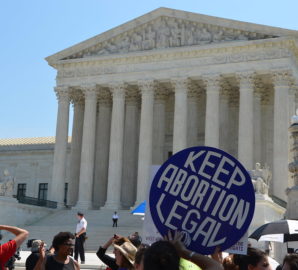
This year, the Guttmacher Institute published a mid-year report that found this was “the worst legislative year ever for U.S. abortion rights,” with 90 restrictions enacted in the 2021 legislative session.

A kissing bug disproportionately affects Latin American immigrants. Author Daisy Hernández talks about the lack of urgency around diseases thought to be uncommon or eradicated in the United States.

With Roe v. Wade imperiled, activists are stepping up with innovative acts of resistance.
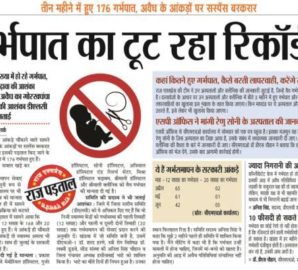
A new analysis of print, digital media, and entertainment has found that coverage is heavy on sensationalism and moral judgment, and light on factual information.

The former state legislator, well known for her filibuster of a 2013 anti-abortion bill, speaks out on how and why we must keep fighting back against the erosion of reproductive rights.

"TIBBI," a telehealth solution meant to digitize the operations of lady health workers (LHWs) in Pakistan for better efficiency, has been ill-received by their patients: workers reported being yelled at and thrown out of homes for being vulgar and recording information on their devices.

Menstruation has long been stigmatized in our society, often portrayed as shameful or embarrassing rather than a natural function of the human body.

A recent trend in anti-choice activism is rearing its ugly head again.

Across western Nepal, tradition remains stronger than law as villagers find new ways to partake in “chhaupadi,” the age-old tradition of exiling women during menstruation because periods have been long considered impure.

In defiance of public opinion, state legislatures in 2021 have already passed the highest number of curbs on abortion since the 1973 Supreme Court Roe v. Wade decision.

In Kashmir, a longstanding history of mistrust with the Indian central government stands in the way of more people getting vaccinated — including pregnant women, who are among the most vulnerable to COVID-19.

Experts fear that disruptions in health services could aggravate India’s already high maternal mortality and child mortality rates.

A new pilot program will be introduced in the upcoming school year to teach sex education to high school students in North Macedonia — and right-wing backlash has already arisen to challenge its implementation.