















In Assam’s Tea Gardens, Low-Wage Women Workers Struggle to Access Maternity Care
On a sunny afternoon in February 2021, Bohagi Tanti Karmakar sat on the ground outside a small thatched mud house in Letekujan, a remote tea garden in Jorhat district of India’s far northeastern Assam state. Karmakar is a temporary worker at the garden, brought in when her labor is needed. There are more than 500 women workers who live on the grounds of this garden.

The frail 20-year-old, clad in a printed maxi dress, was recalling the painful experience of delivering her first child, a son, about a year ago. During her pregnancy, she said she often experienced dizziness and shortness of breath.
Immediately after the child was born, Karmakar started bleeding profusely. She underwent three vaginal surgeries thereafter. “There was a lot of bleeding,” said Karmakar in a meek voice. “It tired me out.” While her son is now healthy, she said she often still feels weak.
Still, Karmakar was one of the lucky ones. According to the latest Indian government data, for every 100,000 live births, 113 women in the country die from pregnancy-related complications. Assam state’s maternal mortality ratio (MMR) of 215 is nearly double that of India’s average and the highest in the country.
Assam is one of seven northeastern states nestled in the frontier region between Tibet, Bhutan, Bangladesh and Myanmar — connected to the rest of the country only by a narrow land corridor known as the Siliguri Corridor. These states are considered distant from “mainland” India, rendering the region’s access to basic services — like health care — far more difficult, especially for economically poor and socially marginalized families.
In Assam, tea gardens are situated far away from towns and cities, and lack proper medical facilities. The state accounts for nearly 55 percent of India's total tea production, and about 80 percent of the country's export. Nearly 1 million workers are spread across some 800 tea gardens and unorganized small gardens. Paban Singh Ghatowar, leader of the Assam Chah Mazdoor Sangh (Assam Tea Workers Association), told me that some 56 to 60 percent of this workforce is made up of women like Karmakar, who spend upwards of seven to eight hours a day out in the fields plucking and pruning the leaves. And, despite the physical demands of their jobs, the pay is barely enough to survive.
In spite of free government schemes to address the issue of maternal mortality through basic health care facilities in government hospitals, they often do not reach thousands of poor women who urgently require these primary health care services. Instead, pregnant women in rural areas like Letekujan have to make long, arduous journeys to government hospitals to avail them, eventually dropping out of institutional maternity care and paying full medical expenses from their meager wages.
Scant local resources
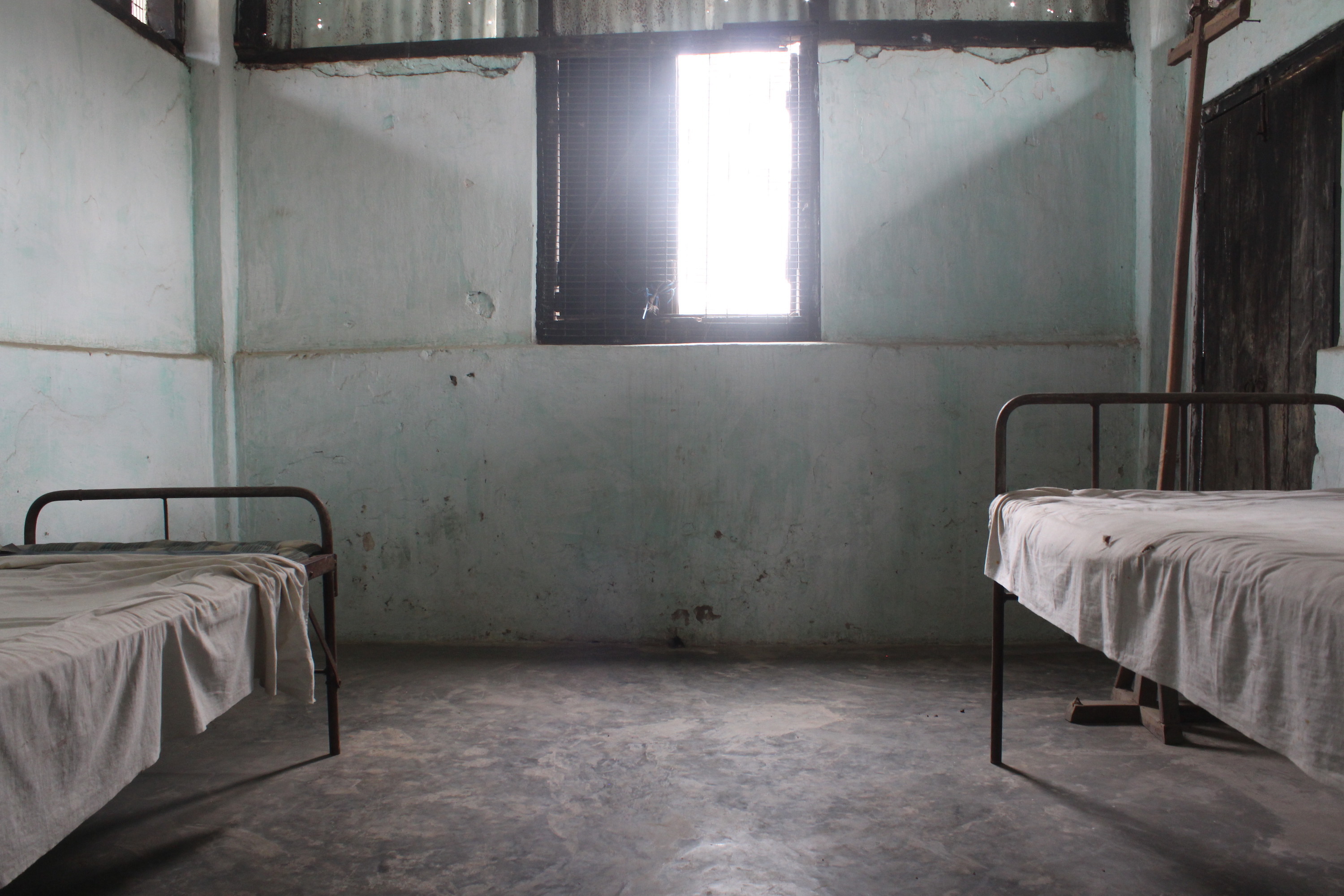
At Letekujan, the lone community medical dispensary — consisting of three small, dingy rooms sparsely furnished with a couple of rundown beds clad in shabby white sheets, a few used surgical scissors placed on ceramic plates on dusty tables, and no visible supply of medicines — lies vacant and dilapidated.
“There is a nurse and a compounder who are usually here,” said Rupen Tanti, who works as a guard at the dispensary. Basic cold and fever medicines are available, he said, but for anything else, patients are referred to the Titabor Civil Hospital in the nearest town over — about half an hour away from Letekujan. Karmakar had to have two of her vaginal surgeries there; for the third, she was referred to the Jorhat Medical College Hospital (JMCH), an hour away from Letekujan.
“An antenatal checkup is supposed to be done at least four times during a pregnancy,” said Amita Dhanu, head of programs at the Family Planning Association of India. “[But] there isn’t anybody to do proper monitoring of the pregnancies [in remote tea areas].” Most women in Letekujan have to travel to Titabor or Jorhat just to buy a pregnancy test to determine that they need maternity care.
A community health worker — a woman from the village who is trained to work as an interface between the community and the public health system — is meant to accompany them during their antenatal checkups, blood tests, and ultrasounds. But, according to Sonia Tanti, Jorhat district’s secretary activist for the All Adivasi Women Association of Assam (AAWAA), that almost never happens because these workers are absent from the fields. They are also poorly paid, according to Dhanu, and not much has been done to better train them or enhance their skills.
There is no local ambulance facility, but a small van owned by the tea garden can ferry patients from the tea garden to the civil hospital. However, Tanti told me that the van is hardly available during an emergency.
In India’s remotest areas, such as the tea gardens, Dhanu said institutional deliveries are scarce because the closest government hospital is 20 to 25 kilometers (about 12 to 15 miles) away. Consequently, the lack of ready and immediate access to the most basic essential services is potentially life threatening, especially for pregnant women and their infants in the far-flung corners of the country.
A 2016 study examining linkages between iron deficiency anemia — the most common form of anemia in which the body lacks sufficient iron to produce red blood cells — and Assam’s high MMR found evidence of links to higher risks of postpartum hemorrhage, low birthweight, and perinatal and neonatal deaths.
Correlatively, a 2018 study carried out in eight tea gardens in four Assam districts revealed that women tea garden workers specifically were suffering from anemia due to poor access to nutritional foods and health care during pregnancy — including 22.4 percent of pregnant women aged 15 to 49 in the Golaghat district neighboring Jorhat. Karmakar, too, was anemic during her pregnancy.
“There are nearly 1 million tea garden workers in Assam who do not get bare minimum wages and work and live in poor conditions,” the report read. “They have little access to health care, housing, nutrition, sanitation, and water facilities. These conditions contribute to Assam having the highest maternal mortality rate in India.”
Girls here are married off as soon as they hit puberty, Binata Borah Gowala — project manager at World Vision India in Jorhat — told me, which means that from a young age, they are burdened with housework, work in the fields, and early pregnancy. As such, the extensive labor at a pivotal time in their developmental growth makes them more vulnerable to health issues. “They are also deprived of proper health care facilities because there is lack of accessibility,” she said.
Workers in the tea gardens have poor diets due to the same lack of access, which leaves them further at risk. “Salt content is high in the tea that women workers consume here [in the tea gardens],” which has led to a higher prevalence of hypertension, said Grace Lalbiek Gangte, a women and children’s health specialist based in Assam.
According to Gangte, consumption of local alcohol, or “illicit liquor,” is also rampant in the tea gardens. In most cases, women workers consume cheap alcohol even during their pregnancies. But due to a confluence of poverty and a lack of awareness, Gangte understands how women workers aren’t well equipped to make the most informed choices for themselves.
Meager wages
While Assam’s tea workers make up one of the most marginalized and vulnerable communities in the region, in terms of their livelihoods and access to health care and education, they serve as a large and influential voting bloc for successive governments. Subsequently, the government of India’s Plantation Labour Act of 1951 provides for the welfare of the tea community and regulates the conditions of work in India’s tea plantations.
The community has been demanding a pay raise for permanent laborers from the existing interim wage of ₹167 (about $2) to ₹350 (about $5) since 2017. “In today’s day and age, a family cannot survive on ₹167 [per day],” said Lakhi Ram Tanti, a social worker from Cinnamara tea estate in Jorhat, both a larger property and far more accessible to nearby towns than Letekujan. “It does not fulfill our housing, medical, water, food, and electricity expenses. The community is underdeveloped because we are so lowly paid.”
In addition to permanent workers, tea estates also employ temporary workers, who are brought in when additional labor is needed during the peak plucking season between April and November. The wages for a temporary worker often fluctuate, sometimes well below the ₹167 minimum that a permanent worker makes. They are often disparagingly called “faltu” — meaning “useless” — given their status, even as they comprise half of the workers in tea gardens.
For ₹167, most women end up working long hours, even during their pregnancies. “Once the leaf season begins, plucking will start, and we will have to work for eight hours or more at a stretch with only a lunch break in between,” said 25-year-old Joymoti Gwala, who works as a permanent worker at Letekujan.
According to the reports, the Assam government has increased the wages of tea garden workers by ₹50 ($0.68), but human rights lawyer Jayshree Satpute, who has worked with the tea garden community, said that while the demand has been ₹350, the wage in 2021 for the workers to live a dignified, healthy, and safe life should be a couple hundred more than ₹350. “Better pay can be a component in saving the lives of women,” Satpute said. “[Then], they’ll have the resources to access better health care and food.”
Lack of awareness and access to reproductive and sexual health
Lakhi Mirdha, a 19-year-old temporary tea garden worker from Letekujan, hasn’t been working for some time now. Her husband, too, is a temporary worker and wasn’t home when I visited. They’ll be called into the fields when the extra labor is needed; otherwise, Mirdha’s husband picks up daily-wage jobs in Jorhat or Titabor while she stays home. A regular day for Mirdha consists of completing her household chores: cooking, cleaning, and fetching water.
Mirdha married two years ago, at 17, and has already had two deliveries. But neither of her daughters survived — one passed away at four months; the other, when she was six months old. Both girls were born premature.
When asked how her daughters died, the soft-voiced Mirdha told me that her house is haunted. “There is something wrong with this house. It’s evil,” she said.
While superstitious beliefs remain prevalent, many tea women workers generally lack awareness of services that can help them delay, prevent, or space out pregnancies. According to Dhanu, couples aren’t aware of any other method of contraception apart from condoms, which are at the discretion of the men to use — and few are willing to. There are, however, other options for women, such as monthly oral pills or an IUD insertion. “But somebody has to create the demand for these services, and then these services need to be delivered to the women,” said Dhanu. “On both these accounts, the tea gardens have failed.”
Even if a woman, or her partner, wants to buy contraception, they likely would have to let go of their day’s wage in order to go to the nearest town about 17 kilometers away (10.5 miles) away, get what they need, and then come back, said Satpute. “The price of a condom may as well be similar to that of their daily wage.”
Government schemes fall short of ‘the last mile’
The Indian government has introduced several free schemes for poor pregnant mothers to access antenatal checkups, institutional deliveries, blood tests and ultrasounds: Assam’s Bharatiya Janata Party (BJP) government introduced a wage compensation scheme in October 2018 to provide better health and nutrition to the pregnant women of the tea garden areas. Under the scheme, a cash benefit of ₹12,000 ($163.05) is provided to each pregnant woman in four installments to cover expenses related to maternal health care.
But Karmakar, who has filled out the form twice, is yet to receive any installments of ₹12,000. In lieu of this assistance, she’s had to pay for her own ultrasounds, blood tests, and surgeries.
Services for the women of the tea gardens “should ideally be free at the government hospitals,” said Tanti of AAWAA, “but they most often end up paying from their own pockets or go to a private hospital. I know women from Letekujan who’ve had to pay for their own C-section deliveries.”
Bhoni Mai Mudi, an 18-year-old temporary worker from Letekujan who is currently in her first trimester, was informed by a community health worker that she was suffering from anemia and was taken to the nearby civil hospital for a blood transmission. “It didn't happen for free,” Mudi said. She and her husband paid from their own pockets, which has resulted in massive debt for the entire family.
Most women I spoke to told me that they were asked to pay for pregnancy, ultrasound, and blood tests, buy their own prenatal vitamins, and even give some money to the health workers, who are supposed to help them for free. “I bought the iron injection, too, for ₹620 ($8.54),” said Mudi. “This is my third month [first trimester], and I’m worried that the expenses will increase.”
The government workers and higher authorities at health departments are charged with ensuring proper monitoring of the schemes and facilities on the ground, but that “almost never happens,” said a public health worker from Assam, who asked to remain anonymous.
On paper, there are some “wonderful” government programs, said Dhanu, but there are gaps in their implementation. “There are no providers at the last mile.”
Meanwhile, the Indian Tea Association (ITA) on March 23 has hiked the minimum day wage of workers by an interim amount of only ₹26 ($0.36). Earlier, the ITA and 17 tea plantation companies had filed a petition to withdraw the February 23 notification from the Labour Welfare Department that had increased the minimum wage to the interim amount of ₹50 ($0.68). With Assam state going to the polls beginning March 27, both the ruling BJP and opposition Congress have been trying to court votes among the tea workers.
But real change must find motivation beyond an election cycle. Until then, the pregnant women of Letekujan are on their own. Without support at every crucial milestone in their pregnancies, women workers of the tea gardens will continue to play a precarious game of chance with their survival.
More articles by Category: Health, International
More articles by Tag: India, Maternal health


