















What will it take to prioritize women’s dignity and safety over defending the disclosure — on purpose or through reckless error — of private information?
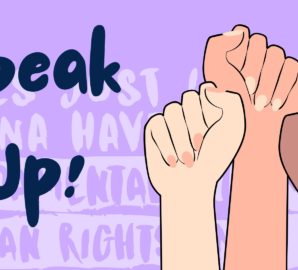
When Egyptian feminist group Speak Up announced a partnership with Pornhub—the world’s largest website for adult content—to rapidly identify and remove non-consensual content, it received immediate backlash. Are its efforts meeting the reality of sextortion in the country, or normalizing a platform that has often hosted non-consensual and illegal content?

Laura Bates, author of The New Age of Sexism, says: “We are building a whole new world, but the inequalities and oppression of our current society are being baked into its very foundations.”

After a scathing experience in one of India's top media houses, Meena Kotwal, a Dalit journalist, founded The Mooknayak, an independent online media outlet that reports on caste oppression and systemic violence against marginalized communities across India.

Women journalists are significantly more likely than men to be targeted for online threats and harassment, and it's having an impact on how they do their jobs.

Anti-Muslim violence and hate speech have become normalized under the ruling Hindu-nationalist Bharatiya Janata Party (BJP), but activists say that the attacks against India’s Muslims have ratcheted up over the last year — particularly, against Muslim women.

The competition for the presidency, between the only son of a “strongman” and a widow, resonates with the enduring friction between a woman-centered native culture and the infrastructure of patriarchal political dynasties bred by colonialism in the Philippines.
The silencing of women online goes beyond trolling.
More than 80 women had their names and pictures posted without their consent on the app’s “deals of the day.” Rather than hosting actual transactions, the sole purpose of the app was to humiliate its subjects.

Journalists and activists in Bosnia and Herzegovina are routinely harassed, threatened, and intimidated for their work with refugees and migrants entering the country via the Western Balkan route.
It is vital to know how your personal information is being absorbed and used by others.

The bipartisan bill, part of the Violence Against Women Act reauthorization, would be the first to outlaw the distribution of private intimate visual depictions without consent.

When a Telegram group called “Public Room” was discovered sharing private images and contact information of countless women and girls from across North Macedonia without their consent, the outrage was swift, but authorities' lackluster response to online crimes against women signals a critical need for more protections — and better enforcement.

Earlier this month, Wikimedia, which runs the crowdsourced database Wikipedia, put into effect a global code of conduct aimed at lessening harassment for its underrepresented contributors.
An interview with Anna Simone, a sociologist and a professor at the University of Roma Tre, about how women and men are scrutinized differently by the Italian media and public.

When an Instagram private group of twenty schoolboys from Delhi's elite schools fantasizing and degrading their female classmates went viral, it was supposed to offer a cultural reckoning for India's teens about misogyny and gendered violence. Then, it took a dark turn.

The coronavirus pandemic has led to a massive surge in child abuse material being uploaded, according to a story from the Fuller Project for International Reporting co-published with the UK Telegraph.

While Venezuela reels from its ongoing political and humanitarian crises, attacks against members of the press, and particularly women journalists, have become especially acute.

Despite citing scientific evidence, no sooner had my tweet gone live than a legion of angry twitter users, mostly men, came baying for my blood.

As if being pursued by an enemy isn’t traumatic enough, women in the military are also being stalked by their own..
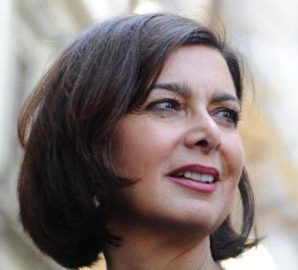
Research shows that social media exposes female politicians to online abuse, but it also enables them to engage directly with their constituencies without the bias of mass media.

The discussion around Rep. Katie Hill's resignation has mostly missed the truths about the crime that was committed against her.

“I don’t think there is any reason whatsoever to charge me with hate speech toward anyone,” says Russian feminist Lyubov Kalugina.

The targeting of a member of parliament has shed light on everyday violence against women.
When one is trying to shame, embarrass, or call into question the reputation of a woman, exposing her body is often the first weapon used to do sob