
















Spain's Partido Socialista Obrero Español (PSOE) party may have won in the country's general elections in April, and in European elections in May, but the threat of anti-abortion, anti-immigration, and anti-feminist party Vox looms large across the country, especially for Spain's women, who have so much more to lose than to gain.

Decades after Guatemala's 36-year internal armed conflict, 36 Maya Achi women are seeking justice against the soldiers who raped them and the officials who gave them the orders.

It's tempting for Western audiences to believe that cell phones beget rape in Congo, but the real root causes of mass sexualized violence in the country require more nuance than that.

As Congress deliberates ratifying the Uyghur Human Rights Policy Act of 2019, Women Under Siege spoke with Mihrigul Tursun, a Uighur refugee, about her experience at what she describes as an "ethnic cleansing camp" for Uighurs in China's Xinjiang region.

On April 9, 2019, Ivy Wangechi, a sixth-year medical student at Moi University in Kenya, was murdered. Like many stories of femicides that came before Wangechi’s, the media’s depiction of this murder was problematic.

Brazil has maintained its place as first among countries with the highest murder rate of trans and gender-diverse peoples. In a country that remains deeply conservative and religious, and under a president who has openly targeted the LGBTQ community to "rescue our values," Brazil's trans community especially is fighting to exist, freely, openly, and safely.

On April 27, thousands of people gathered in central Jakarta for the 2019 Women's March, parading in solidarity to support women's right in the archipelago and across the globe.

If women have historically been silenced and ignored about experiences of conflict-related sexual violence, the inverse is now true: survivors are being pressured to share their stories, emphasizing heinous details of sexual abuse and little else.

Organized criminal gangs displaced hundreds of families from their homes in the mountains of Guerrero state, Mexico. It's the women—mothers, grandmothers, aunties, and sisters alike—who are keeping their communities together.

The United Nations passed a watered-down version of a resolution to end sexual violence in war on April 23 after bowing to pressure from the Trump administration to eliminate all references to sexual and reproductive health and protections for gay and transgender victims.

The Trump administration’s latest use of domestic politics to hold international rights hostage will cost women's lives.

In 2018, Fabiano Contarato became the first openly gay man to be elected to the Brazilian Senate. The 52-year-old senator, who represents the state of Espírito Santo, was elected in the midst of a shift in Brazil’s political climate toward extremist and fundamentalist views; the president elected in 2018, Jair Bolsonaro, has consistently made racist and homophobic remarks and has been called “Trump of the Tropics.”

Zimbabwean students, both male and female, are struggling to pay for higher education. In response, a number of female Zimbabwean university students have begun to engage in transactional sex to pay their tuition and otherwise survive.

South Korea’s Constitutional Court struck down a 66-year-old law that criminalized abortion in the nation on April 11. Women’s rights and pro-choice activists who have long campaigned to overturn the ban celebrated the decision.
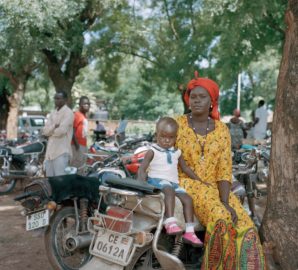
Only a paltry number of women conflict photographers are in the field compared to men, which means that men are largely shaping our understanding of war.

The 30-year rule of Sudan’s president Omar Hassan al-Bashir was ended on Thursday when the military announced it had finally unseated their leader, who governed with an iron fist and is wanted on charges of genocide.

Recently, reports surfaced of an 11-year-old girl from a rural area in Argentina who got pregnant after being raped by her grandmother’s partner. Mariela Belski, Executive Director of Amnesty International Argentina, told the FBomb more about this case and how Argentinian girls and women are fighting for justice thanks to the Ni Una Menos (Not One [Woman] Less) movement.

The development in their case comes after a months-long saga in which the women, who said they fled to escape an abusive family and restrictive society, hid out in Hong Kong and stayed in various safe houses out of fear they could be intercepted and forced to return home.

Several women had reported being raped by security forces during the government crackdown on protests in January. Since then, no formal investigations have been undertaken; no formal independent complaints mechanism has been established; and the outrage has dissipated.

Ugandan Tourism Minister John Kiwanda plans to feature “curvy and sexy women” as a primary Ugandan attraction in the official literature for the nation’s tourism. The plan also includes the launch of a beauty pageant called “Miss Curvy Uganda,” the winner of which will be used in an advertising campaign.
This attack, like almost all mass shootings, was perpetrated by a man.

As the number of cases of attempted kidnappings in metro stations mount, feminist civil society is fighting to create a safe city for women, against the inefficacy of law enforcement and a city government that appear ill-equipped to address the daily reality of violence committed against them in public.

Sexual harassment and bullying of women have long been commonplace in Nigeria’s bustling markets. Now, women are leading the charge to change its culture.

Populist nationalist political leaders have been increasingly rising to power in recent years all over the world — from Bolsonaro in Brazil to the success of the Vote Leave campaign in the UK to President Trump. Now a group of female leaders has banded together to warn the world about how this growing embrace of right-wing authoritarianism undermines women’s rights across the globe.

A year after Rio de Janeiro city councilwoman Marielle Franco's murder, justice remains elusive, but her life and work live on with her supporters.