










In a year when Latin America was swept with protests against gender-based violence from Mexico to Chile, the Encuentro de Mujeres que Luchan, organized by the Zapatista community, welcomed some 4,000 women to the Chiapaneco highlands to unite in transnational feminist solidarity and confront the global crisis of violence against women.

India’s government said early last week it thinks women are not fit to serve in ground combat roles—citing reasons that are embarrassingly regressive.

A study published Wednesday confirms “extensive direct links” between environmental pressures and gender-based violence.

The CAA’s language grants a legal path to citizenship for only some "persecuted minorities." Muslims, as well as groups like Tamil refugees from Sri Lanka, Rohingya Muslims from Myanmar, and Buddhist refugees from Tibet, are all left out.

A court in India issued a death warrant Tuesday for four men convicted of gang-raping a 23-year-old physiotherapy student in 2012. They are set to be hanged on January 22.

Korean women are still—nearly 75 years later—fighting to gain restitution from the country that forced them into sexual slavery, despite a “final and irreversible” deal reached between Korea and Japan in 2015.

While Harvey Weinstein’s accusers are figuring out whether to take a proposed multimillion-dollar settlement, Japan’s version of Harvey Weinstein has been ordered to pay just 3.3 million yen ($30,000) in damages in a very public rape case.

Zimbabwe's maternal mortality crisis is pushing the debate on abortion, but the current economic crisis and stigma stand in the way of legalization.
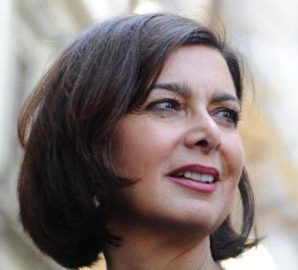
Research shows that social media exposes female politicians to online abuse, but it also enables them to engage directly with their constituencies without the bias of mass media.

While she may have escaped the horrors of North Korea, one woman who defected to South Korea says she has been forced into a new nightmare.

As part of a new revolution, South African women are making efforts to rewrite parts of our history in a way that is reflective, inclusive, and honest about the contributions the likes of Madikizela-Mandela have made during the struggle.
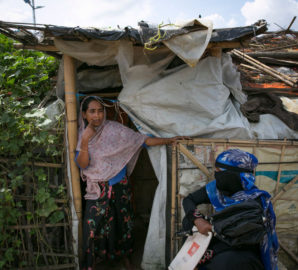
Burmese women are critical to understanding a country whose people have endured systematic violence and repression for far too long. They can’t be forgotten.

In a stunning display of greed—or possibly deep ignorance—two popular Japanese clothing brands have purposely turned a human rights tragedy into a selling point: Muji and Uniqlo have both been touting the fact that the cotton for their clothing comes from Xinjiang, China, an area in which a million Muslim Uighurs have reportedly been detained in “reeducation” camps.

As absurd or 1950s as it sounds, women across various work sectors in Japan are being told to take off their glasses.
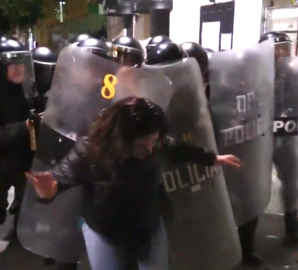
Amid ongoing violent demonstrations against the re-election of Bolivian President Evo Morales, masked protesters on Wednesday kidnapped the mayor of a small town in central Bolivia.

In a country as staunchly anti-abortion as Argentina, Sunday’s presidential election outcome signals a potential sea change for women’s rights in the notoriously restrictive country.

As the #MeToo movement steadily grows throughout Mexico, with thousands of actions, collectives, and ongoing projects in operation throughout the country, women are finding their power to fight back and build a society in which their lives are not in constant danger.

Women Under Siege discussed the disproportionate impact of the occupation on women with Kashmir scholars Ather Zia, founder of Kashmir Lit and co-founder of the Critical Kashmir Studies Collective, and Nitasha Kaul, a poet, novelist, artist, and associate professor of politics and international relations at the University of Westminster.

Gloria Steinem and Christine Ahn return to the DMZ to call on the leaders of the United States and North Korea to return to talks and negotiate a final settlement to the nearly 70-year-old Korean War. Ahn's article argues the importance of including women in the peace negotiations.

As of August 1, the Netherlands has instituted a ban on burqas and niqabs in public places, including hospitals, educational facilities, police departments, public museums, and public transportation. This recent policy change stands in stark contrast to the common narrative of Dutch people as tolerant and progressive, and highlights just how pervasive populism and Islamophobia currently are in Europe.

The Helms Amendment and has caused damage to women all over the world by limiting U.S. funding for family planning all over the world.

Zimbabwe's economic crisis has forced women working in informal setups to the fringes, where they're often rendered vulnerable to physical and sexualized violence.

As I watched the mainstream media cover this day this year, I noticed that hardly any mentioned the female leaders of a famous 1990 protest.
Kenyan women and girls rarely get information about abortion at all because our society is heavily influenced by conservative religious beliefs. There is no sex education in the Kenyan education system, and religion seeps into classes like biology; Kenyan students are taught in their schools that abortion is evil and against God’s will.

One of Donald Trump's first acts as president was to reinstate and expand the global gag rule. This conservative policy hurts people in developing countries that already have to endure systemic obstacles to access health care.