
















Despite their disproportionate vulnerability, the Indian government has largely ignored commercially sexually exploited people in its response to the coronavirus pandemic.

Last August, India's Hindu nationalist government scrapped Articles 370 and 35A of the Indian constitution, stripping the state of Jammu & Kashmir of its special constitutional status. What followed is only the latest chapter in a documented history of sexualized violence by security forces as a means to quell dissent in Muslim-majority Kashmir.
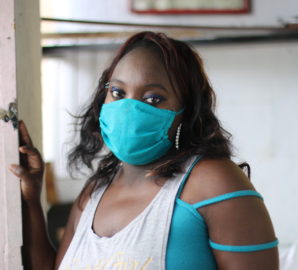
"We're one of the most vulnerable populations, and it's the government that makes us vulnerable. During this pandemic especially, we need maximum protection."

In early 2018, the story of a baby who was raped by a relative sent shockwaves around the world. Two years later, the world has moved on, but she is no closer to receiving justice.

Countries like New Zealand, Germany, and Finland have had striking success in fighting the coronavirus. What do they have in common? For one, they all have women leaders.

Pandemic-related lockdowns disproportionally burden women. By asking the right questions, policymakers can create policies that alleviate that burden.

Countries like Spain, France, the UK, Argentina, and Norway have devised schemes that allow women to seek help without alerting their partners.

The loss of resources, support systems, and general safety puts survivors at risk of further abuse.

Almost six months since it was first performed, “Un Violador en Tu Camino” (“A Rapist in Your Path”) has become a universal feminist anthem that has crossed borders, languages, and cultures.
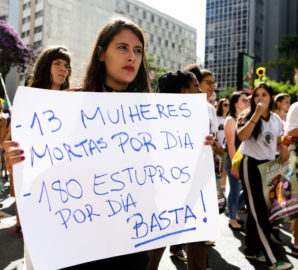
While murder rates are falling in Brazil, femicide rates continue to steadily climb, and with President Jair Bolsonaro at the helm, there are no promising signs of the violence abating.

In Mexico's northeastern state of Nuevo León, young feminists are creating their own safe spaces to share, bond and mobilize, and demand an end to the country's pervasive gender-based violence.

After a tumultuous two weeks in which abortion services were supposed to be operational yet remained inaccessible through Northern Ireland’s health service, the Department of Health said medical professionals were now permitted to "terminate pregnancies lawfully."

In a country not known for its empowerment of women—or for its health system—five teenage girls are tackling Afghanistan’s coronavirus outbreak head-on.

Even with a zillion variations of “lockdown” and other measures being taken around the world to contain the spread of coronavirus, Panama has managed to find its own unique way of doing things.

Argentina’s battle for abortion rights reached a new boiling point in March when the country’s president, Alberto Fernández, announced a bill to decriminalize abortion.

The question of who will participate in and who will be excluded from the future of work — in times of crisis and the rest — requires a thorough analysis.

Months after Turkish forces launched an offensive in the Rojava region, which some have likened to genocide, a rise in miscarriages sheds light on the unseen impacts of the occupation.

Stories about something that is “still” happening don’t get many eyeballs. But there is no way around what is still happening to Syrian women and girls as the conflict enters its 10th year, and the United Nations is sounding the alarm.

While countries across the world celebrated International Women’s Day on March 8, dozens of women in Kyrgystan were detained for “violating public order” after coming under attack by masked men.
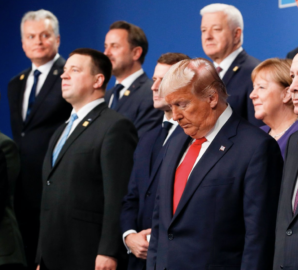
Nearly 90 percent of people in 75 countries demonstrated at least one bias against equality—with 91 percent of men and 86 percent of women showing bias in one of the four areas studied.

In the UK, toilet paper is considered a “necessity,” unlike tampons, which are taxed like a luxury item.

While Venezuela reels from its ongoing political and humanitarian crises, attacks against members of the press, and particularly women journalists, have become especially acute.

Now that the UK has officially left the EU, the government has decided to overhaul its immigration system, and women are about to become the big losers in the process.

As of Monday, women will be afforded equal rights to men who serve, in that they can finally receive equal pay and benefits, achieve command positions, and make the army their career—rather than being forced out after 10 to 14 years.

A shocking new report from Women for Refugee Women, a UK-based nonprofit, says one-third of women they interviewed who had been raped or sexually assaulted in their home countries have faced further rape or sexual abuse while destitute in the UK.