















Women are leading protests against discriminatory legislation in India
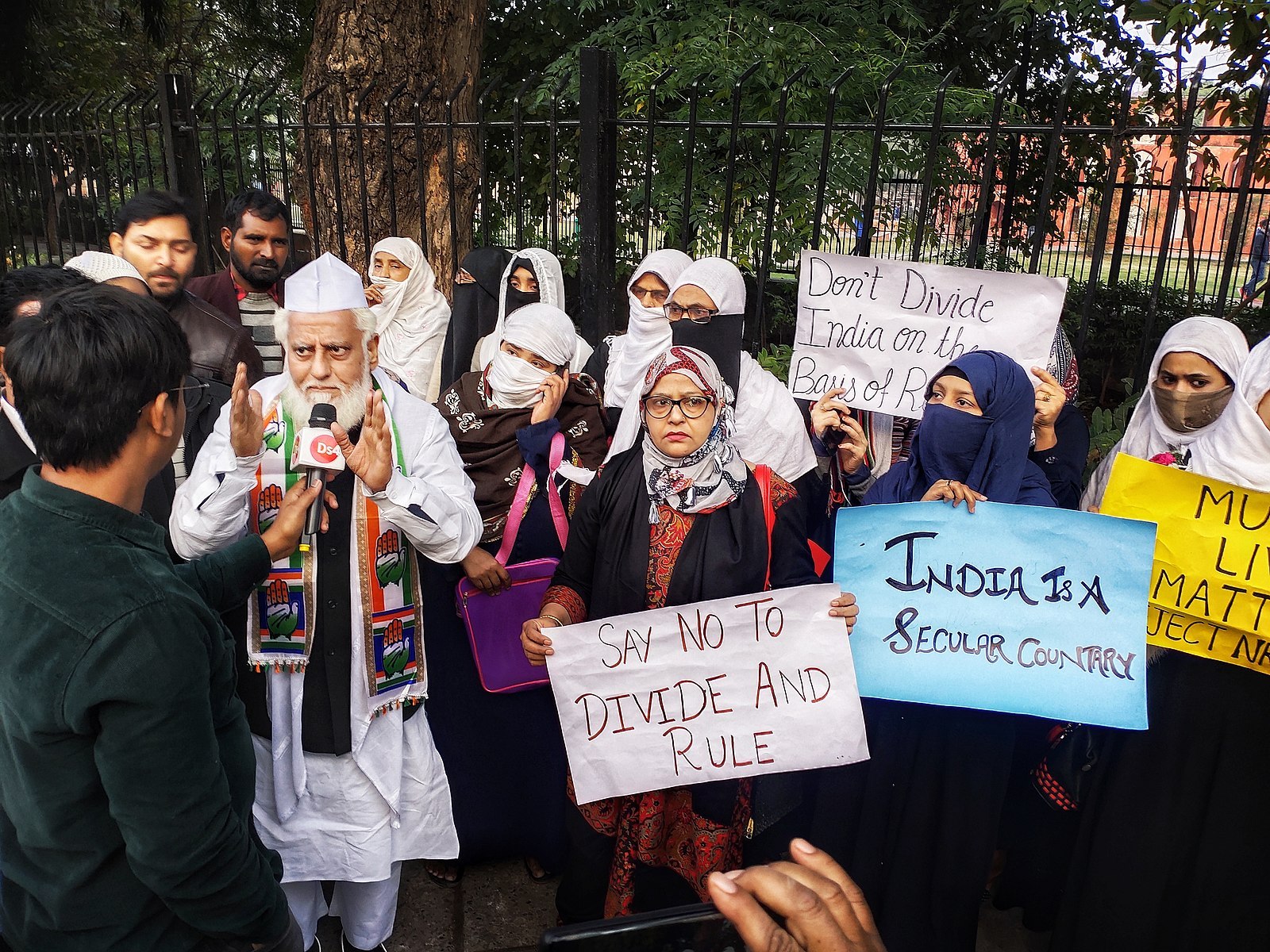
Violent protests and movements have broken out across India after Indian Prime Minister Narendra Modi’s Citizenship Amendment Act (CAA) passed in December. The CAA’s language grants a legal path to citizenship for only some “persecuted minorities,” such as Hindus, Christians, Sikhs, and Buddhists. Muslims, as well as groups like Tamil refugees from Sri Lanka, Rohingya Muslims from Myanmar, and Buddhist refugees from Tibet, are all left out.
The Bharatiya Janata Party (BJP), a major political party in India that sponsored the act, argues that the legislation is an improved version of the 1955 Citizenship Act. But according to an Associated Press (AP) report, Prime Minister Modi’s interior minister revealed the true motive of the legislation in an election speech last April; he said the CAA would implement the National Register of Citizens (NRC) — an official record of legal Indian citizens — to “flush out the infiltrators” from India.
In response, a number of protests have taken place all across India over the last month — and they’re growing. In Shaheen Bagh, for example, small, peaceful sit-ins have grown into large-scale demonstrations that regularly attract 20,000 people.
Notably, many of these protests are being spearheaded by women. According to a DW report, the CAA could disproportionately impact women because they are often deprived of official documentation no matter their socioeconomic status or background. The CAA would make obtaining documentation even harder.
In response, the Indian government is now attempting to ban protests altogether. According to an AP report, the number of incidents of police violence and brutality has increased alongside protests; 23 people have been killed for various reasons since the CAA passed, and most of these deaths occurred in Uttar Pradesh — a state in which 20 percent of the 200 million people who live there are Muslim. Police in Uttar Pradesh have taken nearly 900 people into custody for engaging in violence.
This wave of protests has also sparked international concerns. The U.S. Commission on International Religious Freedom published a press release in December 2019 stating that the legislation is a “dangerous turn in the wrong direction.” The statement also called upon the U.S. government to consider sanctions against the home minister, who maintains internal security and border management.
Several South Asian Americans have spoken publicly about these events. In a January 13 statement, Microsoft CEO Satya Nadella said, “I’m shaped by my Indian heritage, growing up in a multicultural India and my immigrant experience in the U.S. My hope is for an India where an immigrant can aspire to found a prosperous startup or lead a multinational corporation benefitting Indian society and the economy at large.” U.S. Representative Pramila Jayapal (D-Wash.) wrote in a Washington Post op-ed that “as a member of Congress and as an Indian American, I will continue to speak out on fundamental principles of democracy.”
Students at Bates College in Maine also started the South Asian Students Against Fascism movement which is meant to counter the culture of hate and religious polarization in South Asia. They ask that if students study abroad, they should “help organize resistance from afar,” and if people are in Delhi or other parts of India, they should let students in the movement know how to help.
More articles by Category: Immigration, International
More articles by Tag: Asia, Activism and advocacy, Discrimination, Law


