















Mass rape in Congo demands a more nuanced understanding than the cell phone in your pocket
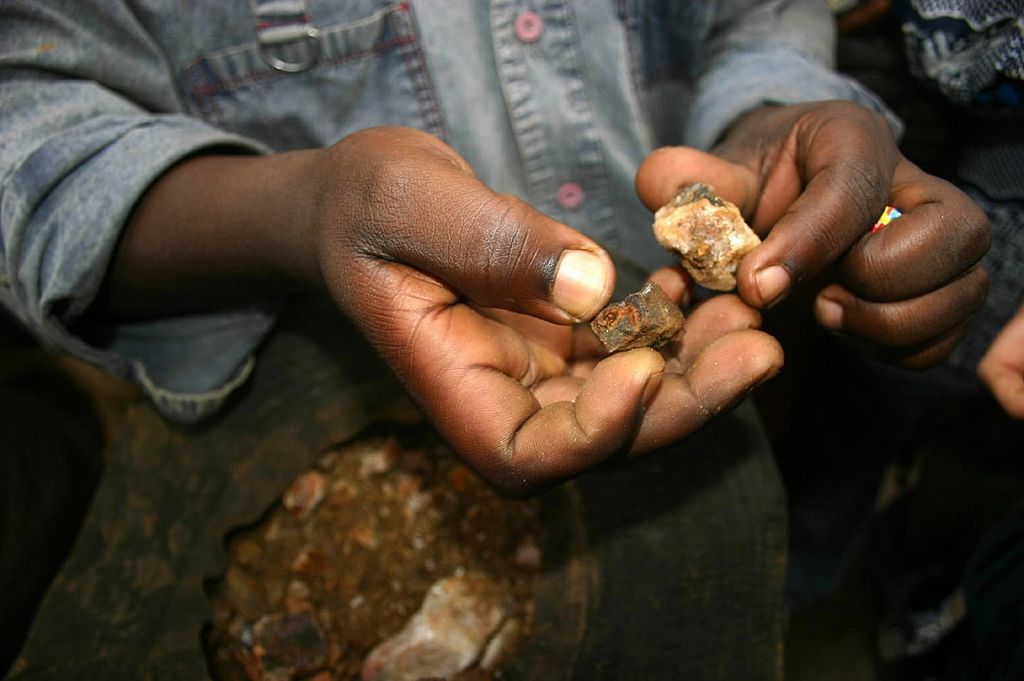
When Dr. Denis Mukwege was awarded the 2018 Nobel Peace Prize last October, international attention was renewed to the “flamboyant brutality” of mass sexualized violence in eastern Democratic Republic of Congo (DRC) and, with it, an exhausted DRC epithet: “the rape capital of the world.” Nearly a decade ago, former UN Special Representative on Sexual Violence in Conflict Margot Wallström used it in an address before the UN Security Council, and again when she wrote in The Guardian linking it to another reductive trope: that “the bodies of women and girls continue to be used as fodder in a war fueled by mineral resources” (her op-ed’s title, “’Conflict minerals' finance gang rape in Africa,” leaves no room for ambiguity). Indeed, at this rate, Congo is just as notorious internationally for its “conflict minerals” as it is for this epithet, but the handful of clichés that dictate international awareness of the country does little for our understanding of Congo’s complex internal conflict, much less for our capacity to address the real root causes of its pandemic of mass rape. I address the rape-minerals nexus here, how it is, perhaps, the favorite of many oversimplified narratives surrounding the conflict in eastern Congo, and how it exonerates Western audiences of meaningful action.
In response to Dr. Mukwege’s recent award, researchers Ann A. Laudati and Dr. Charlotte Mertens seized the opportunity to revisit and critique the popular claim linking resource extraction and mass rape, explaining, “The narrative of rape as a weapon of war to access minerals resonates with Western audiences because it establishes a clear victim-perpetrator setup: racialized and gendered rebels and soldiers against a terrorized population.” Reporter Laura Heaton made a similar observation in her treatment on the narrative of sexualized violence in DRC, writing, “Public understanding of humanitarian emergencies tends to focus on one story and one type of victim … and raped women are [the Congo conflict’s] most prominent victims.”
If something rings familiar about the figure of the suffering Congolese woman who’s subjected to extreme sexualized violence, that’s because she is deployed often as supporting cast in the personal journey of the white intervenor. She is a popular—and even beloved—figure within the legacy of Western savior stories, who provides the stark contrast needed to highlight both the dark, brutal violence of a distant land, and the shiny optimism of “change” that ordinary people in privileged nations can impact. Following this tradition, many Western audiences were made aware of the sexualized violence in eastern Congo because of high-profile visits like Wallström’s and campaigns led by celebrity spokespersons. In 2009, Nicole Richie appeared in a video with The Enough Project’s John Prendergast discussing this very figure of the raped Congolese woman, and how “consumer campaigns” could make the difference for her. Actress Robin Wright committed herself to work in Congo after a trip in which she visited women who had survived mass rape by soldiers and militiamen. She told The Guardian that those women asked her to be their voice, so in 2016, Wright joined the #StandWithCongo campaign to push greater transparency of conflict minerals in the U.S. marketplace, arguing, “We are using these devices all day, every day, for our convenience and it’s basically perpetuating a war.”
While the passion behind Richie’s and Wright’s stance—and their desire to help Congolese women—is both understandable and admirable, to accept the simple framing that cell phones beget rape only succeeds in making the issue appear addressable to an uninformed audience while failing to adequately support survivors.
Celebrity activism, when enacted as a trend—e.g. “airdrop” intervention work—places these women in a particular type of victimhood, and the emphasis on “conscious consumerism” facilitates a poor understanding of what empowerment actually means. In their 2017 report “Emissaries of Empowerment,” Kate Cronin-Furman, Nimmi Gowrinathan, and Rafia Zakaria note that the Western idea of empowerment programming often only applies its narrowest interpretation, focusing on providing women with economic livelihoods that largely remove them from politics. Another campaign Wright champions perfectly typifies this shortcoming: a luxury pajama line called Pour Les Femmes marketed that a portion of sales would go back to providing sewing machines for Congolese women, suggesting that Western consumerism could lift these women out of their current situation. However tempting it may be to believe that a sewing machine could provide women with the agency needed to change their lives, the idea merely places the responsibility on these women to uproot the deeply-entrenched social, cultural, and political structures that victimize them. What it does achieve is placing the Western consumer at the center of the solution to this issue and making them feel heroic.
Cell phones offer an easy explanation—and solution—to a problem that might look insurmountable otherwise. We’d love to believe that we have the power to undo the horrors faced by many women in Congo simply by boycotting conflict-mineral mining (the exchange between Richie and Prendergast in the Enough Project video suggests as much) rather than by confronting the myriad factors contributing to this violence (political history, gender relations, and lack of sensitization, to name a few). But, just as there are many actors in the conflict that are erased by this narrative, the narrative also silences the voices of the most important constituency: those who are actually affected by sexualized violence in Congo.
Take the Enough Project video featuring Richie: Congolese women are only seen, but they are being spoken for and—literally—spoken over. Survivors and their communities have both the greatest understanding of and the greatest stake in the situation. Theirs are the voices we need to be prioritizing.
In response to public outcry, the Congolese government moved to ban pregnant women from the mines in an attempt to chip away at the pandemic of sexualized violence attributed to mining. “You saw artisanal mining women in Kinshasa telling policymakers and women, ‘Do not ban pregnant women from the mine site. That’s what the law says, but we don’t want that because we need access to cash...When we [have to] go through our male counterparts or men in the community, it can render us more vulnerable,’” said Joanne Lebert, executive director of IMPACT, an organization focused on expanding the dialogue around mining in areas where human rights are at risk. IMPACT spoke to local community members and found that this response simply removed women from an economic sector without providing another avenue for income, let alone addressing the causes of such violence or providing help for those already affected.
In partnership with Carleton University, Uganda’s Development Research and Social Policy Analysis Centre, and the group’s local partners in DRC, IMPACT conducted research to examine the role of women in the artisanal mining sector, and what economic empowerment would look like when framed in the context of political power. After consulting with local communities, they found that women were being further victimized by policies that failed to take gender inequalities into account. These local communities expressed their needs and then presented their recommendations to lawmakers—a structure that allowed those most impacted by policies to have a direct say in their formulation.
“We know what's been done to us, we should be the first ones involved in responding to this crime,” Guillaumette Tsongo Kanyere, a women’s rights activist in Congo who is herself a rape survivor, told delegates at the UN’s first conference on ending sexualized violence in humanitarian crises in Oslo last week. “We are not asking you to speak in our name but to amplify our voices.”
Placing survivors at the forefront of discussions will likely broaden the understanding that drives intervention and, ultimately, offer them more comprehensive support. Fortunately, international audiences have slowly begun to widen their understanding over the last few years, moving away from an over-emphasis on the conflict-minerals narrative and toward a holistic view that centers the affected population. Lebert noted this growth, saying, “I think the discussion is becoming more nuanced. And that's a positive thing, but there's still a long way to go.”
For a start, we can first accept that the scope of sexualized violence cannot be confined to sites of mineral mining—and nor should interventions—if we are truly committed to addressing this scourge.
Read our story “The actual state of sexualized violence in the Democratic Republic of Congo” for more on the difficulty of quantifying rape in the country.
More articles by Category: Gender-based violence, International, Violence against women
More articles by Tag: Rape, Sexualized violence, DRC


