















Much more than language: How the U.S. denied survivors of rape in conflict lifesaving care
New York, NY—On Wednesday, April 23, 2019, the UN Security Council adopted Resolution 2467 during the Council’s annual Open Debate on Conflict-Related Sexual Violence. It was the ninth on the Council’s Women, Peace and Security agenda. Usually, these are somewhat stodgy affairs, comprising of dozens of pre-prepared statements detailing all the ways nations are fighting impunity and providing for survivors—after all, what country would refuse to stand with survivors of wartime rape? As it turns out, much to no one’s surprise in 2019, that country is the United States.
After months of German-led negotiations, passage of the Resolution ultimately came down to sexual and reproductive health (SRH)—specifically, whether the U.S. would veto its inclusion in the final text. SRH is not without its champions in the Council, and France, Belgium, South Africa, and the Dominican Republic were all trying to hold the line. In the end, however, the threat of an American veto was too much for Germany to risk; reference to SRH was deleted, and the Resolution received 13 votes and two abstentions (from Russia and China). Much more than a simple erasure of technical language, the concession on SRH is also a concession on lifesaving services.
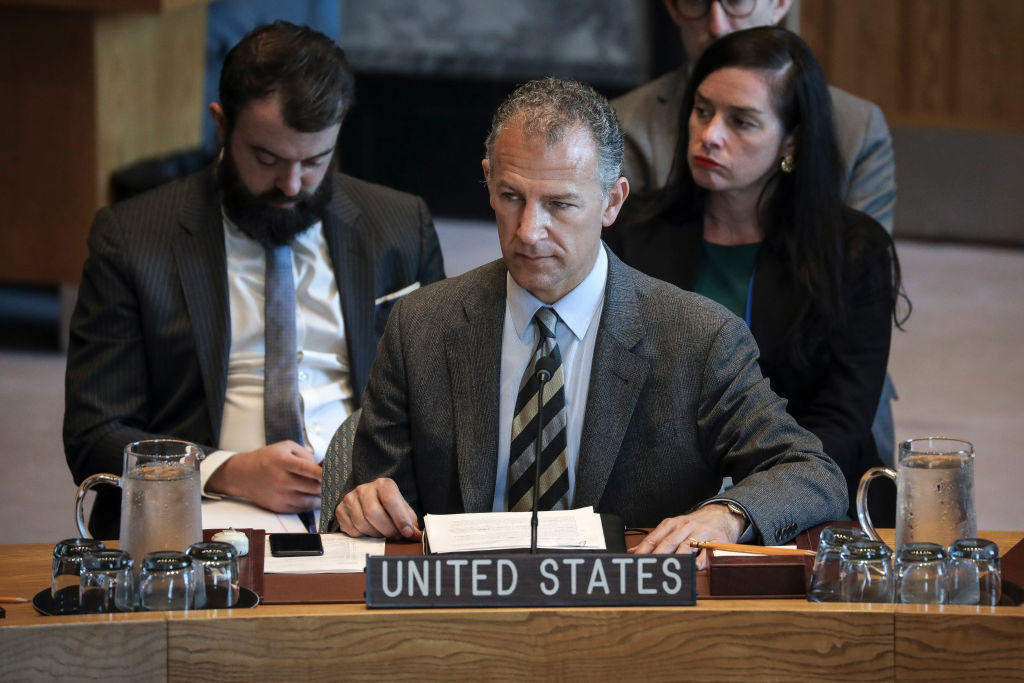
The U.S. justified its position by claiming that SRH is a euphemism for abortion services. Not only is this not true—SRH includes, among other things, contraception, safe abortion services, HIV prevention, and prenatal healthcare—but even if it were, abortion services for survivors of sexual violence save lives.
To fully appreciate the importance of the availability of safe abortion services for survivors of wartime rape, it must be made clear that conflict-related sexualized violence is endemic. Wartime rape is not merely incidental; it is a strategic and operational component of the larger conflict, intended to terrorize communities, interrupt social cohesion, displace targeted groups, and further the perpetrators’ social and economic ideologies. As the UN Secretary General has noted, “women and girls of reproductive age, as the perceived transmitters of cultural and ethnic identity and the symbolic repositories of familial and national ‘honor’” are often specifically targeted for such violence.
The brutal means by which women and girls are targeted for rape make pregnancy very dangerous. Conditions imposed by war—namely malnutrition, anemia, malaria, exposure, stress, infection, and disease—increase the risk of maternal mortality. When denied access to abortion in the face of an unwanted pregnancy, many resort to “non-sterile” or “non-medical” methods. Unsafe abortion causes the deaths of 47,000 people each year and leaves another 5 million with some form of permanent or temporary disability. They may suffer complications, including hemorrhage, infection, perforation of the uterus, and damage to the genital tract or internal organs. In fact, the consequences of denying abortion services have been found to be so severe that it can amount to torture and other inhuman or degrading treatment.
Failing to specifically include SRH in the resolution misses a critical opportunity to assert with clarity that international law requires the option of abortion services for survivors of wartime rape. This is not a controversial view—the UN Secretary General, United Kingdom, France, the Netherlands, and the European Union have all recognized the right to non-discriminatory medical care in armed conflict, including safe abortion. In fact, the UN Security Council has itself previously confirmed the necessity of SRH in the clinical care of survivors of conflict-related sexual violence.
Resolution 2467 and its silence on SRH does nothing to change the law in this regard.[1] It does, however, make the whole framework more confusing. Since coming into office, the Trump administration has levied persistent and extreme attacks against women, including through expanding the Global Gag Rule. By highly-visibly exporting very broad and very technical anti-abortion policies, the Trump administration has created a chilling effect whereby humanitarian aid providers are unsure of what is and is not permitted, causing an extreme scarcity of SRH services.
Moving forward, there must be recognition that SRH is a legal right—a specific and basic entitlement attached to the condition of being human. When survivors of wartime rape are faced with an unwanted or unintended, health- and/or life-threatening pregnancy, the option of abortion is the only medical service available to ameliorate the situation, and international law protects their right to receive such services. The international community cannot become accustomed or complacent to the Trump administration’s use of domestic politics to hold international rights hostage. Because it is more than just words that are given up last minute on the floor of the Security Council—it’s women’s lives.
[1] Because Resolution 2467 is technically silent on SRH and incorporates Resolution 2106, the SRH language in 2106 remains the precedent language.
More articles by Category: Disability, Gender-based violence, Health, International, Violence against women, WMC Loreen Arbus Journalism Program
More articles by Tag: Reproductive rights, Abortion, Maternal health, Global Gag Rule, United Nations


