
















A number of conservative U.S. governors are using coronavirus as an excuse to shut down all abortion services in their states, calling them “non-essential” procedures.

In Australia, a government-supported initiative that provides “safe phones” to women stuck in violent homes is seeing a serious uptick in requests attributed to the virus, the Thomson Reuters Foundation reported Wednesday.

While necessary to combat the spread of COVID-19, sheltering in place has been shown to exacerbate domestic violence.

Stories about something that is “still” happening don’t get many eyeballs. But there is no way around what is still happening to Syrian women and girls as the conflict enters its 10th year, and the United Nations is sounding the alarm.

In the UK, toilet paper is considered a “necessity,” unlike tampons, which are taxed like a luxury item.

When it comes to reproductive rights, the United States is flunking. A report card from the nonprofit, Washington-based Population Institute has given the U.S. an F for the first time in the eight years it has graded the country’s record.

A new ad campaign from feminine hygiene brand Kotex has decided that using blue liquid to demonstrate the efficacy of its menstruation products in commercials is outdated and, well, absurd.

Zimbabwe's maternal mortality crisis is pushing the debate on abortion, but the current economic crisis and stigma stand in the way of legalization.

iI’s been a troublesome week filled with reports that migrants and refugees being held in U.S. detention are being refused medical care they desperately need.
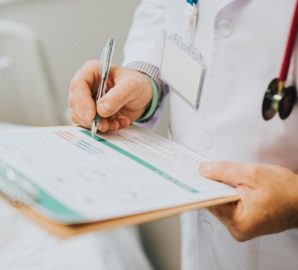
An anti-abortion bill introduced to Ohio’s General Assembly on November 14 is causing controversy for requiring doctors to exhaust every possible option to save an unborn fetus, including “re-implanting” an ectopic pregnancy — a procedure that is literally medically impossible.

The 1973 Roe v. Wade decision, which affirmed a woman’s right to choose, is often referred to as “the law of the land.” However, it’s actually a Supreme Court decision, not a law, and that distinction is incredibly important.

In the ever-intensifying war on women’s reproductive rights in the U.S., Republican Ohio lawmakers have managed to take things to a new, frightening low. A bill introduced this month would criminalize all abortion and includes a provision requiring doctors to try to “re-implant” ectopic pregnancies, despite the fact that no such procedure exists.

I used to think that kids who live in nice homes and attend good schools are not supposed to feel hopeless. I thought Black students like me were always supposed to be strong and overcome whatever we encountered the way our ancestors did.

As states move toward ever-more-restrictive abortion regulations, Missouri has really gone over the edge. At a hearing on Tuesday, the state’s health director told lawmakers that he had been tracking the periods of women who’d been to the state’s only Planned Parenthood clinic, in St. Louis.

In a country as staunchly anti-abortion as Argentina, Sunday’s presidential election outcome signals a potential sea change for women’s rights in the notoriously restrictive country.

More and more women are starting to turn to mail-order services as a quick and cheap source for birth control pills. But many of these women may not be aware that they are putting themselves at risk by obtaining their pills this way.

After a surge of bans this year, abortion providers and advocates are expanding coalitions to widen the network of support for rights and access.

The Helms Amendment and has caused damage to women all over the world by limiting U.S. funding for family planning all over the world.
I tried getting help numerous times, especially since my symptoms got worse over time. But none of the doctors I saw took me seriously.
In late July, the American Academy of Pediatrics (AAP) issued the first policy statement regarding racism’s negative impact on children’s health. According to their statement, exposure to racism in a variety of settings — including but not limited to the home, school, and even while in the womb — can create stress.

The most critical voices among those pushing back against this recent onslaught of anti-choice legislation and rhetoric are those of people who have been pregnant or had abortions themselves.

The College Student Right to Access Act would make sure that once a student has decided to end a pregnancy, they won’t be forced to go off campus to see a provider they don’t know.

Kenyan women and girls rarely get information about abortion at all because our society is heavily influenced by conservative religious beliefs. There is no sex education in the Kenyan education system, and religion seeps into classes like biology; Kenyan students are taught in their schools that abortion is evil and against God’s will.

Kathryn Kolbert, co-counsel in the landmark Planned Parenthood v. Casey Supreme Court case, gives her perspective on the current push to ban abortion — and what we can do about it.

Pro-choice religious leaders are an increasingly visible component of the growing movement fighting back against extreme abortion bans.