
















Mother’s Day is coming up, and oftentimes for Black folks it means families celebrate their mothers as superwoman. However, while we honor and celebrate mothers for all their beautiful nurturing and labor, we must not get caught up in the idea that mothers should do it all and alone. After all, even a superhero needs a squad.

As lawmakers in many places turn their backs on women, new research shows that employees want companies to take on the fight for their reproductive freedom.

The Trump administration’s latest use of domestic politics to hold international rights hostage will cost women's lives.

Without passing any major anti-choice legislation, the Trump administration has managed to curtail access to reproductive health care by radically altering federal policies.
Although unearthing the trauma this illness has caused has been difficult, it has also taught me a lot about what it means to stand up for myself and the countless other people who have been affected by it.

Over the past two years, an estimated 30 women have had miscarriages while in the custody of Immigration and Customs Enforcement (ICE), according to information released by the federal government and published by the Arizona Republic last week.
In recent years, a number of new studies have shed light on the scope and reality of the continuing HIV crisis among Black women in the United States. The high rates of infection have left experts and advocates scrambling to ensure Black women are receiving the medical care they need.

What’s so harmful about the Trump administration’s latest restrictions on reproductive rights health care? A lot, actually.

As Venezuela spirals from rampant hyperinflation and violent political clashes, a health crisis has stricken the South American country, it’s the most vulnerable migrants—children, babies and pregnant women—who are being hit the hardest.
The government still controls mothers, especially those in marginalized populations, by criminalizing their bodies and the choices they make about them.

“Sex Hurts” is the first episode of “Bodies,” a podcast produced by Allison Behringer that delves into some of the physiological experiences women commonly have but individually find mysterious.

After my sister was diagnosed with breast cancer at 28, I wanted to get genetically tested to understand my own risk. I soon found out that insurance companies will not cover the genetic testing that could potentially allow me to take agency over my own health.
Should the ACA be overturned, it would be the latest development in a long history of discrimination against women in the health care industry.

Tuesday’s midterm election brought mixed results for abortion rights. Democrats took control of the House, but anti-choice ballot measures passed in two states, leaving millions of women vulnerable to criminalization if Roe v. Wade is ultimately overturned.
Advocates warn that the expansion of religious refusals could open the door to more discrimination in other areas.

Beyond not feeling represented or seen by my doctors, the persistence of a binary understanding of sex and gender in the medical field has failed to account for the way I, and patients like me, deserve and need to be treated.

During Breast Cancer Awareness Month, it seems that we see pink ribbons everywhere. But can we move beyond awareness to action?

With the appointment of Brett Kavanaugh to the Supreme Court, anti-abortion activists see a new opportunity to overturn or gut Roe v. Wade.

I am a vegan and a feminist. Despite their different labels, however, I don’t believe these are separate identities.
Psychology and medical students and social workers need to learn how to accommodate people that have been through the trauma of rape or they will continue to not only be unable to help but also worsen the experiences of one out of every eight people.

From Brazil to México, from Chile to Venezuela, from Peru to Costa Rica, from Bolivia to Ecuador, the green wave protesters’ call for legal, safe, and free abortion has intensified. The right to choose is influencing and energizing the activists in these countries, and these countries’ political institutions are paying more attention to their activism.
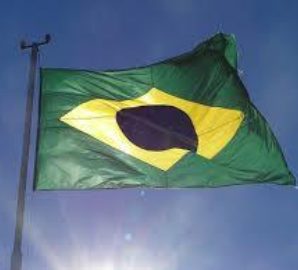
In Brazil, abortion is currently only legal in cases of rape, when the pregnancy poses a major threat to the woman’s life, or in cases of anencephaly in the fetus. On August 3 and 6 of this year, a public hearing was held to discuss the possibility of decriminalizing abortion altogether.
As California struggles to contain more than 15 forest fires, including the largest one in recorded state history, a perhaps unexpected group of state residents is playing a key role: prisoners.

A Japanese medical school has been lowering the scores of women taking its entrance exam to ensure that a greater proportion of men are admitted, Japanese media revealed on August 2.

As I have gotten older, I have come to realize what a unique privilege it is to engage in outdoor activities that are often only available to affluent white people and, more specifically, wealthy white men.