








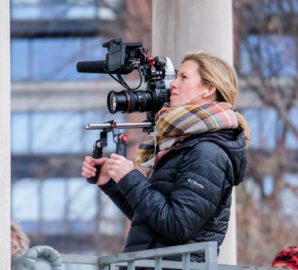
In 2016, producer and director Shannon Cohn created Endo What?, a film that gives an accurate, up-to-date base of knowledge about endometriosis, straight from experts.

India is the most dangerous country in the world for women, according to a nee survey of experts. The results come amid a worsening climate of sexual and communal violence in India, including the January rape and murder of an 8-year-old Muslim girl.

A multi-pronged approach that encourages Kenyan magistrates, prosecutors, doctors, clinicians, and government chemists to work together in pursuit of justice has helped fast track sexualized violence cases and bring justice closer to survivors.

Currently, control over fertility via LARC (long-acting reversible contraception) is restricted to women; men have no LARC options. This is problematic for a number of reasons.

On Thursday, activists drew attention to severe restrictions on the right to choose: Women in Belfast took abortion pills, which had been delivered by robot from the Netherlands, in front of the city’s main court buildings.

After a lengthy legal battle that reached all the way to the U.S. Supreme Court, Arkansas has become the first state in the nation in which women are unable to access medical abortions.

Minors should have the right to have an abortion without parental consent or notification because teens who choose not notify their parents before having an abortion likely do so for very good reasons other than privacy or shame.

Anti-choice legislators have been quietly using insurance regulations to restrict abortion access.

On Monday, Connecticut Governor Dannel Malloy signed a bill into law that codifies existing statues and practices designed to ensure fair treatment of women and trans people incarcerated by the state’s Department of Corrections.

A monument dedicated to “victims of abortion” is one step closer to being built on the grounds of the Tennessee State Capitol.

Ask Me About My Uterus: A Quest to Make Doctors Believe in Women’s Pain is Norman’s exploration of her own experience with pain — specifically, doctors' failure to get to the bottom of it as well as their suggestions that the pain was "all in her head."

California is one step closer to providing compensation to the living survivors of state-sponsored sterilization.

The administration's funding priorities threaten programs that provide affordable contraceptive care to millions.
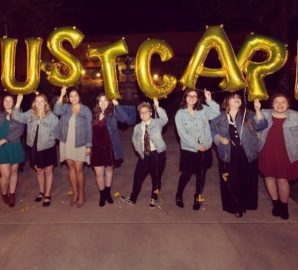
Removing the barriers to accessing safe and timely abortion is an economic justice issue.

I recognize that discussing any intimate health topic (or vaginas in general) makes some people uncomfortable. But any worry I have about making people uncomfortable is overshadowed by my desire to advocate for all of the ladies I know suffering from endometriosis and to provide the information and insight I wish I had found years ago.
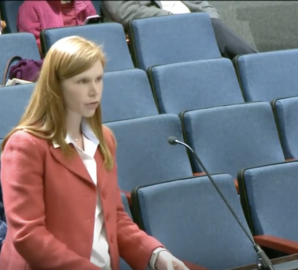
At a recent closed-door meeting, Bethany Kozma stood before a roomful of international leaders assembled to discuss gender equality and women’s rights and announced that the “U.S. is a pro-life nation.”
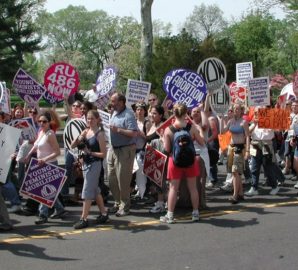
On Monday, Mississippi's governor signed a new bill into law that prohibits abortion after 15 weeks, making Mississippi the strictest state in the country for women who want to terminate unwanted pregnancies. Just before noon today, a district judge granted a temporary restraining order requested by the state's lone clinic.
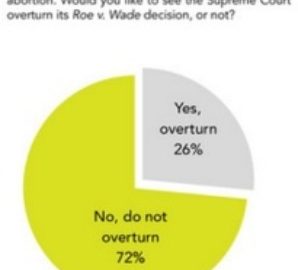
A new approach has revealed that most pollsters may be asking the wrong questions on abortion.

As women used words like “menstruation” and “heavy flow” while describing the humiliating and degrading experience of having insufficient sanitary products in prison, the nine, all-male members of the Arizona legislature’s Committee on Military, Veterans and Regulatory Affairs bristled and shifted in their seats.

A new study shows that laws restricting abortion access are creating long-lasting economic consequences for women.
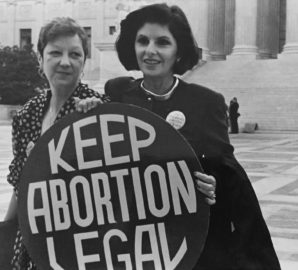
On January 22, 1973, the Supreme Court handed down its decision in the Roe v. Wade case. That decision, made 45 years ago, gave women the legal right to have an abortion.

Today, the Trump administration established yet more barriers for women, LGBTQ people, and others to access the urgent care they need by providing additional protections to health care workers who refuse to provide treatment because of their moral or religious beliefs.

The one thing that characterized my childhood in the Bronx has been fire. Growing up there, it was clear that the borough hadn’t been, wasn’t, and perhaps never will be a priority for New York City officials.

Banning these particular words silences already marginalized Americans — especially women.
Anti-abortion advocates are using a "free speech" argument to try to skirt a reproductive health law.