















How Trump is bypassing Congress to restrict reproductive rights
Even without passing any bills through Congress, President Trump has been able to block access to comprehensive reproductive health care and restrict abortion providers.
To accomplish this erosion of rights, the administration has packed the judiciary and the Department of Health and Human Services with archconservatives with ties to anti-choice and anti-LGBT organizations, and has promulgated its anti-choice, anti-LGBT agenda through rules and regulations that are not subject to congressional approval.
“The Trump-Pence administration has tried to take away our rights and access to reproductive health care across the board since their first days in office,” said Jacqueline Ayers, vice president of government relations and public policy at Planned Parenthood Federation of America. “Over the past two years, we’ve seen this administration and Republican leadership try to eliminate access to birth control, health care, and Planned Parenthood; ignore and mock survivors of sexual assault; attempt to erase the existence of transgender people; and embrace racist and discriminatory policies.”
Some of the tools of attack to block access to abortion and comprehensive reproductive health care, and curtail LGBT civil rights, include:
Changes to rules, regulations, and federal grants
“The issuing of federal regulations with the goal of undermining key health programs has been a major strategy of the Trump Administration’s agenda to attack women’s health,” said Dr. Jamila Taylor, senior fellow with the Women’s Initiative at the Center for American Progress. The Trump administration wasted no time and began issuing rules and making changes to funding applications that seriously curtail access to comprehensive reproduction health care during Trump’s first year in office.
The most recent attempt is the Title X “gag rule,” which prevents health care providers in these federally funded programs from telling their patients how to obtain access to an abortion or providing them with all of their options. “The Title X rule is the latest in a series of moves by the Trump administration to advance an ideologically driven agenda that jeopardizes the health of vulnerable people and dismantles the health care safety net in this country,” said Audrey Sandusky, director of advocacy and communications at the National Family Planning & Reproductive Health Association. “The health care of poor and low-income people is being held hostage. Their care should not be politicized. This should not be a zero-sum game.”
In 2017, the Trump administration tried to cut funding for the Teen Pregnancy Prevention Program and alter it from supporting evidence-based programs to ones that emphasize abstinence-only approaches; the requirement for LGBTQ inclusivity was also rescinded. The administration has also overhauled federal regulations that govern the Affordable Care Act’s (ACA) birth control guarantee by trying to end the no copay component as well as allowing any employer, college, or university to opt out of providing coverage on religious or moral grounds. Last year, the administration tried to make it almost impossible to get abortion coverage through health insurance under the ACA.
Title X is the only federal grant program specifically dedicated to family planning and serves 4 million low-income, uninsured, and underserved people annually, and the Trump administration has been whittling away at it since Trump’s first year. “It is a 50-year-old program that has been through Republican and Democratic administrations and was specifically designed to avoid being subjected to political whims,” said Mary Alice Carter, executive director of Equity Forward, a reproductive rights watchdog organization that monitors HHS. “The minute that the Trump administration walked in the door, they turned Title X into a political football.”
In March, HHS issued changes that include stringent requirements for physical and financial separation of Title X–funded activities from abortion-related services that could mean large networks like Planned Parenthood, as well as individual clinics, lose their Title X funding. The Title X grant application process has been changed to encourage applications from providers that offer only “natural” family planning or abstinence counseling and don't provide comprehensive reproductive services. The selection criteria for awarding grantees has been altered to allow more anti-choice providers into the Title X network. In addition, “HHS has released successful Title X applications to prospective grantees that they favor politically,” said Carter. “This is unprecedented, and many would say unethical.”
On March 29, HHS announced this year’s Title X grant recipients, which include for the first time the Obria Group, an anti-choice network of crisis pregnancy centers, which has also received funding from the United States Conference of Catholic Bishops. The Campaign for Accountability, a nonpartisan watchdog organization, has filed two lawsuits seeking records and communications between HHS and Obria, and information about the application; Equity Forward has also filed lawsuits regarding HHS’ communications with Obria. Advocates are concerned there will be a proliferation of grants awarded to similar groups. The altered Title X rule “changes the set-up for who can apply and opens the gates for crisis pregnancy centers,” said Mollie Katz, communications director at the Religious Coalition for Reproductive Choice. “These are fake clinics that use deceptive practices for the express purpose of preventing women and girls from abortions and are rooted in conservative faith beliefs. Women and girls who currently use Title X–funded clinics are overwhelmingly low-income, young, and of color. They are vulnerable to inadequate sex education and inadequate access to health care.”
Women in rural areas or other parts of the country that already have few health care provider options will also face particular hardships, said Taylor. “I am very worried about access for women in the South, where we see reproductive health disparities across the spectrum of conditions, high rates of maternal mortality, and a host of other poor health outcomes. This is also a region concentrated with people of color and high rates of poverty.”
Appointments to the Department of Health and Human Services
Led by the former pharmaceutical executive Alex Azar, who clerked for the late Supreme Court Justice Antonin Scalia, HHS is filled with appointees who have prior involvement with abstinence-only organizations and pro-life groups such as the Heritage Foundation and the Susan B. Anthony List. Now these same people have the ability to turn their beliefs into federal policy. They include Valerie Huber, senior advisor in the Office of Global Affairs, who used to be president of Ascend, formerly known as the National Abstinence Education Association, and Diane Foley, deputy assistant secretary at the Office of Population Affairs, who previously worked for the Life Network, which operates two crisis pregnancy centers and a pro-abstinence program for teens. “The Trump administration's approach to changing HHS has been much like the appointments of people from oil and gas businesses to the Department of the Interior,” said Carter. “HHS has become a Susan B. Anthony satellite office.”
In January 2018, HHS’ Office for Civil Rights announced the creation of the Conscience and Religious Freedom Division to “protect” health care providers with moral or religious objections to performing certain medical procedures, such as abortion. The Office for Civil Rights, which is intended to protect everyone’s civil rights, is also now being run by a number of people who oppose same-sex marriage. According to Equity Forward, a leaked memo “outlined the department’s efforts to establish a new legal definition of sex — as assigned at birth on the basis of genitalia — under gender protection laws, meaning that transgender people would be ‘defined out of existence’ and no longer protected under discrimination in federally funded education programs.”
Nominating Right-Wing Judges
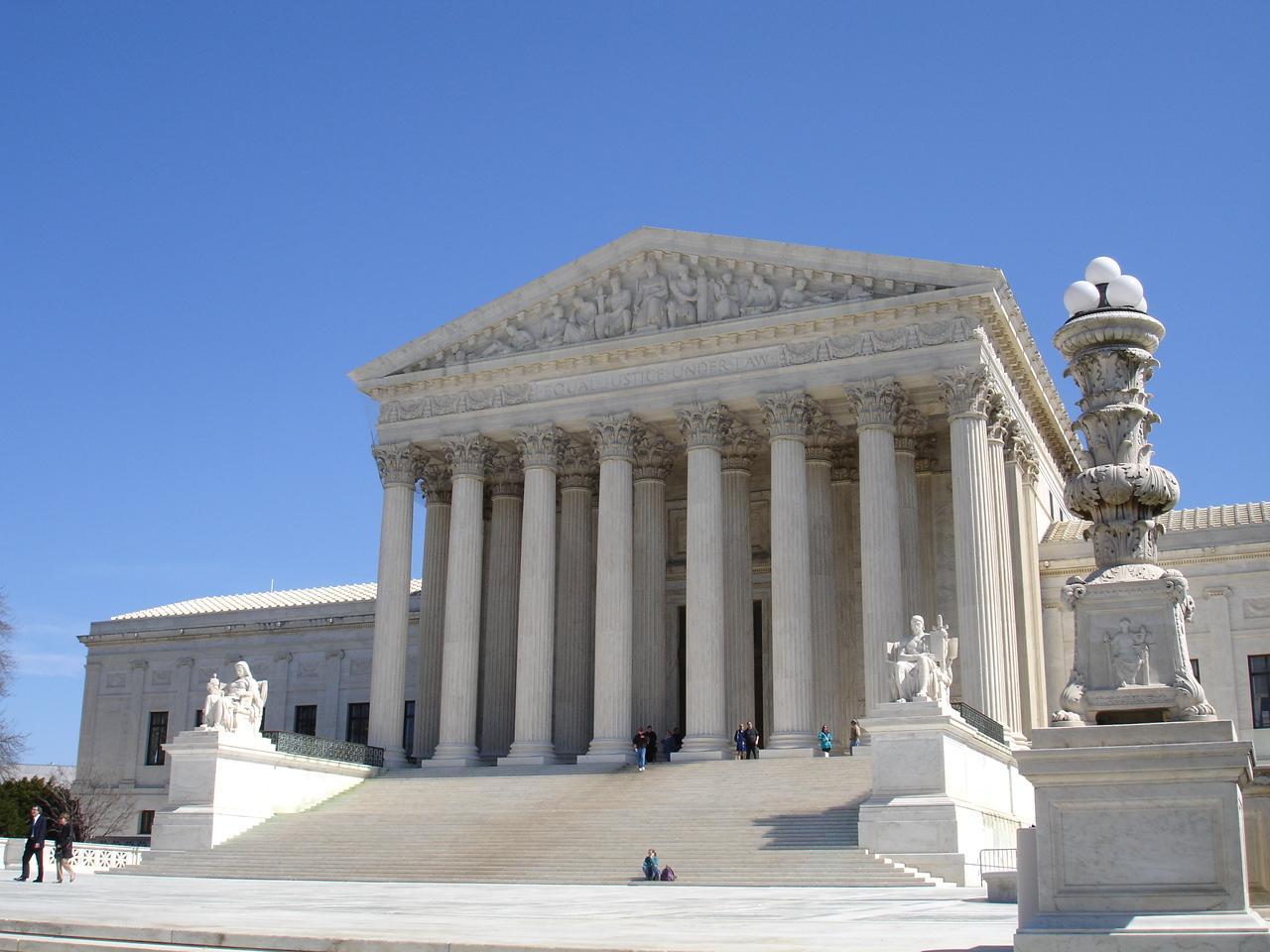
Throughout President Obama’s tenure, Republicans managed to keep vacant 108 judgeships as well as one seat on the Supreme Court. These require only Senate approval, and Trump is quickly filling the vacancies. “Federal courts have been a backstop, preventing countless unconstitutional abortion restrictions from taking effect,” said Brigitte Amiri, deputy director of the Reproductive Freedom Project at the American Civil Liberties Union. “The changes in the judiciary are concerning, particularly at the Supreme Court level. Lower courts are bound by the Supreme Court’s decisions, and must follow Roe v. Wade and its progeny, but President Trump vowed to appoint Supreme Court justices who would overturn Roe v. Wade.”
To aid in this effort, the Senate Judiciary Committee has sped up the process by holding hearings during Congressional recesses, and seeing multiple candidates during the same hearing, which has had the effect of turning the committee “into a complete rubber stamp for President Trump,” according to Trump’s Judicial Assault on LGBT Rights, a report by Lambda Legal, a national legal organization for LGBT civil rights. For decades, the nonpartisan American Bar Association has counseled senators on the qualifications of nominees, but conservatives in the Senate have ended that practice. In early April, the Senate voted to make the process even faster, by reducing the time between final confirmation votes on executive-branch nominees and district court judges from 30 hours to two. Currently, 85 percent of Trump’s circuit court nominees are members of the Federalist Society, a right-wing legal network strongly connected to anti-abortion organizations, and five of the nation’s 12 circuit courts are now composed of over 25 percent Trump judges. Many of Trump’s nominees in the lower courts are outspoken foes of abortion rights, and a few of their court decisions have included “language that would signal an alignment with anti-abortion positions, such as the recent 6th Circuit's decision in our ultrasound challenge [in Kentucky] and Judge Bush referring to ‘unborn life’ rather than ‘fetus,’” said Amiri.
Already this year, 304 abortion restrictions have been introduced in states across the country, including six-week abortion bans — which is before most people even know they are pregnant. “Religious and political conservatives have worked for decades to shift the federal courts to the right, but Trump has accelerated this process,” said Katz. “Federal courts see thousands of cases a year, and many of the restrictive state bills that are being challenged in court will come before these same judges. The whole judicial system is shifting towards more conservative judges. Many voters may be unaware of this shift and how deep an impact it will have, because even basic civics lessons don’t tend to focus on the role of federal courts.”
Advocates are working hard to mobilize their supporters to fight against back against these nominations. “An increase in conservative judgeships in the lower-level courts is a disaster for LGBT people, women, and immigrants, and it will take years to undo this harm,” said Sasha Buchert, senior attorney at Lambda Legal. “There is still time to stop the courts from being completely packed, but people have to get involved now before it is too late.” Although the appointments, nominations, rules, and regulations can all be accomplished largely without Congress, reproductive rights advocates urged concerned citizens to still reach out to Congress to “let them know that they do want the ACA and the birth control benefit,” said Carter. “And to hold HHS accountable, and tell their stories of how the ACA, Title X, and Planned Parenthood have helped them. The vast majority of voters don't support these anti-choice initiatives. The idea that Trump was elected with a mandate to defund Planned Parenthood and curtail access to birth control is ludicrous.”
More articles by Category: Health, Politics
More articles by Tag: Reproductive rights, Abortion, Activism and advocacy, Planned Parenthood


