















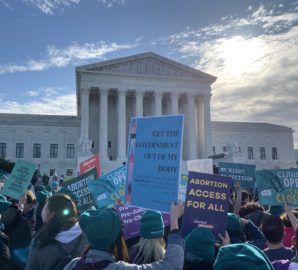
Advocates are expressing concern that less than four years after the court ruled that TRAP laws are unconstitutional, it has agreed to revisit the question.

As states move toward ever-more-restrictive abortion regulations, Missouri has really gone over the edge. At a hearing on Tuesday, the state’s health director told lawmakers that he had been tracking the periods of women who’d been to the state’s only Planned Parenthood clinic, in St. Louis.

After a surge of bans this year, abortion providers and advocates are expanding coalitions to widen the network of support for rights and access.

Of the many topics about which moderators asked the Democratic candidates during the second round of debates on July 30 and 31, two crucial ones were noticeably absent: reproductive and disability rights.

On Wednesday, the House of Representatives passed a spending bill that includes the renewal of the Hyde Amendment. The amendment denies the use of Medicaid funds for abortion care with only limited exceptions.

Kathryn Kolbert, co-counsel in the landmark Planned Parenthood v. Casey Supreme Court case, gives her perspective on the current push to ban abortion — and what we can do about it.

The Trump administration issued another anti-choice policy on Wednesday, limiting federal funding for medical research that involves fetal tissue and canceling a multimillion-dollar contract for a lab that’s using the tissue to combat HIV/AIDS.

Pro-choice religious leaders are an increasingly visible component of the growing movement fighting back against extreme abortion bans.

Pro-choice activists are in mourning this week after the Alabama state legislature passed the country's most restrictive abortion bill and Gov. Kay Ivey signed it into law on Thursday.

As lawmakers in many places turn their backs on women, new research shows that employees want companies to take on the fight for their reproductive freedom.

The United Nations passed a watered-down version of a resolution to end sexual violence in war on April 23 after bowing to pressure from the Trump administration to eliminate all references to sexual and reproductive health and protections for gay and transgender victims.

South Korea’s Constitutional Court struck down a 66-year-old law that criminalized abortion in the nation on April 11. Women’s rights and pro-choice activists who have long campaigned to overturn the ban celebrated the decision.

Without passing any major anti-choice legislation, the Trump administration has managed to curtail access to reproductive health care by radically altering federal policies.

Over the past two years, an estimated 30 women have had miscarriages while in the custody of Immigration and Customs Enforcement (ICE), according to information released by the federal government and published by the Arizona Republic last week.
What’s so harmful about the Trump administration’s latest restrictions on reproductive rights health care? A lot, actually.

This Alabama woman wrote a piece about the late-term abortion she wishes she had. With Donald Trump’s conservative agenda in action, will lawmakers listen to stories like hers?

A new study shows that depictions of abortion on TV can dispel myths and destigmatize the experience.

According to a new study, there was an encouraging increase in diverse fictional depictions of abortion last year.

A recent Amnesty International report released on December 10, the 70th anniversary of the Universal Declaration of Human Rights, reveals that women, particularly the most marginalized women in the UK, have been disproportionately affected by austerity measures implemented in 2010.
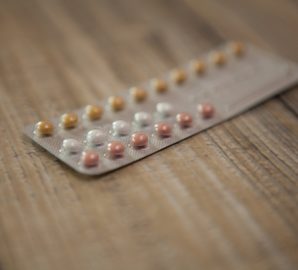
Advocates warn that the expansion of religious refusals could open the door to more discrimination in other areas.

With the appointment of Brett Kavanaugh to the Supreme Court, anti-abortion activists see a new opportunity to overturn or gut Roe v. Wade.
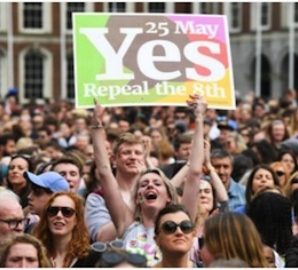
A leader in the campaign to repeal Ireland's abortion ban reflects on how the victory was won — and the implications for other countries.

Anti-choice legislators have been quietly using insurance regulations to restrict abortion access.

The administration's funding priorities threaten programs that provide affordable contraceptive care to millions.
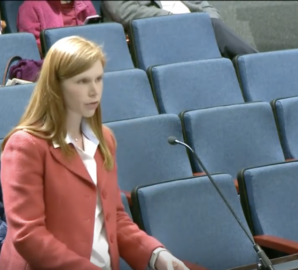
At a recent closed-door meeting, Bethany Kozma stood before a roomful of international leaders assembled to discuss gender equality and women’s rights and announced that the “U.S. is a pro-life nation.”