
















In January 2008, during the violence following Kenya’s disputed elections, someone banged on my door. The man was a friend of my neighbor and, since my neighbor wasn’t home, I thought I might be able to help. But when I opened the door, he forced his way into my house and raped me.

In a swirl of humanity punctuated by police geared with batons, riot gear, and even machine guns, a sense of solace can be hard to find. But for many of the refugees I met at the Hungarian border with Serbia and Croatia, they sought to locate that saving grace in their families, who were both a source of anxiety on this unending journey, and also their succor.

It is clear there are accountability problems within the UN system when it comes to sexual assault. Between campaigns fighting for accountability in cases of rape in the Central African Republic by French peacekeepers and the latest scandal involving a UN contractor in the DRC, the issue of impunity for UN employees is now being discussed within the UN system—and outside of it, too.


I’d been working on a short radio story for the July 30 UN World Day Against Trafficking in Persons when I realized that the fight against human trafficking in my country, Italy, has become a disaster.

For women, the world might feel like it’s slowly becoming worse. Earlier this month, the UN announced that four peacekeepers in the Central African Republic have been accused of raping two women and an underage girl, as well as a 12-year-old girl. Last month, four women were raped and killed in Mexico City. And then there’s Syria, where reports keep emerging of how Islamic State militants justify raping women and children.
First-year orientation is too late for young men and women to start learning about consent. Activists are pushing for better access to early, comprehensive sex education as one way to have an impact.

“Who Killed Rúben Espinosa?” read headlines throughout Mexico after the brutal murder of five people in Mexico City. On July 31, the victims were found in an apartment the Narvarte neighborhood of Mexico City.
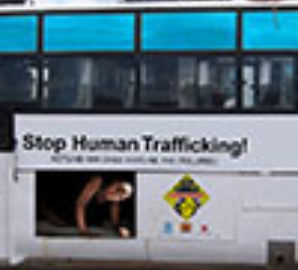
When I met Sophie Otiende, she was running late. I had reached out to her in December 2014 while I was in Nairobi doing research for a film about sex trafficking. Sophie and her boyfriend, Jakob Christensen, are volunteers at the anti-trafficking nonprofit HAART Kenya and had agreed to meet me for dinner. But as time wore on, I was beginning to think I’d been stood up.

A few months ago, an Indian-American Hindu, a Christian Armenian-American, an American Jew, and a Muslim Pakistani-American filmed 22 strangers addressing questions about their experiences regarding gender, race, and wealth. We wanted to produce a website of short videos that explore the concept of “privilege.”

The Women’s Resource Center of Armenia is leading a small but growing movement, working for domestic violence laws, women’s health, education, and more.